Thank you for visiting SNEWPapers!
Sign up free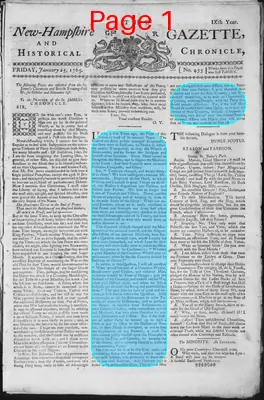
Editorial
January 25, 1765
The New Hampshire Gazette And Historical Chronicle
Portsmouth, Greenland, Rockingham County, New Hampshire
What is this article about?
The editorial reflects on Britain's past unity under a wise leader, now lost to factions and parties, weakening the nation against enemies. It argues that loyal citizens must actively reconcile divisions rather than remain neutral, citing Solon and Plutarch on the duty to engage in civil discord for the country's sake.
Clipping
OCR Quality
96%
Excellent
Full Text
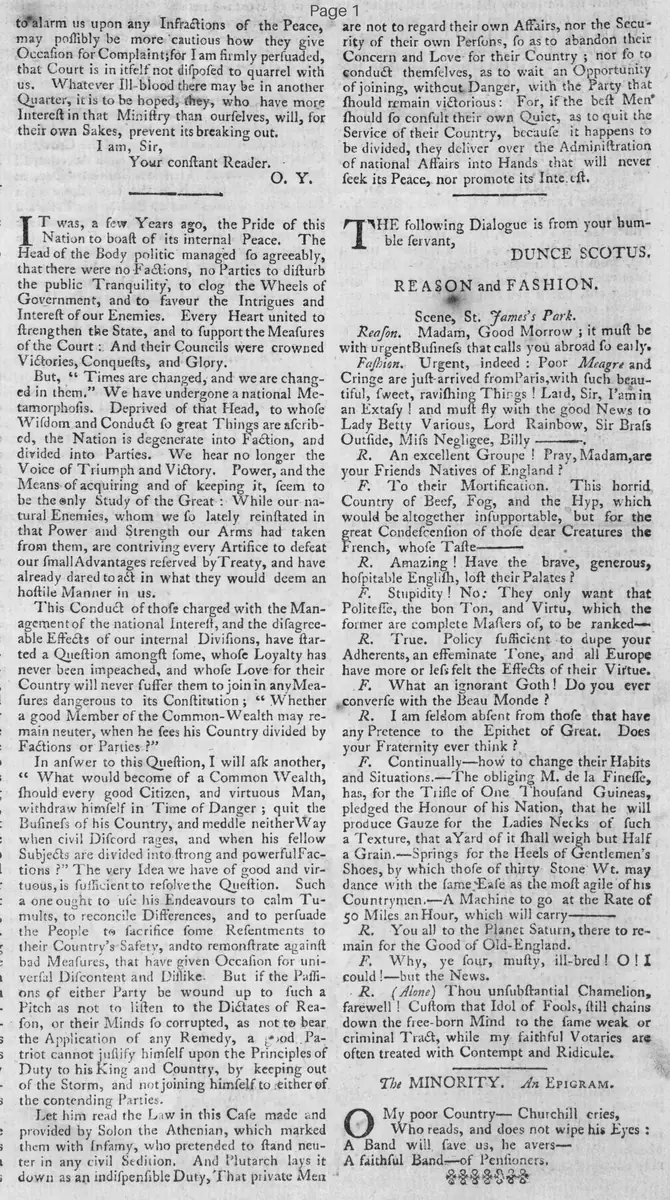
It was, a few Years ago, the Pride of this Nation to boast of its internal Peace. The Head of the Body politic managed so agreeably, that there were no Factions, no Parties to disturb the public Tranquility, to clog the Wheels of Government, and to favour the Intrigues and Interest of our Enemies. Every Heart united to strengthen the State, and to support the Measures of the Court: And their Councils were crowned Victories, Conquests, and Glory. But, "Times are changed, and we are changed in them." We have undergone a national Metamorphosis. Deprived of that Head, to whose Wisdom and Conduct so great Things are ascribed, the Nation is degenerate into Faction, and divided into Parties. We hear no longer the Voice of Triumph and Victory. Power, and the Means of acquiring and of keeping it, seem to be the only Study of the Great: While our natural Enemies, whom we so lately reinstated in that Power and Strength our Arms had taken from them, are contriving every Artifice to defeat our small Advantages reserved by Treaty, and have already dared to act in what they would deem an hostile Manner in us. This Conduct of those charged with the Management of the national Interest, and the disagreeable Effects of our internal Divisions, have started a Question amongst some, whose Loyalty has never been impeached, and whose Love for their Country will never suffer them to join in any Measures dangerous to its Constitution: "Whether a good Member of the Common-Wealth may remain neuter, when he sees his Country divided by Factions or Parties?" In answer to this Question, I will ask another, What would become of a Common Wealth, should every good Citizen, and virtuous Man, withdraw himself in Time of Danger; quit the Business of his Country, and meddle neither Way when civil Discord rages. and when his fellow Subjects are divided into strong and powerful Factions?" The very Idea we have of good and virtuous, is sufficient to resolve the Question. Such a one ought to use his Endeavours to calm Tumults, to reconcile Differences, and to persuade the People to sacrifice some Resentments to their Country's Safety, and to remonstrate against bad Measures. that have given Occasion for universal Discontent and Dislike. But if the Passions of either Party be wound up to such a Pitch as not to listen to the Dictates of Reason, or their Minds so corrupted, as not to bear the Application of any Remedy, a good Patriot cannot justify himself upon the Principles of Duty to his King and Country, by keeping out of the Storm, and not joining himself to either of the contending Parties. Let him read the Law in this Case made and provided by Solon the Athenian. which marked them with Infamy, who pretended to stand neuter in any civil Sedition. And Plutarch lays it down as an indispensable Duty. That private Men are not to regard their own Affairs, nor the Security of their own Persons, so as to abandon their Concern and Love for their Country: nor so to conduct themselves, as to wait an Opportunity of joining, without Danger, with the Party that should remain victorious: For, if the best Men should so consult their own Quiet, as to quit the Service of their Country, because it happens to be divided, they deliver over the Administration of national Affairs into Hands that will never seek its Peace, nor promote its Interest.
What sub-type of article is it?
Partisan Politics
Constitutional
What keywords are associated?
Political Factions
Citizen Duty
Neutrality Infamy
National Unity
Civil Discord
Loyalty To Country
What entities or persons were involved?
Solon The Athenian
Plutarch
The Head Of The Body Politic
Editorial Details
Primary Topic
Duty Of Citizens Against Political Neutrality In Factional Divisions
Stance / Tone
Urging Active Reconciliation And Engagement To Preserve National Unity
Key Figures
Solon The Athenian
Plutarch
The Head Of The Body Politic
Key Arguments
Past National Unity Under Wise Leadership Brought Victories; Now Factions Divide The Nation.
Current Leaders Focus On Power, Ignoring Enemies Who Exploit Divisions.
Good Citizens Must Not Remain Neutral In Civil Discord But Work To Reconcile Parties.
Neutrality In Sedition Is Infamous Per Solon.
Private Men Must Prioritize Country Over Personal Safety, Per Plutarch.
Withdrawing From Divided Politics Hands Power To Those Who Harm The Nation's Interest.