Thank you for visiting SNEWPapers!
Sign up free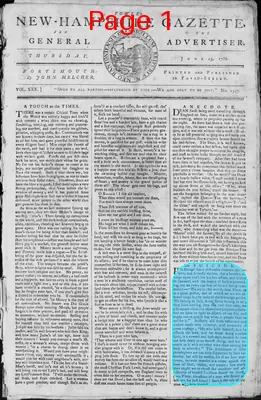
Literary
June 15, 1786
Fowle's New Hampshire Gazette And General Advertiser
Portsmouth, Rockingham County, New Hampshire
What is this article about?
Philosophical essay arguing against suicide, citing Plato's view of life as a divine prison and Aristotle's condemnation of self-murder as cowardly and unlawful. Emphasizes moral, rational, and religious reasons to detest self-destruction as akin to assassinating one's best friend.
Clipping
OCR Quality
95%
Excellent
Full Text
ON SUICIDE.
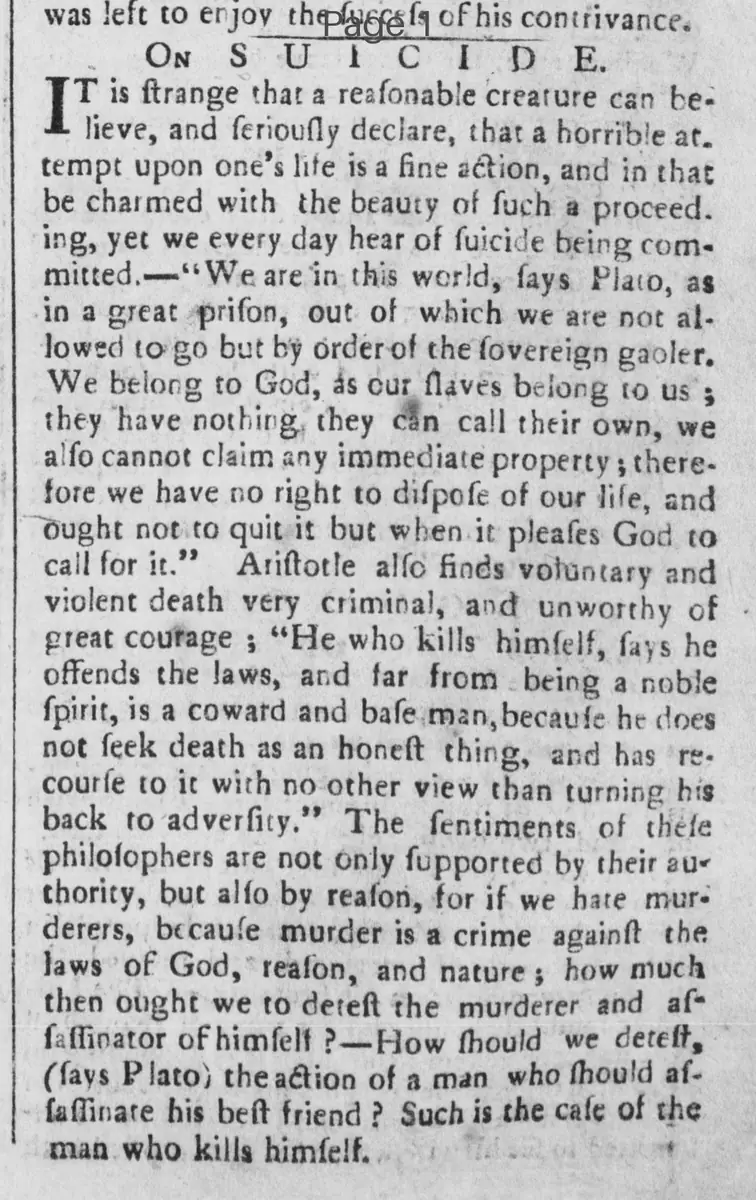
IT is strange that a reasonable creature can believe, and seriously declare, that a horrible attempt upon one's life is a fine action, and in that be charmed with the beauty of such a proceeding, yet we every day hear of suicide being committed. "We are in this world," says Plato, "as in a great prison, out of which we are not allowed to go but by order of the sovereign gaoler. We belong to God, as our slaves belong to us; they have nothing they can call their own, we also cannot claim any immediate property; therefore we have no right to dispose of our life, and ought not to quit it but when it pleases God to call for it." Aristotle also finds voluntary and violent death very criminal, and unworthy of great courage; "He who kills himself," says he, "offends the laws, and far from being a noble spirit, is a coward and base man, because he does not seek death as an honest thing, and has recourse to it with no other view than turning his back to adversity." The sentiments of these philosophers are not only supported by their authority, but also by reason. for if we hate murderers, because murder is a crime against the laws of God, reason, and nature; how much then ought we to detest the murderer and assassin of himself? How should we detest, (says Plato) the action of a man who should assassinate his best friend? Such is the case of the man who kills himself.
IT is strange that a reasonable creature can believe, and seriously declare, that a horrible attempt upon one's life is a fine action, and in that be charmed with the beauty of such a proceeding, yet we every day hear of suicide being committed. "We are in this world," says Plato, "as in a great prison, out of which we are not allowed to go but by order of the sovereign gaoler. We belong to God, as our slaves belong to us; they have nothing they can call their own, we also cannot claim any immediate property; therefore we have no right to dispose of our life, and ought not to quit it but when it pleases God to call for it." Aristotle also finds voluntary and violent death very criminal, and unworthy of great courage; "He who kills himself," says he, "offends the laws, and far from being a noble spirit, is a coward and base man, because he does not seek death as an honest thing, and has recourse to it with no other view than turning his back to adversity." The sentiments of these philosophers are not only supported by their authority, but also by reason. for if we hate murderers, because murder is a crime against the laws of God, reason, and nature; how much then ought we to detest the murderer and assassin of himself? How should we detest, (says Plato) the action of a man who should assassinate his best friend? Such is the case of the man who kills himself.
What sub-type of article is it?
Essay
What themes does it cover?
Moral Virtue
Death Mortality
Religious
What keywords are associated?
Suicide
Philosophy
Plato
Aristotle
Morality
Self Murder
Divine Law
Literary Details
Title
On Suicide.
Subject
Argument Against Suicide
Key Lines
"We Are In This World," Says Plato, "As In A Great Prison, Out Of Which We Are Not Allowed To Go But By Order Of The Sovereign Gaoler."
"He Who Kills Himself," Says He, "Offends The Laws, And Far From Being A Noble Spirit, Is A Coward And Base Man."
For If We Hate Murderers, Because Murder Is A Crime Against The Laws Of God, Reason, And Nature; How Much Then Ought We To Detest The Murderer And Assassin Of Himself?
How Should We Detest, (Says Plato) The Action Of A Man Who Should Assassinate His Best Friend? Such Is The Case Of The Man Who Kills Himself.