Thank you for visiting SNEWPapers!
Sign up free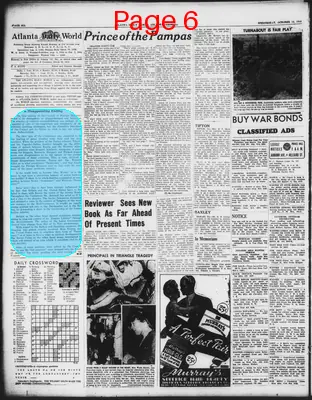
Editorial
October 10, 1945
Atlanta Daily World
Atlanta, Fulton County, Georgia
What is this article about?
The first session of the Council of Foreign Ministers ended in disappointment without resolving peace treaties for Italy and Axis satellites, due to procedural disorder and deep Soviet-Western disagreements on democracy, strategic control in Mediterranean and Balkans, and post-war world order; issues deferred to deputies.
Clipping
OCR Quality
100%
Excellent
Full Text
A Disappointing Ending
The first session of the Council of Foreign Ministers ended in an atmosphere of disappointment and irritation.
The absence of concrete accomplishment was perhaps to be expected in view of the magnitude and complexity of the problems awaiting settlement, but the disorderly procedure of the Council and its failure to stick to any one subject were disheartening.
The first task of the Conference was supposed to be the drafting of peace treaties with Italy and the Axis satellites. When the problem of the Italian colonies, Trieste, and the Yugoslav-Italian frontier brought up the differences of opinion between Russia and the Western Allies, these problems were dropped. Similarly, discussion of peace terms for Bulgaria, Rumania, Hungary and Finland bogged down over disagreement as to the nature of the present governments of these countries. This, in turn, involved a deeper disagreement between Russia and the Western Allies as to what constitutes "Democracy"; and that finally brought the Foreign Ministers face to face with the most basic of the peace problems, namely:
Is the world truly to become "One World," or is the peace to rest upon a precarious balance of power between two worlds? Is there to be whole-hearted cooperation or competition between Soviet "Democracy" and Western "Democracy"?
Soviet policy has to date been strongly influenced by the fact that Britain and the United States have so far failed to share with Russia the secret of the Atomic Bomb.
Throughout the Conference Mr. Molotoff has acted as if he had a chip on his shoulder. The Soviet Delegation demanded and obtained a voice in the control of Tangiers at the western entrance to the Mediterranean. It sought an equally strong position not only in the Dardanelles but in the Red Sea, by demanding a share in the trusteeship of the former Italian colonies.
Britain on the other hand showed stubborn determination to keep sole control of its "Empire Lifeline" through the Mediterranean. The policy of the Labor Government showed little change from that of its Tory predecessors.
With regard to the Balkan and Danubian countries, the situation was almost exactly reversed. Here Britain and the United States seek to establish their form of "Democracy," or at least to have a voice in political developments.
The Soviet Union on the other hand seems determined to retain sole control of an area which it considers vital to its own security.
None of these problems were solved by the Council. One by one the "hot potatoes" were dropped into the hands of deputies "for study pending the next session of the Council."
The first session of the Council of Foreign Ministers ended in an atmosphere of disappointment and irritation.
The absence of concrete accomplishment was perhaps to be expected in view of the magnitude and complexity of the problems awaiting settlement, but the disorderly procedure of the Council and its failure to stick to any one subject were disheartening.
The first task of the Conference was supposed to be the drafting of peace treaties with Italy and the Axis satellites. When the problem of the Italian colonies, Trieste, and the Yugoslav-Italian frontier brought up the differences of opinion between Russia and the Western Allies, these problems were dropped. Similarly, discussion of peace terms for Bulgaria, Rumania, Hungary and Finland bogged down over disagreement as to the nature of the present governments of these countries. This, in turn, involved a deeper disagreement between Russia and the Western Allies as to what constitutes "Democracy"; and that finally brought the Foreign Ministers face to face with the most basic of the peace problems, namely:
Is the world truly to become "One World," or is the peace to rest upon a precarious balance of power between two worlds? Is there to be whole-hearted cooperation or competition between Soviet "Democracy" and Western "Democracy"?
Soviet policy has to date been strongly influenced by the fact that Britain and the United States have so far failed to share with Russia the secret of the Atomic Bomb.
Throughout the Conference Mr. Molotoff has acted as if he had a chip on his shoulder. The Soviet Delegation demanded and obtained a voice in the control of Tangiers at the western entrance to the Mediterranean. It sought an equally strong position not only in the Dardanelles but in the Red Sea, by demanding a share in the trusteeship of the former Italian colonies.
Britain on the other hand showed stubborn determination to keep sole control of its "Empire Lifeline" through the Mediterranean. The policy of the Labor Government showed little change from that of its Tory predecessors.
With regard to the Balkan and Danubian countries, the situation was almost exactly reversed. Here Britain and the United States seek to establish their form of "Democracy," or at least to have a voice in political developments.
The Soviet Union on the other hand seems determined to retain sole control of an area which it considers vital to its own security.
None of these problems were solved by the Council. One by one the "hot potatoes" were dropped into the hands of deputies "for study pending the next session of the Council."
What sub-type of article is it?
Foreign Affairs
War Or Peace
What keywords are associated?
Council Of Foreign Ministers
Peace Treaties
Soviet Western Divide
Italian Colonies
Trieste
Democracy Disagreement
Atomic Bomb
Balkan Countries
Mediterranean Control
Dardanelles
What entities or persons were involved?
Council Of Foreign Ministers
Soviet Union
Western Allies
Britain
United States
Mr. Molotoff
Editorial Details
Primary Topic
Disappointment In The First Session Of The Council Of Foreign Ministers Over Unresolved Peace Treaties And East West Divisions
Stance / Tone
Disappointed And Critical Of Procedural Disorder And Lack Of Progress
Key Figures
Council Of Foreign Ministers
Soviet Union
Western Allies
Britain
United States
Mr. Molotoff
Key Arguments
Absence Of Concrete Accomplishments Due To Complex Problems
Disorderly Procedure And Failure To Stick To Subjects
Dropped Discussions On Italian Colonies, Trieste, And Yugoslav Italian Frontier Over Russia Western Differences
Stalemate On Peace Terms For Bulgaria, Rumania, Hungary, And Finland Due To Government Nature Disagreements
Fundamental Disagreement On What Constitutes Democracy
Question Of One World Cooperation Versus Balance Of Power Between Soviet And Western Democracies
Soviet Policy Influenced By Lack Of Atomic Bomb Secret Sharing
Soviet Demands For Voice In Tangiers, Dardanelles, And Red Sea Trusteeship
Britain's Stubborn Control Of Mediterranean Empire Lifeline
Reversed Situation In Balkan And Danubian Countries With Western Push For Democracy Influence Against Soviet Sole Control
All Problems Deferred To Deputies For Study