Thank you for visiting SNEWPapers!
Sign up free
Literary
September 14, 1827
The National Republican And Ohio Political Register
Cincinnati, Hamilton County, Ohio
What is this article about?
Excerpt from Blackwood's Magazine explores the immortality of the soul, rejecting the notion of total extinction and examining how earthly desires shape conceptions of afterlife and national religions, from Gothic halls to Platonic ideals.
Clipping
OCR Quality
95%
Excellent
Full Text
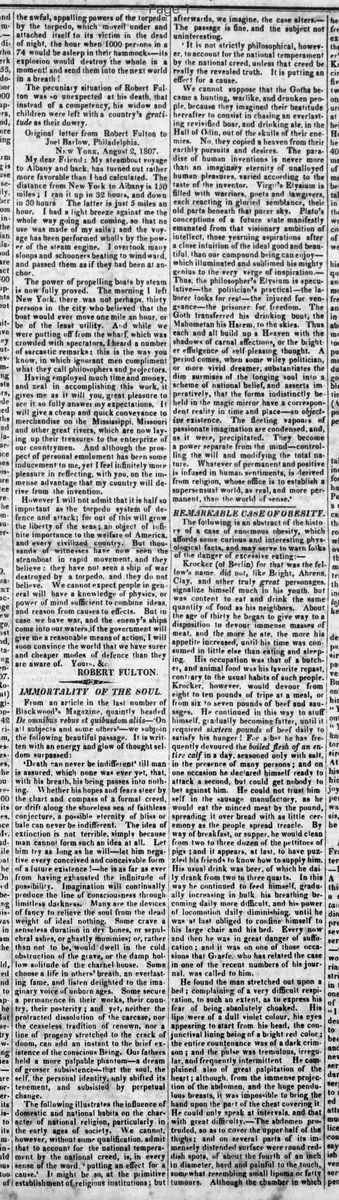
IMMORTALITY OF THE SOUL
From an article in the last number of Blackwood's Magazine, quaintly headed De omnibus rebus et quibusdam aliis—'On all subjects and some others'—we subjoin the following beautiful passage. It is written with an energy and glow of thought seldom surpassed:
Death can never be indifferent till man is assured, which none was ever yet, that, with his breath, his being passes into nothing. Whether his hopes and fears steer by the chart and compass of a formal creed, or drift along the shoreless sea of faithless conjecture, a possible eternity of bliss or bale can never be indifferent. The idea of extinction is not terrible, simply because man cannot form such an idea at all. Let him try as long as he will—let him negative every conceived and conceivable form of a future existence!—he is as far as ever from having exhausted the infinitude of possibility. Imagination will continually produce the line of consciousness through limitless darkness. Many are the devices of fancy to relieve the soul from the dead weight of ideal nothing. Some crave a senseless duration in dry bones, or sepulchral ashes, or ghastly mummies; or, rather than not to be, would dwell in the cold obstruction of the grave, or the damp hollow solitude of the charnel house. Some choose a life in others' breath, an everlasting fame, and listen delighted to the imaginary voice of unborn ages. Some secure a permanence in their works, their country, their posterity; and yet, neither the protracted dissolution of the carcase, nor the ceaseless tradition of renown, nor a line of progeny stretched to the crack of doom, can add an instant to the brief existence of the conscious Being. Our fathers held a more palpable phantom—a dream of grosser subsistence—that the soul, the self, the personal identity, only shifted its tenement, and subsisted by perpetual change.
The following illustrates the influence of domestic and national habits on the character of national religion, particularly in the early ages of society. We cannot, however, without some qualification, admit that to account for the national temperament by the national creed, is, in every sense of the word, 'putting an effect for a cause.' It might be so, at the primitive establishment of religious institutions; but afterwards, we imagine, the case alters.
The passage is fine, and the subject not uninteresting. It is not strictly philosophical, however, to account for the national temperament by the national creed, unless that creed be really the revealed truth. It is putting an effect for a cause.
We cannot suppose that the Goths became a hunting, warlike, and drunken people, because they imagined their beatitude hereafter to consist in chasing an everlasting revivified boar, and drinking ale, in the Hall of Odin, out of the skulls of their enemies. No, they copied a heaven from their earthly pursuits and desires. The paradise of human inventions is never more than an imaginary eternity of unalloyed human pleasures, varied according to the taste of the inventor. Virgil's Elysium is filled with warriors, poets and lawgivers, each reacting in glorified semblance, their old parts beneath that purer sky. Plato's conceptions of a future state manifestly emanated from that visionary ambition of intellect, those yearning aspirations after a close intuition of the ideal good and beautiful, than our compound being can enjoy—which illuminated and sublimed his mighty genius to the very verge of inspiration.—Thus, the philosopher's Elysium is speculative—the politician's practical—the laborer looks for rest—the injured for vengeance—the prisoner for freedom. The Goth transferred his drinking bout, the Mahometan his Harem, to the skies. Thus each and all build up a Heaven with the shadows of carnal affections, or the brighter effulgence of self-pleasing thought. A period comes, when some wily politician, or more vivid dreamer, substantiates the dim surmises of the longing soul into a scheme of national belief, and asserts imperatively, that the forms indistinctly beheld in the magic mirror have a correspondent reality in time and place—an objective existence. The fleeting vapours of passionate imagination are condensed, and, as it were, precipitated. They become a power separate from the mind—controlling the will and modifying the total nature. Whatever of permanent and positive is infused in human sentiments, is derived from religion, whose office is to establish a supersensual world, as real, and more permanent, than the world of sense.
From an article in the last number of Blackwood's Magazine, quaintly headed De omnibus rebus et quibusdam aliis—'On all subjects and some others'—we subjoin the following beautiful passage. It is written with an energy and glow of thought seldom surpassed:
Death can never be indifferent till man is assured, which none was ever yet, that, with his breath, his being passes into nothing. Whether his hopes and fears steer by the chart and compass of a formal creed, or drift along the shoreless sea of faithless conjecture, a possible eternity of bliss or bale can never be indifferent. The idea of extinction is not terrible, simply because man cannot form such an idea at all. Let him try as long as he will—let him negative every conceived and conceivable form of a future existence!—he is as far as ever from having exhausted the infinitude of possibility. Imagination will continually produce the line of consciousness through limitless darkness. Many are the devices of fancy to relieve the soul from the dead weight of ideal nothing. Some crave a senseless duration in dry bones, or sepulchral ashes, or ghastly mummies; or, rather than not to be, would dwell in the cold obstruction of the grave, or the damp hollow solitude of the charnel house. Some choose a life in others' breath, an everlasting fame, and listen delighted to the imaginary voice of unborn ages. Some secure a permanence in their works, their country, their posterity; and yet, neither the protracted dissolution of the carcase, nor the ceaseless tradition of renown, nor a line of progeny stretched to the crack of doom, can add an instant to the brief existence of the conscious Being. Our fathers held a more palpable phantom—a dream of grosser subsistence—that the soul, the self, the personal identity, only shifted its tenement, and subsisted by perpetual change.
The following illustrates the influence of domestic and national habits on the character of national religion, particularly in the early ages of society. We cannot, however, without some qualification, admit that to account for the national temperament by the national creed, is, in every sense of the word, 'putting an effect for a cause.' It might be so, at the primitive establishment of religious institutions; but afterwards, we imagine, the case alters.
The passage is fine, and the subject not uninteresting. It is not strictly philosophical, however, to account for the national temperament by the national creed, unless that creed be really the revealed truth. It is putting an effect for a cause.
We cannot suppose that the Goths became a hunting, warlike, and drunken people, because they imagined their beatitude hereafter to consist in chasing an everlasting revivified boar, and drinking ale, in the Hall of Odin, out of the skulls of their enemies. No, they copied a heaven from their earthly pursuits and desires. The paradise of human inventions is never more than an imaginary eternity of unalloyed human pleasures, varied according to the taste of the inventor. Virgil's Elysium is filled with warriors, poets and lawgivers, each reacting in glorified semblance, their old parts beneath that purer sky. Plato's conceptions of a future state manifestly emanated from that visionary ambition of intellect, those yearning aspirations after a close intuition of the ideal good and beautiful, than our compound being can enjoy—which illuminated and sublimed his mighty genius to the very verge of inspiration.—Thus, the philosopher's Elysium is speculative—the politician's practical—the laborer looks for rest—the injured for vengeance—the prisoner for freedom. The Goth transferred his drinking bout, the Mahometan his Harem, to the skies. Thus each and all build up a Heaven with the shadows of carnal affections, or the brighter effulgence of self-pleasing thought. A period comes, when some wily politician, or more vivid dreamer, substantiates the dim surmises of the longing soul into a scheme of national belief, and asserts imperatively, that the forms indistinctly beheld in the magic mirror have a correspondent reality in time and place—an objective existence. The fleeting vapours of passionate imagination are condensed, and, as it were, precipitated. They become a power separate from the mind—controlling the will and modifying the total nature. Whatever of permanent and positive is infused in human sentiments, is derived from religion, whose office is to establish a supersensual world, as real, and more permanent, than the world of sense.
What sub-type of article is it?
Essay
What themes does it cover?
Death Mortality
Religious
Political
What keywords are associated?
Immortality
Soul
Extinction
Afterlife
National Religion
Heaven
Creed
Philosophy
What entities or persons were involved?
Blackwood's Magazine
Literary Details
Title
Immortality Of The Soul
Author
Blackwood's Magazine
Subject
Influence Of Domestic And National Habits On National Religion
Key Lines
Death Can Never Be Indifferent Till Man Is Assured, Which None Was Ever Yet, That, With His Breath, His Being Passes Into Nothing.
The Idea Of Extinction Is Not Terrible, Simply Because Man Cannot Form Such An Idea At All.
The Paradise Of Human Inventions Is Never More Than An Imaginary Eternity Of Unalloyed Human Pleasures, Varied According To The Taste Of The Inventor.
Thus Each And All Build Up A Heaven With The Shadows Of Carnal Affections, Or The Brighter Effulgence Of Self Pleasing Thought.
Whatever Of Permanent And Positive Is Infused In Human Sentiments, Is Derived From Religion, Whose Office Is To Establish A Supersensual World, As Real, And More Permanent, Than The World Of Sense.