Thank you for visiting SNEWPapers!
Sign up free
Literary
September 14, 1818
Alexandria Gazette & Daily Advertiser
Alexandria, Virginia
What is this article about?
The essayist 'The Cobbler' explains his irregular publication schedule for periodical writings, then reflects on his uncle Ned's unfinished proverb about navigating life virtuously, invoking Seneca to argue that actions' moral integrity, guided by conscience, outweighs external judgments. Examples from professions illustrate living by honest principles.
Clipping
OCR Quality
95%
Excellent
Full Text
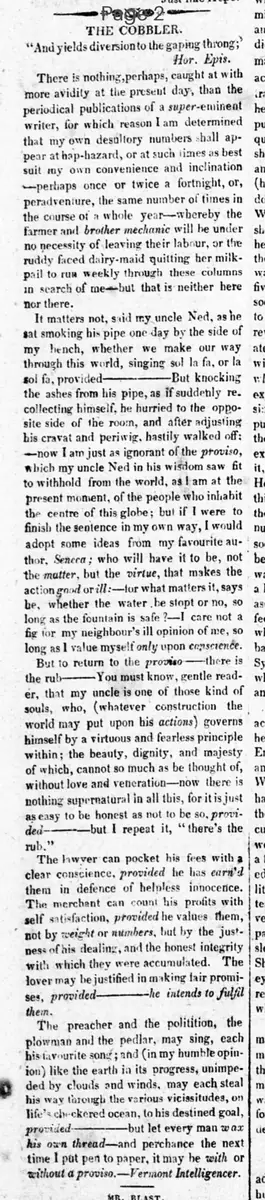
THE COBBLER.
"And yields diversion to the gaping throng;
Hor. Epis."
There is nothing, perhaps, caught at with more avidity at the present day, than the periodical publications of a super-eminent writer, for which reason I am determined that my own desultory numbers shall appear at hap-hazard, or at such times as best suit my own convenience and inclination-perhaps once or twice a fortnight, or, peradventure, the same number of times in the course of a whole year-whereby the farmer and brother mechanic will be under no necessity of leaving their labour. or the ruddy faced dairy-maid quitting her milk-pail to run weekly through these columns in search of me but that is neither here nor there.
It matters not, said my uncle Ned, as he sat smoking his pipe one day by the side of my bench, whether we make our way through this world, singing sol la fa, or la sol fa, provided-
But knocking the ashes from his pipe, as if suddenly recollecting himself. he hurried to the opposite side of the room, and after adjusting his cravat and periwig, hastily walked off: now I am just as ignorant of the proviso, but which my uncle Ned in his wisdom saw fit to withhold from the world, as I am at the present moment, of the people who inhabit the centre of this globe; but if I were to finish the sentence in my own way, I would adopt some ideas from my favourite author. Seneca; who will have it to be, not the matter. but the virtue, that makes the action good or ill:--for what matters it, says he. whether the water be stopt or no, so long as the fountain is safe ? I care not a fig for my neighbour's ill opinion of me, so long as I value myself only upon conscience.
But to return to the proviso --there is the rub-o-- You must know. gentle reader, that my uncle is one of those kind of souls, who, (whatever construction the world may put upon his actions) governs himself by a virtuous and fearless principle within; the beauty, dignity, and majesty of which, cannot so much as be thought of. without love and veneration-now there is nothing supernatural in all this, for it is just as easy to be honest as not to be so, provided----but I repeat it, "there's the rub."
The lawyer can pocket his fees with a clear conscience, provided he has earn'd them in defence of helpless innocence.
The merchant can count his profits with self satisfaction, provided he values them, not by weight or numbers, but by the justness of his dealing, and the honest integrity with which they were accumulated. The lover may be justified in making fair promises, provided -he intends to fulfil them.
The preacher and the politician, the plowman and the pedlar, may sing, each his favourite song; and (in my humble opinion) like the earth in its progress, unimpeded by clouds and winds, may each steal his way through the various vicissitudes, on life's checkered ocean, to his destined goal, provided but let every man wax his own thread-and perchance the next time I put pen to paper. it may be with or without a proviso.-Vermont Intelligencer
"And yields diversion to the gaping throng;
Hor. Epis."
There is nothing, perhaps, caught at with more avidity at the present day, than the periodical publications of a super-eminent writer, for which reason I am determined that my own desultory numbers shall appear at hap-hazard, or at such times as best suit my own convenience and inclination-perhaps once or twice a fortnight, or, peradventure, the same number of times in the course of a whole year-whereby the farmer and brother mechanic will be under no necessity of leaving their labour. or the ruddy faced dairy-maid quitting her milk-pail to run weekly through these columns in search of me but that is neither here nor there.
It matters not, said my uncle Ned, as he sat smoking his pipe one day by the side of my bench, whether we make our way through this world, singing sol la fa, or la sol fa, provided-
But knocking the ashes from his pipe, as if suddenly recollecting himself. he hurried to the opposite side of the room, and after adjusting his cravat and periwig, hastily walked off: now I am just as ignorant of the proviso, but which my uncle Ned in his wisdom saw fit to withhold from the world, as I am at the present moment, of the people who inhabit the centre of this globe; but if I were to finish the sentence in my own way, I would adopt some ideas from my favourite author. Seneca; who will have it to be, not the matter. but the virtue, that makes the action good or ill:--for what matters it, says he. whether the water be stopt or no, so long as the fountain is safe ? I care not a fig for my neighbour's ill opinion of me, so long as I value myself only upon conscience.
But to return to the proviso --there is the rub-o-- You must know. gentle reader, that my uncle is one of those kind of souls, who, (whatever construction the world may put upon his actions) governs himself by a virtuous and fearless principle within; the beauty, dignity, and majesty of which, cannot so much as be thought of. without love and veneration-now there is nothing supernatural in all this, for it is just as easy to be honest as not to be so, provided----but I repeat it, "there's the rub."
The lawyer can pocket his fees with a clear conscience, provided he has earn'd them in defence of helpless innocence.
The merchant can count his profits with self satisfaction, provided he values them, not by weight or numbers, but by the justness of his dealing, and the honest integrity with which they were accumulated. The lover may be justified in making fair promises, provided -he intends to fulfil them.
The preacher and the politician, the plowman and the pedlar, may sing, each his favourite song; and (in my humble opinion) like the earth in its progress, unimpeded by clouds and winds, may each steal his way through the various vicissitudes, on life's checkered ocean, to his destined goal, provided but let every man wax his own thread-and perchance the next time I put pen to paper. it may be with or without a proviso.-Vermont Intelligencer
What sub-type of article is it?
Essay
What themes does it cover?
Moral Virtue
What keywords are associated?
Proviso
Virtue
Conscience
Seneca
Honesty
Moral Principle
Literary Details
Title
The Cobbler.
Form / Style
Prose Reflection On Virtue And Conscience
Key Lines
It Matters Not, Said My Uncle Ned, As He Sat Smoking His Pipe One Day By The Side Of My Bench, Whether We Make Our Way Through This World, Singing Sol La Fa, Or La Sol Fa, Provided
But If I Were To Finish The Sentence In My Own Way, I Would Adopt Some Ideas From My Favourite Author. Seneca; Who Will Have It To Be, Not The Matter. But The Virtue, That Makes The Action Good Or Ill: For What Matters It, Says He. Whether The Water Be Stopt Or No, So Long As The Fountain Is Safe ? I Care Not A Fig For My Neighbour's Ill Opinion Of Me, So Long As I Value Myself Only Upon Conscience.
There's The Rub.