Thank you for visiting SNEWPapers!
Sign up free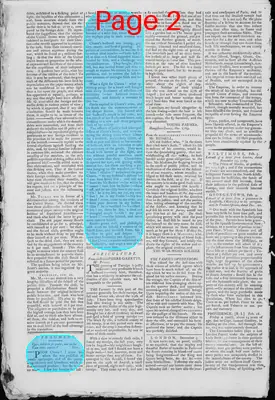
Literary
March 3, 1790
The New Hampshire Gazette And General Advertiser
Portsmouth, Rockingham County, New Hampshire
What is this article about?
A prose fragment with a Latin epigraph from Horace laments the tragic deaths of Cleora and her husband Florio. Florio dies from wounds in a duel after losing at gambling; Cleora, overcome by grief, hallucinates and soon follows him in death. The narrator witnesses and mourns their fate.
Clipping
OCR Quality
95%
Excellent
Full Text
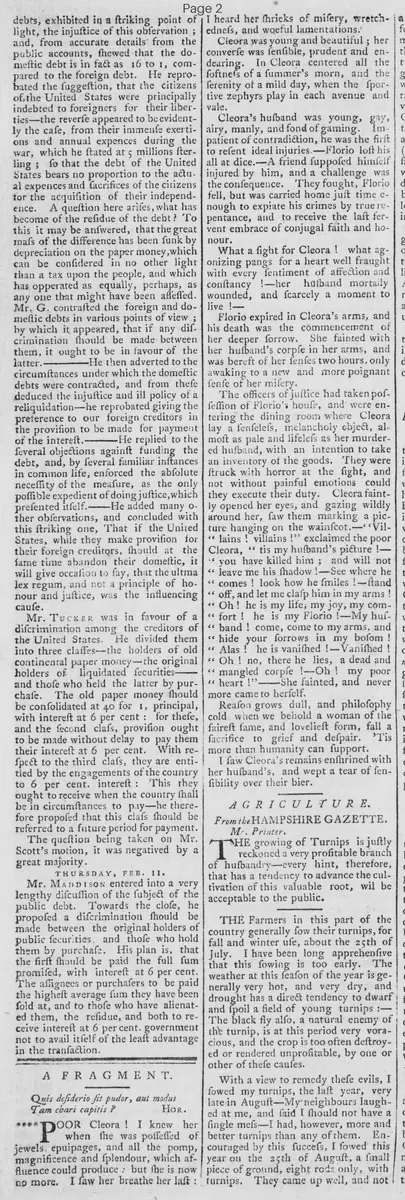
A FRAGMENT.
Quis desiderio sit pudor, aut modus
Tam chari capitis?
HOR.
Poor Cleora! I knew her when she was possessed of jewels, equipages, and all the pomp, magnificence and splendour, which affluence could produce: but she is now no more. I saw her breathe her last: I heard her shrieks of misery, wretchedness, and woeful lamentations.
Cleora was young and beautiful; her conversation was sensible, prudent and endearing. In Cleora centered all the softness of a summer's morn, and the serenity of a mild day, when the sportive zephyrs play in each avenue and vale.
Cleora's husband was young, gay, airy, manly, and fond of gaming. Impatient of contradiction, he was the first to resent ideal injuries.—Florio lost his all at dice.—A friend supposed himself injured by him, and a challenge was the consequence. They fought, Florio fell, but was carried home just time enough to expiate his crimes by true repentance, and to receive the last fervent embrace of conjugal faith and honour.
What a sight for Cleora! what agonizing pangs for a heart well fraught with every sentiment of affection and constancy!—her husband mortally wounded, and scarcely a moment to live!—
Florio expired in Cleora's arms, and his death was the commencement of her deeper sorrow. She fainted with her husband's corpse in her arms, and was bereft of her senses two hours, only awaking to a new and more poignant sense of her misery.
The officers of justice had taken possession of Florio's house, and were entering the dining room where Cleora lay a senseless, melancholy object, almost as pale and lifeless as her murdered husband, with an intention to take an inventory of the goods. They were struck with horror at the sight, and not without painful emotions could they execute their duty. Cleora faintly opened her eyes, and gazing wildly around her, saw them marking a picture hanging on the wainscot.—"Villains! villains!" exclaimed the poor Cleora, " 'tis my husband's picture!— you have killed him; and will not " leave me his shadow!—See where he " comes! look how he smiles!—stand " off, and let me clasp him in my arms! " Oh! he is my life; my joy, my com- " fort! he is my Florio!—My hus- " band! come, come to my arms, and " hide your sorrows in my bosom! " Alas! he is vanished!—Vanished! " Oh! no, there he lies, a dead and " mangled corpse!—Oh! my poor " heart!"—She fainted, and never more came to herself.
Reason grows dull, and philosophy cold when we behold a woman of the fairest fame, and loveliest form, fall a sacrifice to grief and despair. 'Tis more than humanity can support.
I saw Cleora's remains enshrined with her husband's, and wept a tear of sensibility over their bier.
Quis desiderio sit pudor, aut modus
Tam chari capitis?
HOR.
Poor Cleora! I knew her when she was possessed of jewels, equipages, and all the pomp, magnificence and splendour, which affluence could produce: but she is now no more. I saw her breathe her last: I heard her shrieks of misery, wretchedness, and woeful lamentations.
Cleora was young and beautiful; her conversation was sensible, prudent and endearing. In Cleora centered all the softness of a summer's morn, and the serenity of a mild day, when the sportive zephyrs play in each avenue and vale.
Cleora's husband was young, gay, airy, manly, and fond of gaming. Impatient of contradiction, he was the first to resent ideal injuries.—Florio lost his all at dice.—A friend supposed himself injured by him, and a challenge was the consequence. They fought, Florio fell, but was carried home just time enough to expiate his crimes by true repentance, and to receive the last fervent embrace of conjugal faith and honour.
What a sight for Cleora! what agonizing pangs for a heart well fraught with every sentiment of affection and constancy!—her husband mortally wounded, and scarcely a moment to live!—
Florio expired in Cleora's arms, and his death was the commencement of her deeper sorrow. She fainted with her husband's corpse in her arms, and was bereft of her senses two hours, only awaking to a new and more poignant sense of her misery.
The officers of justice had taken possession of Florio's house, and were entering the dining room where Cleora lay a senseless, melancholy object, almost as pale and lifeless as her murdered husband, with an intention to take an inventory of the goods. They were struck with horror at the sight, and not without painful emotions could they execute their duty. Cleora faintly opened her eyes, and gazing wildly around her, saw them marking a picture hanging on the wainscot.—"Villains! villains!" exclaimed the poor Cleora, " 'tis my husband's picture!— you have killed him; and will not " leave me his shadow!—See where he " comes! look how he smiles!—stand " off, and let me clasp him in my arms! " Oh! he is my life; my joy, my com- " fort! he is my Florio!—My hus- " band! come, come to my arms, and " hide your sorrows in my bosom! " Alas! he is vanished!—Vanished! " Oh! no, there he lies, a dead and " mangled corpse!—Oh! my poor " heart!"—She fainted, and never more came to herself.
Reason grows dull, and philosophy cold when we behold a woman of the fairest fame, and loveliest form, fall a sacrifice to grief and despair. 'Tis more than humanity can support.
I saw Cleora's remains enshrined with her husband's, and wept a tear of sensibility over their bier.
What sub-type of article is it?
Prose Fiction
Elegy
What themes does it cover?
Death Mortality
Love Romance
Moral Virtue
What keywords are associated?
Cleora
Florio
Grief
Death
Conjugal Love
Gaming
Duel
Repentance
Sensibility
Literary Details
Title
A Fragment.
Key Lines
"Villains! Villains!" Exclaimed The Poor Cleora, " 'Tis My Husband's Picture!— You Have Killed Him; And Will Not Leave Me His Shadow!—See Where He Comes! Look How He Smiles!—Stand Off, And Let Me Clasp Him In My Arms! Oh! He Is My Life; My Joy, My Comfort! He Is My Florio!—My Husband! Come, Come To My Arms, And Hide Your Sorrows In My Bosom! Alas! He Is Vanished!—Vanished! Oh! No, There He Lies, A Dead And Mangled Corpse!—Oh! My Poor Heart!"—She Fainted, And Never More Came To Herself.
Reason Grows Dull, And Philosophy Cold When We Behold A Woman Of The Fairest Fame, And Loveliest Form, Fall A Sacrifice To Grief And Despair. 'Tis More Than Humanity Can Support.