Thank you for visiting SNEWPapers!
Sign up free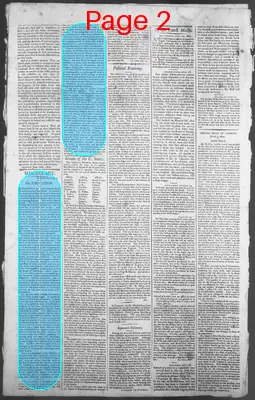
Literary
August 24, 1802
The New Hampshire Gazette
Portsmouth, Rockingham County, New Hampshire
What is this article about?
An essay arguing against idleness as a corrupting force that leads to vice, especially in youth, and advocating for industry as essential to moral and physical health. It critiques a passage in the Monitor that disparages manual labor and cites Roman and biblical examples to promote useful work.
Clipping
OCR Quality
98%
Excellent
Full Text
MISCELLANY.
From the BALANCE.
On EDUCATION.
Idleness is the rust of human nature and the nurse of bad habits. It enervates the mind and overspreads it, as it were with a leprous scurvy, even as water becomes putrid and will breed loathsome vermin, by continuing long stagnant. This was the bane of Sodom. The sacred penman remarked concerning that horridly polluted city, that "abundance of idleness was in her." And from that source there sprang those detestable abominations, which cried to heaven against her, and stamped her character with eternal infamy. As the air, in which we constantly breathe, becomes corrupt when it is long motionless. So the ethereal breath of life itself, which had been breathed into man from above, naturally corrupts in a state of indolence. When children are suffered to get the habit of idleness, a long catalogue of other evil habits will follow of course.
Solomon, the most wise observer of human nature, has remarked, that "sloth casteth into a deep sleep"-and also, that "The desire of the slothful killeth him." These remarks aptly express the invincible tendency of idleness both to produce a general imbecility of character and to generate destructive properties and habits. A certain kind of tedium or irksome disquietude is a never failing concomitant of idleness. The due poise of human life, with respect to comfort as well as usefulness, consists in a constant succession of labour and rest: and any one who never knew labour, never knew rest.*
Time itself oppresses an idle person, as with the weight of a millstone: and in order to kill time, he has recourse to the gambling table and to the various pernicious haunts of dissipation. Children and youth, who are nursed in the lap of idleness, are blighted in the bloom; for by an indolent sauntering disposition, which when once fixed becomes incurable, the mind is shorn of its strength and falls an easy prey to all kinds of evil temptations.
On the other hand, industry is the balsam of life to the human frame. It equally befriends our health and our morals: it equally braces the body and the mind. It is a powerful curb against licentious dispositions and practices, as well as an indispensable prerequisite to the forming of a character either respectable or useful. The importance of guarding the youth against idleness and of forming in them habits of industry, has been too little considered; and yet the experience of ages has proved, that idle and dissipated youths are commonly wrecks and even a nuisance to society, in the subsequent periods of their lives; while those who have been early accustomed to a regular course of industry have found this path, which at first seemed rough and irksome, gradually becoming more and more easy and delightful, and, for the most part, they have preserved through life a decent and useful character. Industry therefore ought to be encouraged by the patronage of public opinion, as well as by the pecuniary advantages which result from it.
There is a paragraph in the Monitor, (a valuable book that is generally read in the American Schools,) which should be expunged. It is an extract from the letters of the Earl of Chesterfield to his son, wherein his Lordship in condescending to give directions to his son on the subject of cutting his finger nails, remarks, "When the nails are cut down to the quick, it is a shrewd sign that the man is a mechanic, to whom long nails would be troublesome; and if they are longer than his fingers ends and encircled with a black gum, it fortells that he has been laboriously and meanly employed, &c." If this paragraph were to be implicitly considered as a lesson from a British nobleman to his son, to whose person and manners he was aiming to give the highest degree of European polish, it might pass without animadversion; but in its application to American Schools, it is highly reprehensible.
There are no fewer than nineteen or twenty among the children and youth accustomed to read the Monitor at schools, who are by no means exempted by the circumstances of their parents from the necessity of manual labour; and they should be taught to view industry as a virtue, both necessary and laudable: but when on the contrary, they are taught at school, that "labour is mean" many of them will be led thereby to conceive an unconquerable prejudice against those laborious, but most useful callings, to which Providence had destined them-and this absurd prejudice, which they imbibed as a part of their education may likely prove ruinous to themselves, as well as greatly injurious to the general interests of society.
It was not so that the prudent Romans educated their children. They honoured useful labour-Cincinnatus, their General, held the plough; and Augustus, their Emperor, wore garments, which were manufactured by his wife and daughter. And if we recur to the most sacred source of authority we there find idleness stigmatized and useful labour encouraged and applauded. The wise king of Israel, in his book of Proverbs, which was particularly designed for the instruction of youth, among various other incentives to industry, says, "Seest thou a man diligent in his business? He shall stand before kings; he shall not stand before mean men"-And in the description of a fine woman, at the close of that book, industry makes a considerable part of the panegyric. "She seeketh wool and flax, and worketh willingly with her hands. She riseth also while it is yet night, and giveth meat to her household and a portion to her maidens. She considereth a field, and buyeth it: with the fruit of her hands she planteth a vineyard. She layeth her hands to the spindle, and her hands hold the distaff. She maketh herself coverings of tapestry. She maketh fine linen and selleth it, and delivereth girdles unto the merchant."
SENEX.
* There is a labour of the mind as well as of the body: and some employ themselves very industriously and usefully to society, who never labour with their hands.
From the BALANCE.
On EDUCATION.
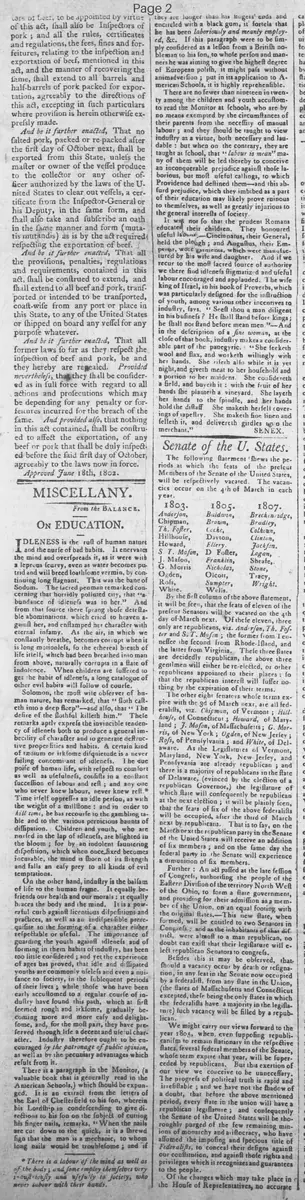
Idleness is the rust of human nature and the nurse of bad habits. It enervates the mind and overspreads it, as it were with a leprous scurvy, even as water becomes putrid and will breed loathsome vermin, by continuing long stagnant. This was the bane of Sodom. The sacred penman remarked concerning that horridly polluted city, that "abundance of idleness was in her." And from that source there sprang those detestable abominations, which cried to heaven against her, and stamped her character with eternal infamy. As the air, in which we constantly breathe, becomes corrupt when it is long motionless. So the ethereal breath of life itself, which had been breathed into man from above, naturally corrupts in a state of indolence. When children are suffered to get the habit of idleness, a long catalogue of other evil habits will follow of course.
Solomon, the most wise observer of human nature, has remarked, that "sloth casteth into a deep sleep"-and also, that "The desire of the slothful killeth him." These remarks aptly express the invincible tendency of idleness both to produce a general imbecility of character and to generate destructive properties and habits. A certain kind of tedium or irksome disquietude is a never failing concomitant of idleness. The due poise of human life, with respect to comfort as well as usefulness, consists in a constant succession of labour and rest: and any one who never knew labour, never knew rest.*
Time itself oppresses an idle person, as with the weight of a millstone: and in order to kill time, he has recourse to the gambling table and to the various pernicious haunts of dissipation. Children and youth, who are nursed in the lap of idleness, are blighted in the bloom; for by an indolent sauntering disposition, which when once fixed becomes incurable, the mind is shorn of its strength and falls an easy prey to all kinds of evil temptations.
On the other hand, industry is the balsam of life to the human frame. It equally befriends our health and our morals: it equally braces the body and the mind. It is a powerful curb against licentious dispositions and practices, as well as an indispensable prerequisite to the forming of a character either respectable or useful. The importance of guarding the youth against idleness and of forming in them habits of industry, has been too little considered; and yet the experience of ages has proved, that idle and dissipated youths are commonly wrecks and even a nuisance to society, in the subsequent periods of their lives; while those who have been early accustomed to a regular course of industry have found this path, which at first seemed rough and irksome, gradually becoming more and more easy and delightful, and, for the most part, they have preserved through life a decent and useful character. Industry therefore ought to be encouraged by the patronage of public opinion, as well as by the pecuniary advantages which result from it.
There is a paragraph in the Monitor, (a valuable book that is generally read in the American Schools,) which should be expunged. It is an extract from the letters of the Earl of Chesterfield to his son, wherein his Lordship in condescending to give directions to his son on the subject of cutting his finger nails, remarks, "When the nails are cut down to the quick, it is a shrewd sign that the man is a mechanic, to whom long nails would be troublesome; and if they are longer than his fingers ends and encircled with a black gum, it fortells that he has been laboriously and meanly employed, &c." If this paragraph were to be implicitly considered as a lesson from a British nobleman to his son, to whose person and manners he was aiming to give the highest degree of European polish, it might pass without animadversion; but in its application to American Schools, it is highly reprehensible.
There are no fewer than nineteen or twenty among the children and youth accustomed to read the Monitor at schools, who are by no means exempted by the circumstances of their parents from the necessity of manual labour; and they should be taught to view industry as a virtue, both necessary and laudable: but when on the contrary, they are taught at school, that "labour is mean" many of them will be led thereby to conceive an unconquerable prejudice against those laborious, but most useful callings, to which Providence had destined them-and this absurd prejudice, which they imbibed as a part of their education may likely prove ruinous to themselves, as well as greatly injurious to the general interests of society.
It was not so that the prudent Romans educated their children. They honoured useful labour-Cincinnatus, their General, held the plough; and Augustus, their Emperor, wore garments, which were manufactured by his wife and daughter. And if we recur to the most sacred source of authority we there find idleness stigmatized and useful labour encouraged and applauded. The wise king of Israel, in his book of Proverbs, which was particularly designed for the instruction of youth, among various other incentives to industry, says, "Seest thou a man diligent in his business? He shall stand before kings; he shall not stand before mean men"-And in the description of a fine woman, at the close of that book, industry makes a considerable part of the panegyric. "She seeketh wool and flax, and worketh willingly with her hands. She riseth also while it is yet night, and giveth meat to her household and a portion to her maidens. She considereth a field, and buyeth it: with the fruit of her hands she planteth a vineyard. She layeth her hands to the spindle, and her hands hold the distaff. She maketh herself coverings of tapestry. She maketh fine linen and selleth it, and delivereth girdles unto the merchant."
SENEX.
* There is a labour of the mind as well as of the body: and some employ themselves very industriously and usefully to society, who never labour with their hands.
What sub-type of article is it?
Essay
What themes does it cover?
Moral Virtue
Temperance
What keywords are associated?
Idleness
Industry
Education
Youth
Moral Habits
Manual Labor
Proverbs
What entities or persons were involved?
Senex.
Literary Details
Title
On Education.
Author
Senex.
Key Lines
Idleness Is The Rust Of Human Nature And The Nurse Of Bad Habits.
The Due Poise Of Human Life, With Respect To Comfort As Well As Usefulness, Consists In A Constant Succession Of Labour And Rest: And Any One Who Never Knew Labour, Never Knew Rest.
"When The Nails Are Cut Down To The Quick, It Is A Shrewd Sign That The Man Is A Mechanic, To Whom Long Nails Would Be Troublesome; And If They Are Longer Than His Fingers Ends And Encircled With A Black Gum, It Fortells That He Has Been Laboriously And Meanly Employed, &C."
"Seest Thou A Man Diligent In His Business? He Shall Stand Before Kings; He Shall Not Stand Before Mean Men"
"She Seeketh Wool And Flax, And Worketh Willingly With Her Hands. She Riseth Also While It Is Yet Night, And Giveth Meat To Her Household And A Portion To Her Maidens. She Considereth A Field, And Buyeth It: With The Fruit Of Her Hands She Planteth A Vineyard. She Layeth Her Hands To The Spindle, And Her Hands Hold The Distaff. She Maketh Herself Coverings Of Tapestry. She Maketh Fine Linen And Selleth It, And Delivereth Girdles Unto The Merchant."