Thank you for visiting SNEWPapers!
Sign up free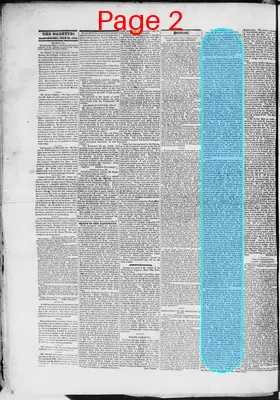
Editorial
June 26, 1834
Martinsburg Gazette
Martinsburg, Berkeley County, West Virginia
What is this article about?
An editorial from the Richmond Whig criticizes Supreme Court Justices John McLean and Philip Barbour for pursuing political offices like the presidency and U.S. Senate while serving as judges, portraying McLean as mediocre and ambitious, and Barbour as egotistical and fickle in his political alignments, urging them to resign.
Clipping

OCR Quality
95%
Excellent
Full Text
From the Richmond Whig
JUDGES McLEAN AND BARBOUR.
Judges McLean and Barbour, are both, now figuring in the newspapers, the first as Candidate for the Presidency, the other, for a seat in the Senate of the United States and probably has hopes of attaining the Presidency. Is it becoming for Judges to descend into the Political Arena or can they, at one and the same time be what they ought to be, as Judges, and candidates for the people's votes?
I have seen both of these gentlemen—I say I have seen them; I do not mean that I know much of them personally—but from what I did see of them personally, and what I have seen of them in the newspapers, I think I ken them.—McLean in capacity, is a mediocre, and barely that.—He is timid and loves to be popular, and will do much to be popular—whilst he was Post master General, he electioneered with every body who came in his way, and I make no doubt he does the same thing now. He seemed to have good intentions, and was industrious in his habits and I believe made a good Postmaster which was as high as he ever ought to trust himself. or his friends wish to place him. His late letter on the subject of his being a candidate for the Presidency, shows that his ambition is great—and this is a darling object with him—and at the same time, shows like all men of his cast of intellect, what great consequences he attaches to small matters. The quibbling distinction between being a candidate, and being willing to serve, if elected, is a question of the right size for him—and, except Mr. Nash, who is yet without a rival, he bears off the palm of this quibbling jesuitry, from all competitors. I am sure McLean's heart is against these things; and if he could "see himself as others see him," he would no longer play the ridiculous. before this great nation.
Of Mr. Barbour; upon the whole, I do not think as well as of Mr. McLean. He has more capacity, perhaps I should say, more acuteness. Indeed his acuteness is considerable, but his horizon a small one; he can see a good way, and very clearly. right before him; but his optics are not sufficient to take in the whole landscape; a single point he can manage with much adroitness; but a subject, requiring the combination of many principles, is not the one which Mr. B. should select, to exalt his fame.
And with all, he is beset by a vanity as ridiculous as it is childish; he talks a good deal—nay, constantly; and it is all about himself, his children, his plantation, his house, his negroes and his speeches.—Happy man, to have so much to delight him, and all his own—like my uncle Toby, let the conversation be what it may, Mr. B's. mind, and tongue too, run on one subject, or on subjects of the same family—all is self—I, mine. Do you try to divert him from these favorite haunts, by bringing up politics, or literature, or law, Mr. B. will take a turn or two with you, but in a short time will give you the slip, and get back again into his favorite company of I, mine, and self, again. You cannot coax him from, or choak him off his egotism. Certainly, as Mr. Barbour's thoughts run so exclusively on his own affairs. it must be a great cross to him to be taken from them, and compelled to look after the affairs of the nation. In political life Mr. B, has been fortunate—except the late Mr. Randolph, (whose name was so far above all others, no one considered him a rival,) there was no one from Virginia, equal to him; and as Mr. R. disdained all the little artifices, and distinctions of political or private life. all these things with their advantages, fell to the share of Mr. Barbour; he was the head of the Virginia delegation, for a long time, and flattered, and treated as political leader of the Old Dominion; he, too claimed to be orthodox. of the real '98 school, and the champion of strict construction of the Constitution. This is the capital on which all the Virginia politicians have traded, and successfully traded. for. the last 25 years. States Rights ought to be dear to many of them, for they have been their true and redeeming friend, in all dangers and tribulations: and to none, more so, than to Mr. B. He was a long time in public life, and in his own neighborhood, was the darling. and throughout the State, was looked on, if not as the first, amongst the first men in the State. In other States too, standing so long at the head of the Virginia delegation. he was considered the most prominent political man amongst us. Time rolled on. Mr. B. had gathered laurels enough, and was made a Federal Judge, in his native State—an office he much desired—and, as all supposed, had bid adieu to politics. This notion was more confirmed, by the fact stated by his friends, that his lungs had given away, and it was dangerous for him to engage in debate.
Upon several occasions after his retirement, notwithstanding the weakness and disease of his lungs, and his laurels, did Mr. B. show signs of a wish to return to political life—to the scenes of his glory. A Senator was to be elected by the Assembly—letters passed and repassed—Mr. B. cogitated awhile. and refused to be run. Again, a Vice President was to be elected with General Jackson, and Mr. Van Buren was taken up by the whole—hog Jackson men of Virginia. Mr. B. again became restive; he could not stand coaxing; he was brought out; and just about the same time his friends got together to organize a ticket for him, at Charlottesville. did he—tell it not in Gath—desert them. Again, last winter, upon the resignation of Mr. Rives. a new Senator was to be elected: Mr. Leigh was immediately taken up by the States Rights party, and his claims pressed with a zeal and fidelity alike becoming Mr. Leigh and his friends. The administration party, being mostly apostate States Rights men, looked around them for a candidate to run Leigh down with. They were at fault—they could get no one, fighting under their flag, who stood the least chance. Rough, at a venture, as they said, these same apostate States Rights men took up Mr. B., who, all his life, had been a true disciple of the States Rights School—yes took up Mr. B. without consulting him, as they say, who had retired from politics—whose lungs were too weak to be trusted in debate—to run down Mr. Leigh who was the State Rights candidate of the State Rights party. The result is known L. was elected, and has shown that B. was not the first man in Virginia—that in point of capacity and every other quality, he is as far above Mr. B. as Mr. B. is above the ordinary grovelling order of political ambition. There lies the rub. The people of Virginia too, had the imprudence to take a fancy to make Mr. Leigh President of the U S. without consulting Mr. B. and straightway, Mr. B. allows his friends to hold him up to Virginia as President—although he had retired from politics—was a Judge, and had weak, diseased lungs.
Next winter another Senator is to be elected, and the friends of the Administration had set their hearts on the re election of Mr. Rives over Mr. Leigh; but the result of the spring elections has flung every hope of that kind. The Van Buren party mean to oust Leigh, if possible; Mr. B. in this dilemma, as has frequently been the case before, cannot stand coaxing; he is held up and he and his friends are now electioneering for the office of Senator—and it now appears, that the hazzard run he made last winter against Mr. Leigh, by the Anti State Rights party, was not such a blind unauthorized affair as it was pretended to have been—it is now ascertained that Mr B. though he condemned the Proclamation and Force Bill, concurred with the President on the Deposite Question— Yes, Mr. B. will run for the Senate, though he had retired from politics and his lungs are so weak and diseased as to be dangerous to himself in debate; at least, this is at present talk & hope of the Van Buren Jackson party.
As Mr. B. has been so fickle in these matters, ever since he was made a Judge, as old Hardy says in the play, I think I "foresee" that Mr. B. will coquette with them until he sees how the land lies—and then desert them. And it is marvellous that these people, who have such a horror of the U. S. Bank—that monster of iniquity—should have at this time, such a protection of Mr. B. If my memory does not fail me, Mr. B. was a member of the same Congress that hatched this monster—and if he had hated it half as bad as his present friends pretend to do, instead of not voting at all, he would have put all his powers to strangle the monster in its infantine weakness. But he had scruples about its constitutionality—he did not think that Congress had power to charter a Bank—and, therefore he would not vote at all. Good logic this. Poor Leigh has gone pell mell against the Bank, and these same people, who wish to run Mr. B., think him much more friendly to the Bank than Mr. B. It is said love is blind—and verily they seem to be so, in the election of Mr. B. Mr. B's. position is an unenviable one, in several points of view. He is an electioneering judge, of which few characters can be more contemptible. He is understood to have denounced Gen. Jackson for his proclamation and Force Bill—and though those sins still abide with the old Hero, he is understood to have come back into the Jackson ranks upon the Deposite question—or, I take it for granted, if he had not been graciously received into full communion, the Kitchen gentry would never talk of him as their candidate. Mr. B. too, has been a States Rights man—his position is a strange one,—opposed to the States Right candidate, and doing all in his power to destroy the party, when it is literally on its trial—struggling for its very existence. His own State is looked to. by the other Southern States to offer a candidate for the next Presidency; the people have brought forward Leigh. Mr. B. considers this a slight on his pretensions, and is either doing himself or suffering others to do, in his name every thing possible to defeat Mr. Leigh's pretensions, and the people's wishes. What a judge! and what a politician!! These judges, if they persist in their pretensions should resign. Yes, they should immediately resign. And as to Mr. B. who does resign, he should run up his colors and if they do not resign, I hope the people will show them with what contempt they can treat such aspirants—and I trust State Rights Virginians will remember the obligations they are under to Mr. Barbour.
JUDGES McLEAN AND BARBOUR.
Judges McLean and Barbour, are both, now figuring in the newspapers, the first as Candidate for the Presidency, the other, for a seat in the Senate of the United States and probably has hopes of attaining the Presidency. Is it becoming for Judges to descend into the Political Arena or can they, at one and the same time be what they ought to be, as Judges, and candidates for the people's votes?
I have seen both of these gentlemen—I say I have seen them; I do not mean that I know much of them personally—but from what I did see of them personally, and what I have seen of them in the newspapers, I think I ken them.—McLean in capacity, is a mediocre, and barely that.—He is timid and loves to be popular, and will do much to be popular—whilst he was Post master General, he electioneered with every body who came in his way, and I make no doubt he does the same thing now. He seemed to have good intentions, and was industrious in his habits and I believe made a good Postmaster which was as high as he ever ought to trust himself. or his friends wish to place him. His late letter on the subject of his being a candidate for the Presidency, shows that his ambition is great—and this is a darling object with him—and at the same time, shows like all men of his cast of intellect, what great consequences he attaches to small matters. The quibbling distinction between being a candidate, and being willing to serve, if elected, is a question of the right size for him—and, except Mr. Nash, who is yet without a rival, he bears off the palm of this quibbling jesuitry, from all competitors. I am sure McLean's heart is against these things; and if he could "see himself as others see him," he would no longer play the ridiculous. before this great nation.
Of Mr. Barbour; upon the whole, I do not think as well as of Mr. McLean. He has more capacity, perhaps I should say, more acuteness. Indeed his acuteness is considerable, but his horizon a small one; he can see a good way, and very clearly. right before him; but his optics are not sufficient to take in the whole landscape; a single point he can manage with much adroitness; but a subject, requiring the combination of many principles, is not the one which Mr. B. should select, to exalt his fame.
And with all, he is beset by a vanity as ridiculous as it is childish; he talks a good deal—nay, constantly; and it is all about himself, his children, his plantation, his house, his negroes and his speeches.—Happy man, to have so much to delight him, and all his own—like my uncle Toby, let the conversation be what it may, Mr. B's. mind, and tongue too, run on one subject, or on subjects of the same family—all is self—I, mine. Do you try to divert him from these favorite haunts, by bringing up politics, or literature, or law, Mr. B. will take a turn or two with you, but in a short time will give you the slip, and get back again into his favorite company of I, mine, and self, again. You cannot coax him from, or choak him off his egotism. Certainly, as Mr. Barbour's thoughts run so exclusively on his own affairs. it must be a great cross to him to be taken from them, and compelled to look after the affairs of the nation. In political life Mr. B, has been fortunate—except the late Mr. Randolph, (whose name was so far above all others, no one considered him a rival,) there was no one from Virginia, equal to him; and as Mr. R. disdained all the little artifices, and distinctions of political or private life. all these things with their advantages, fell to the share of Mr. Barbour; he was the head of the Virginia delegation, for a long time, and flattered, and treated as political leader of the Old Dominion; he, too claimed to be orthodox. of the real '98 school, and the champion of strict construction of the Constitution. This is the capital on which all the Virginia politicians have traded, and successfully traded. for. the last 25 years. States Rights ought to be dear to many of them, for they have been their true and redeeming friend, in all dangers and tribulations: and to none, more so, than to Mr. B. He was a long time in public life, and in his own neighborhood, was the darling. and throughout the State, was looked on, if not as the first, amongst the first men in the State. In other States too, standing so long at the head of the Virginia delegation. he was considered the most prominent political man amongst us. Time rolled on. Mr. B. had gathered laurels enough, and was made a Federal Judge, in his native State—an office he much desired—and, as all supposed, had bid adieu to politics. This notion was more confirmed, by the fact stated by his friends, that his lungs had given away, and it was dangerous for him to engage in debate.
Upon several occasions after his retirement, notwithstanding the weakness and disease of his lungs, and his laurels, did Mr. B. show signs of a wish to return to political life—to the scenes of his glory. A Senator was to be elected by the Assembly—letters passed and repassed—Mr. B. cogitated awhile. and refused to be run. Again, a Vice President was to be elected with General Jackson, and Mr. Van Buren was taken up by the whole—hog Jackson men of Virginia. Mr. B. again became restive; he could not stand coaxing; he was brought out; and just about the same time his friends got together to organize a ticket for him, at Charlottesville. did he—tell it not in Gath—desert them. Again, last winter, upon the resignation of Mr. Rives. a new Senator was to be elected: Mr. Leigh was immediately taken up by the States Rights party, and his claims pressed with a zeal and fidelity alike becoming Mr. Leigh and his friends. The administration party, being mostly apostate States Rights men, looked around them for a candidate to run Leigh down with. They were at fault—they could get no one, fighting under their flag, who stood the least chance. Rough, at a venture, as they said, these same apostate States Rights men took up Mr. B., who, all his life, had been a true disciple of the States Rights School—yes took up Mr. B. without consulting him, as they say, who had retired from politics—whose lungs were too weak to be trusted in debate—to run down Mr. Leigh who was the State Rights candidate of the State Rights party. The result is known L. was elected, and has shown that B. was not the first man in Virginia—that in point of capacity and every other quality, he is as far above Mr. B. as Mr. B. is above the ordinary grovelling order of political ambition. There lies the rub. The people of Virginia too, had the imprudence to take a fancy to make Mr. Leigh President of the U S. without consulting Mr. B. and straightway, Mr. B. allows his friends to hold him up to Virginia as President—although he had retired from politics—was a Judge, and had weak, diseased lungs.
Next winter another Senator is to be elected, and the friends of the Administration had set their hearts on the re election of Mr. Rives over Mr. Leigh; but the result of the spring elections has flung every hope of that kind. The Van Buren party mean to oust Leigh, if possible; Mr. B. in this dilemma, as has frequently been the case before, cannot stand coaxing; he is held up and he and his friends are now electioneering for the office of Senator—and it now appears, that the hazzard run he made last winter against Mr. Leigh, by the Anti State Rights party, was not such a blind unauthorized affair as it was pretended to have been—it is now ascertained that Mr B. though he condemned the Proclamation and Force Bill, concurred with the President on the Deposite Question— Yes, Mr. B. will run for the Senate, though he had retired from politics and his lungs are so weak and diseased as to be dangerous to himself in debate; at least, this is at present talk & hope of the Van Buren Jackson party.
As Mr. B. has been so fickle in these matters, ever since he was made a Judge, as old Hardy says in the play, I think I "foresee" that Mr. B. will coquette with them until he sees how the land lies—and then desert them. And it is marvellous that these people, who have such a horror of the U. S. Bank—that monster of iniquity—should have at this time, such a protection of Mr. B. If my memory does not fail me, Mr. B. was a member of the same Congress that hatched this monster—and if he had hated it half as bad as his present friends pretend to do, instead of not voting at all, he would have put all his powers to strangle the monster in its infantine weakness. But he had scruples about its constitutionality—he did not think that Congress had power to charter a Bank—and, therefore he would not vote at all. Good logic this. Poor Leigh has gone pell mell against the Bank, and these same people, who wish to run Mr. B., think him much more friendly to the Bank than Mr. B. It is said love is blind—and verily they seem to be so, in the election of Mr. B. Mr. B's. position is an unenviable one, in several points of view. He is an electioneering judge, of which few characters can be more contemptible. He is understood to have denounced Gen. Jackson for his proclamation and Force Bill—and though those sins still abide with the old Hero, he is understood to have come back into the Jackson ranks upon the Deposite question—or, I take it for granted, if he had not been graciously received into full communion, the Kitchen gentry would never talk of him as their candidate. Mr. B. too, has been a States Rights man—his position is a strange one,—opposed to the States Right candidate, and doing all in his power to destroy the party, when it is literally on its trial—struggling for its very existence. His own State is looked to. by the other Southern States to offer a candidate for the next Presidency; the people have brought forward Leigh. Mr. B. considers this a slight on his pretensions, and is either doing himself or suffering others to do, in his name every thing possible to defeat Mr. Leigh's pretensions, and the people's wishes. What a judge! and what a politician!! These judges, if they persist in their pretensions should resign. Yes, they should immediately resign. And as to Mr. B. who does resign, he should run up his colors and if they do not resign, I hope the people will show them with what contempt they can treat such aspirants—and I trust State Rights Virginians will remember the obligations they are under to Mr. Barbour.
What sub-type of article is it?
Partisan Politics
Constitutional
Legal Reform
What keywords are associated?
Judges Politics
Mclean Candidacy
Barbour Senate
States Rights
Virginia Politics
Judicial Ethics
Political Ambition
What entities or persons were involved?
Judge Mclean
Judge Barbour
Mr. Leigh
Gen. Jackson
Mr. Van Buren
Mr. Rives
Mr. Randolph
Editorial Details
Primary Topic
Criticism Of Judges Mclean And Barbour Entering Politics
Stance / Tone
Strongly Critical And Satirical Of Judicial Political Ambitions
Key Figures
Judge Mclean
Judge Barbour
Mr. Leigh
Gen. Jackson
Mr. Van Buren
Mr. Rives
Mr. Randolph
Key Arguments
Judges Should Not Descend Into Politics While Serving On The Bench
Mclean Is Mediocre, Timid, And Overly Ambitious For Popularity
Barbour Is Egotistical, Fickle, And Limited In Intellectual Scope
Barbour's Repeated Flirtations With Political Office Despite Retirement And Health Issues
Barbour's Inconsistency On Key Issues Like The Bank And States' Rights
Judges Pursuing Office Should Resign To Avoid Contemptible Electioneering
Support For States' Rights Candidate Leigh Over Barbour