Thank you for visiting SNEWPapers!
Sign up free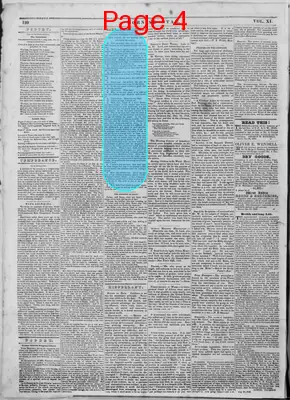
Literary
November 23, 1836
Morning Star
Limerick, York County, Maine
What is this article about?
A dialogue between two farmers debating the merits of continuing Sabbath school during winter. Farmer B raises objections—cold weather, storms, and travel difficulties—but Farmer A counters that these conditions make schooling more beneficial, encouraging indoor reading and building resilience in children.
Clipping
OCR Quality
95%
Excellent
Full Text
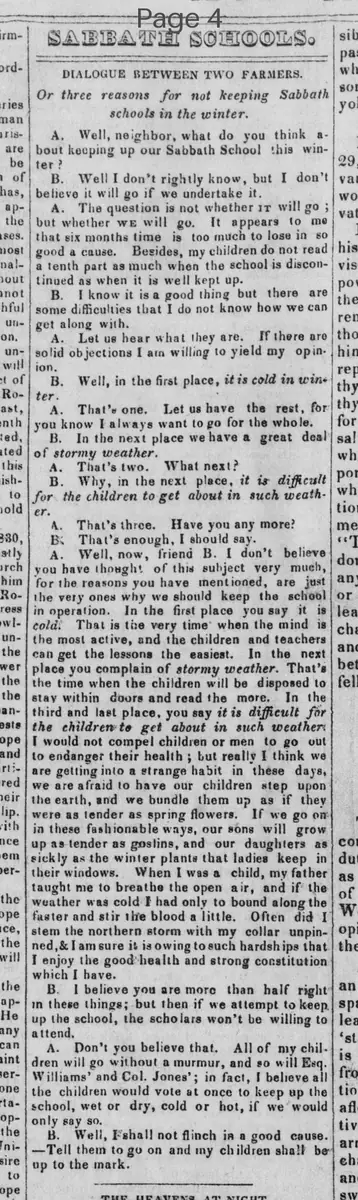
SABBATH SCHOOLS.
DIALOGUE BETWEEN TWO FARMERS.
Or three reasons for not keeping Sabbath schools in the winter.
A. Well, neighbor, what do you think about keeping up our Sabbath School this winter?
B. Well I don't rightly know, but I don't believe it will go if we undertake it.
A. The question is not whether IT will go; but whether we will go. It appears to me that six months time is too much to lose in so good a cause. Besides, my children do not read a tenth part as much when the school is discontinued as when it is well kept up.
B. I know it is a good thing but there are some difficulties that I do not know how we can get along with,
A. Let us hear what they are. If there are solid objections I am willing to yield my opinion.
B.
Well, in the first place, it is cold in winter.
A. That's one. Let us have the rest, for you know I always want to go for the whole.
B. In the next place we have a great deal of stormy weather.
A. That's two. What next?
B. Why, in the next place, it is difficult for the children to get about in such weather.
A. That's three. Have you any more?
B That's enough, I should say.
A. Well, now, friend B. I don't believe you have thought of this subject very much, for the reasons you have mentioned, are just the very ones why we should keep the school in operation. In the first place you say it is cold That is the very time when the mind is the most active, and the children and teachers can get the lessons the easiest. In the next place you complain of stormy weather. That's the time when the children will be disposed to stay within doors and read the more. In the third and last place, you say it is difficult for the children to get about in such weather I would not compel children or men to go out to endanger their health; but really I think we are getting into a strange habit in these days, we are afraid to have our children step upon the earth, and we bundle them up as if they were as tender as spring flowers. If we go on in these fashionable ways, our sons will grow up as tender as goslings, and our daughters as sickly as the winter plants that ladies keep in their windows. When I was a child, my father taught me to breathe the open air, and if the weather was cold I had only to bound along the faster and stir the blood a little. Often did I stem the northern storm with my collar unpinned,& I am sure it is owing to such hardships that I enjoy the good health and strong constitution which I have.
B. I believe you are more than half right in these things; but then if we attempt to keep up the school, the scholars won't be willing to attend.
A. Don't you believe that. All of my children will go without a murmur, and so will Esq. Williams' and Col. Jones'; in fact. I believe all the children would vote at once to keep up the school, wet or dry, cold or hot, if we would only say so.
B. Well, I shall not flinch in a good cause. -Tell them to go on and my children shall be up to the mark.
DIALOGUE BETWEEN TWO FARMERS.
Or three reasons for not keeping Sabbath schools in the winter.
A. Well, neighbor, what do you think about keeping up our Sabbath School this winter?
B. Well I don't rightly know, but I don't believe it will go if we undertake it.
A. The question is not whether IT will go; but whether we will go. It appears to me that six months time is too much to lose in so good a cause. Besides, my children do not read a tenth part as much when the school is discontinued as when it is well kept up.
B. I know it is a good thing but there are some difficulties that I do not know how we can get along with,
A. Let us hear what they are. If there are solid objections I am willing to yield my opinion.
B.
Well, in the first place, it is cold in winter.
A. That's one. Let us have the rest, for you know I always want to go for the whole.
B. In the next place we have a great deal of stormy weather.
A. That's two. What next?
B. Why, in the next place, it is difficult for the children to get about in such weather.
A. That's three. Have you any more?
B That's enough, I should say.
A. Well, now, friend B. I don't believe you have thought of this subject very much, for the reasons you have mentioned, are just the very ones why we should keep the school in operation. In the first place you say it is cold That is the very time when the mind is the most active, and the children and teachers can get the lessons the easiest. In the next place you complain of stormy weather. That's the time when the children will be disposed to stay within doors and read the more. In the third and last place, you say it is difficult for the children to get about in such weather I would not compel children or men to go out to endanger their health; but really I think we are getting into a strange habit in these days, we are afraid to have our children step upon the earth, and we bundle them up as if they were as tender as spring flowers. If we go on in these fashionable ways, our sons will grow up as tender as goslings, and our daughters as sickly as the winter plants that ladies keep in their windows. When I was a child, my father taught me to breathe the open air, and if the weather was cold I had only to bound along the faster and stir the blood a little. Often did I stem the northern storm with my collar unpinned,& I am sure it is owing to such hardships that I enjoy the good health and strong constitution which I have.
B. I believe you are more than half right in these things; but then if we attempt to keep up the school, the scholars won't be willing to attend.
A. Don't you believe that. All of my children will go without a murmur, and so will Esq. Williams' and Col. Jones'; in fact. I believe all the children would vote at once to keep up the school, wet or dry, cold or hot, if we would only say so.
B. Well, I shall not flinch in a good cause. -Tell them to go on and my children shall be up to the mark.
What sub-type of article is it?
Dialogue
What themes does it cover?
Religious
Moral Virtue
What keywords are associated?
Sabbath Schools
Winter Debate
Farmers Dialogue
Moral Persuasion
Child Education
Religious Instruction
Literary Details
Title
Dialogue Between Two Farmers. Or Three Reasons For Not Keeping Sabbath Schools In The Winter.
Subject
Debate On Maintaining Sabbath Schools During Winter
Key Lines
Well, In The First Place, It Is Cold In Winter.
That's The Very Time When The Mind Is The Most Active, And The Children And Teachers Can Get The Lessons The Easiest.
If We Go On In These Fashionable Ways, Our Sons Will Grow Up As Tender As Goslings, And Our Daughters As Sickly As The Winter Plants That Ladies Keep In Their Windows.
All Of My Children Will Go Without A Murmur, And So Will Esq. Williams' And Col. Jones';
Well, I Shall Not Flinch In A Good Cause. Tell Them To Go On And My Children Shall Be Up To The Mark.