Thank you for visiting SNEWPapers!
Sign up free
Literary
June 21, 1832
Litchfield Enquirer
Litchfield, Litchfield County, Connecticut
What is this article about?
Excerpt from a chapter on flowers by the author of 'Rank and Talent,' published in the Amulet, portraying flowers as symbols of God's paternal love and benevolence, instructing humanity in beauty, grace, and moral elevation beyond materialism.
Clipping
OCR Quality
95%
Excellent
Full Text
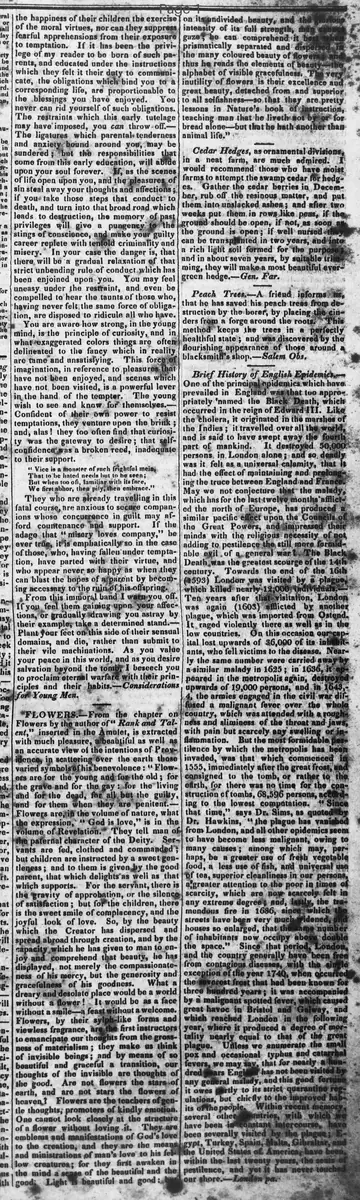
FLOWERS From the chapter on Flowers by the author of "Rank and Talent," inserted in the Amulet, is extracted with much pleasure, a beautiful as well as an accurate view of the intentions of Providence, in scattering over the earth those varied symbols of his benevolence: "Flowers are for the young and for the old; for the grave and for the gay: for the living and for the dead, for all but the guilty, and for them when they are penitent.—Flowers are in the volume of nature, what the expression, "God is love," is in the volume of Revelation.—They tell man of the paternal character of the Deity. Servants are fed, clothed and commanded; but children are instructed by a sweet gentleness; and to them is given by the good parent, that which delights as well as that which supports. For the servant, there is the gravity of approbation, or the silence of satisfaction; but for the children, there is the sweet smile of complacency, and the joyful look of love. So, by the beauty which the Creator has dispersed and spread abroad through creation, and by the capacity which he has given to man to enjoy and comprehend that beauty, he has displayed, not merely the compassionateness of his mercy, but the generosity and gracefulness of his goodness. What a dreary and desolate place would be a world without a flower! It would be as a face without a smile -a feast without a welcome. Flowers, by their sylph-like forms and viewless fragrance, are the first instructors to emancipate our thoughts from the grossness of materialism; they make us think of invisible beings; and by means of so beautiful and graceful a transition, our thoughts of the invisible are thoughts of the good. Are not flowers the stars of earth, and are not stars the flowers of heaven? Flowers are the teachers of gentle thoughts, promoters of kindly emotion. One cannot look closely at the structure of a flower without loving it. They are emblems and manifestations of God's love to the creation, and they are the means and ministrations of man's love to his fellow creatures; for they first awaken in the mind a sense of the beautiful and the good: Light is beautiful and good: but on its undivided beauty, and the glorious intensity of its full strength man can gaze; he can comprehend it best prismatically separated and dispersed the many coloured beauty of flowers thus he reads the elements of beauty the alphabet of visible gracefulness, The very inutility of flowers, is their excellence and great beauty, detached from and superior to all selfishness--so that they are pretty lessons in Nature's, book of instruction, teaching man that he liveth not by or for bread alone-but that he hath another than animal life."
What sub-type of article is it?
Essay
What themes does it cover?
Religious
Nature
Moral Virtue
What keywords are associated?
Flowers
Providence
Divine Love
Nature Beauty
Moral Lessons
Gentle Thoughts
What entities or persons were involved?
The Author Of "Rank And Talent"
Literary Details
Title
Flowers
Author
The Author Of "Rank And Talent"
Subject
Intentions Of Providence In Scattering Flowers As Symbols Of Benevolence
Key Lines
Flowers Are For The Young And For The Old; For The Grave And For The Gay: For The Living And For The Dead, For All But The Guilty, And For Them When They Are Penitent.
Flowers Are In The Volume Of Nature, What The Expression, "God Is Love," Is In The Volume Of Revelation.
What A Dreary And Desolate Place Would Be A World Without A Flower! It Would Be As A Face Without A Smile A Feast Without A Welcome.
Are Not Flowers The Stars Of Earth, And Are Not Stars The Flowers Of Heaven?
The Very Inutility Of Flowers, Is Their Excellence And Great Beauty, Detached From And Superior To All Selfishness So That They Are Pretty Lessons In Nature's, Book Of Instruction, Teaching Man That He Liveth Not By Or For Bread Alone But That He Hath Another Than Animal Life.