Thank you for visiting SNEWPapers!
Sign up free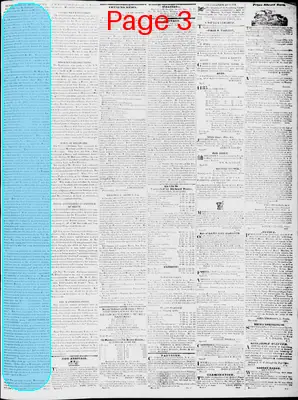
Editorial
April 18, 1836
Lynchburg Virginian
Lynchburg, Virginia
What is this article about?
Editorial denounces Van Buren congressional majority for rejecting Mr. Robertson's resolutions to probe retrenchments in federal departments, public money accountability, bank roles, and potential abuses, accusing them of hiding corruption despite prior promises of economy.
Clipping

OCR Quality
95%
Excellent
Full Text
RETRENCHMENT—PUBLIC MONEY.
On the 8th inst. Mr. Robertson, the able representative from the Richmond District, offered a series of resolutions, proposing the appointment of select committees, to enquire and report to the H. of R. what retrenchments, if any, can be made in the expenses of Congress; in the Treasury, Navy and War Departments; in the Department of Indian Affairs and in the General Land Office. Likewise, whether there is an effective system of accountability in the collection and disbursement of the public money; whether banks are necessary for the fiscal operations of the government; whether the intercourse of the Treasury department with the deposite banks is conducted through the instrumentality of an intermediate agent; if so, what agent receives compensation for his services, and by whom it is paid, &c. &c. Also, to enquire into the expediency of revising the laws relating to the franking privilege, and the practical administration and operations of the government; or any abuses, alleged and believed to exist in the government.
Like the resolutions offered by Mr. Wise, however, proposing an enquiry into the safety of the public money, &c. the Van Buren majority in the House refused to consider them. Why? Let the people judge for themselves. It is high time, surely, when the public expenditures have increased to an extent, which, in former times, would have startled the community, and when the moneys drawn from the pockets of the tax-payers are scattered hither and thither, in local Banks, the condition of which, whether solvent or insolvent, is unknown to the public, that some measures should be adopted, by the immediate representatives of the people, who are the natural guardians of the national purse, to prevent all augmentation of the one and to secure the safety of the other. But, instead of performing these duties faithfully and fearlessly, they resist every proposition, even for inquiry, having reference, however remotely or immediately, to this object. We perceive an annual augmentation of some millions in the national expenditures; but they refuse to enquire whether these expenditures may not be diminished without detriment to the public interests! They are told that suspicions of foul abuses are afloat in the management of the Land Office and the Indian Bureau; and they refuse to submit the affairs of those important offices to the inspection of an impartial committee! They are told that the public money is deposited in institutions whose ability to comply with their engagements and to pay up this money when it may be called for, is at least questionable; and yet they rudely shut the door in the face of those, who, believing that these apprehensions are not altogether groundless, ask for a committee to ascertain the facts of the case! They are told that the intercourse of the Treasury department with the deposite Banks is carried on through the instrumentality of an intermediate agent, who, although unknown to the laws, keeps his office in the Treasury Building; and that this agent, without any other visible means of support, is living in affluence and splendor; and yet they refuse to satisfy the public mind, by a simple enquiry into the facts, that there is no corruption or illegal collusion, in this unprecedented state of things! Why are they thus cautious? If there be no danger that these proposed enquiries might elicit facts which would fall like a thunderbolt upon the public ear, why are they resisted by "the party" with such perfect unanimity and such unyielding firmness? If the suspicions and apprehensions which are felt and expressed be unfounded—if, in these important public interests, there be no abuses—if investigation would result in vindicating the parties suspected, and allaying the evil surmises and conjectures which fill the public journals and find ready sponsors on the floor of Congress—why, we ask, why, in the name of common sense and common honesty, do the Van Buren majority refuse to permit enquiry into the facts? We cannot but believe that there is something grossly wrong, and that it is known to be so, by the majority who thus resist investigation and scrutiny.
It strikes us as peculiarly objectionable, too, in the friends of the present administration to refuse to examine into the expediency of retrenching the public expenditures, since, as is well known, it was borne into power on a tide of popular phrenzy, lashed into fury by unfounded complaints of the unnecessary extravagance and prodigality of its predecessor—complaints so loud and so unceasingly reiterated, that they led to the appointment of a committee of retrenchment in the House of Representatives, of which William C. Rives, now our Senator, was a distinguished member,—whose celebrated Report, recommending a variety of changes in the administration of the government, such as the reduction of salaries, the diminution of the number of clerks in the departments, &c. tended to confirm the justice of those complaints, and constituted one of the most powerful weapons of assault upon the Adams administration. Everywhere, columns were paraded, shewing that the expenditures of government "had increased, were increasing, and ought to be diminished." Was it not reasonable, then, to expect, that this administration, using such arguments as these to overthrow its predecessor, and coming into office with the words "RETRENCHMENT and ECONOMY" inscribed on its banners, would redeem its pledge—or that, if circumstances required an unusually large expenditure of the public money, they would be prepared to justify its violation, by demonstrating the necessity therefor? Could it have been expected, when it is shown to have forgotten or disregarded its pledge to economize and retrench, and when its opponents call for an enquiry into the practicability of redeeming its solemn promises, that its supporters should, with one voice, stifle investigation? And yet such is the fact—and it furnishes just ground for the belief, may for the conviction, that "there is something rotten in Denmark." Innocence never shuns the light; but they whose deeds are evil love darkness and obscurity. If the offices at Washington could be subjected to the probe of honest and fearless enquiry, acts of gross corruption would, we verily believe, be exposed, the rank rottenness of which would "smell to Heaven."
The selections from the Washington correspondence of the Baltimore Patriot, which we insert this morning, are deeply interesting—particularly that portion of it which sketches the outlines
On the 8th inst. Mr. Robertson, the able representative from the Richmond District, offered a series of resolutions, proposing the appointment of select committees, to enquire and report to the H. of R. what retrenchments, if any, can be made in the expenses of Congress; in the Treasury, Navy and War Departments; in the Department of Indian Affairs and in the General Land Office. Likewise, whether there is an effective system of accountability in the collection and disbursement of the public money; whether banks are necessary for the fiscal operations of the government; whether the intercourse of the Treasury department with the deposite banks is conducted through the instrumentality of an intermediate agent; if so, what agent receives compensation for his services, and by whom it is paid, &c. &c. Also, to enquire into the expediency of revising the laws relating to the franking privilege, and the practical administration and operations of the government; or any abuses, alleged and believed to exist in the government.
Like the resolutions offered by Mr. Wise, however, proposing an enquiry into the safety of the public money, &c. the Van Buren majority in the House refused to consider them. Why? Let the people judge for themselves. It is high time, surely, when the public expenditures have increased to an extent, which, in former times, would have startled the community, and when the moneys drawn from the pockets of the tax-payers are scattered hither and thither, in local Banks, the condition of which, whether solvent or insolvent, is unknown to the public, that some measures should be adopted, by the immediate representatives of the people, who are the natural guardians of the national purse, to prevent all augmentation of the one and to secure the safety of the other. But, instead of performing these duties faithfully and fearlessly, they resist every proposition, even for inquiry, having reference, however remotely or immediately, to this object. We perceive an annual augmentation of some millions in the national expenditures; but they refuse to enquire whether these expenditures may not be diminished without detriment to the public interests! They are told that suspicions of foul abuses are afloat in the management of the Land Office and the Indian Bureau; and they refuse to submit the affairs of those important offices to the inspection of an impartial committee! They are told that the public money is deposited in institutions whose ability to comply with their engagements and to pay up this money when it may be called for, is at least questionable; and yet they rudely shut the door in the face of those, who, believing that these apprehensions are not altogether groundless, ask for a committee to ascertain the facts of the case! They are told that the intercourse of the Treasury department with the deposite Banks is carried on through the instrumentality of an intermediate agent, who, although unknown to the laws, keeps his office in the Treasury Building; and that this agent, without any other visible means of support, is living in affluence and splendor; and yet they refuse to satisfy the public mind, by a simple enquiry into the facts, that there is no corruption or illegal collusion, in this unprecedented state of things! Why are they thus cautious? If there be no danger that these proposed enquiries might elicit facts which would fall like a thunderbolt upon the public ear, why are they resisted by "the party" with such perfect unanimity and such unyielding firmness? If the suspicions and apprehensions which are felt and expressed be unfounded—if, in these important public interests, there be no abuses—if investigation would result in vindicating the parties suspected, and allaying the evil surmises and conjectures which fill the public journals and find ready sponsors on the floor of Congress—why, we ask, why, in the name of common sense and common honesty, do the Van Buren majority refuse to permit enquiry into the facts? We cannot but believe that there is something grossly wrong, and that it is known to be so, by the majority who thus resist investigation and scrutiny.
It strikes us as peculiarly objectionable, too, in the friends of the present administration to refuse to examine into the expediency of retrenching the public expenditures, since, as is well known, it was borne into power on a tide of popular phrenzy, lashed into fury by unfounded complaints of the unnecessary extravagance and prodigality of its predecessor—complaints so loud and so unceasingly reiterated, that they led to the appointment of a committee of retrenchment in the House of Representatives, of which William C. Rives, now our Senator, was a distinguished member,—whose celebrated Report, recommending a variety of changes in the administration of the government, such as the reduction of salaries, the diminution of the number of clerks in the departments, &c. tended to confirm the justice of those complaints, and constituted one of the most powerful weapons of assault upon the Adams administration. Everywhere, columns were paraded, shewing that the expenditures of government "had increased, were increasing, and ought to be diminished." Was it not reasonable, then, to expect, that this administration, using such arguments as these to overthrow its predecessor, and coming into office with the words "RETRENCHMENT and ECONOMY" inscribed on its banners, would redeem its pledge—or that, if circumstances required an unusually large expenditure of the public money, they would be prepared to justify its violation, by demonstrating the necessity therefor? Could it have been expected, when it is shown to have forgotten or disregarded its pledge to economize and retrench, and when its opponents call for an enquiry into the practicability of redeeming its solemn promises, that its supporters should, with one voice, stifle investigation? And yet such is the fact—and it furnishes just ground for the belief, may for the conviction, that "there is something rotten in Denmark." Innocence never shuns the light; but they whose deeds are evil love darkness and obscurity. If the offices at Washington could be subjected to the probe of honest and fearless enquiry, acts of gross corruption would, we verily believe, be exposed, the rank rottenness of which would "smell to Heaven."
The selections from the Washington correspondence of the Baltimore Patriot, which we insert this morning, are deeply interesting—particularly that portion of it which sketches the outlines
What sub-type of article is it?
Economic Policy
Partisan Politics
What keywords are associated?
Public Expenditures
Retrenchment
Government Accountability
Deposit Banks
Van Buren Administration
Indian Affairs
Land Office
What entities or persons were involved?
Mr. Robertson
Mr. Wise
Van Buren Majority
William C. Rives
Adams Administration
Editorial Details
Primary Topic
Criticism Of Refusal To Investigate Government Retrenchments And Public Money Accountability
Stance / Tone
Strongly Critical Of Van Buren Administration
Key Figures
Mr. Robertson
Mr. Wise
Van Buren Majority
William C. Rives
Adams Administration
Key Arguments
Refusal To Consider Resolutions For Committees On Retrenchments In Congress, Treasury, Navy, War Departments, Indian Affairs, And General Land Office
Lack Of Effective Accountability In Collection And Disbursement Of Public Money
Questions On Necessity Of Banks For Fiscal Operations And Role Of Intermediate Agent In Treasury Dealings
Suspicions Of Abuses In Land Office And Indian Bureau
Concerns Over Solvency Of Deposit Banks Holding Public Money
Hypocrisy Of Current Administration That Campaigned On Retrenchment But Now Resists Inquiry
Belief That Investigations Would Reveal Corruption