Thank you for visiting SNEWPapers!
Sign up free
Literary
April 16, 1807
Lynchburg Star
Lynchburg, Virginia
What is this article about?
A prose reflection on the Christian virtue of mercy, citing Jesus' teaching 'Blessed are the merciful; for they shall obtain mercy.' It argues that humans are naturally compassionate, feeling empathy for the afflicted and joy in relieving their suffering.
Clipping
OCR Quality
85%
Good
Full Text
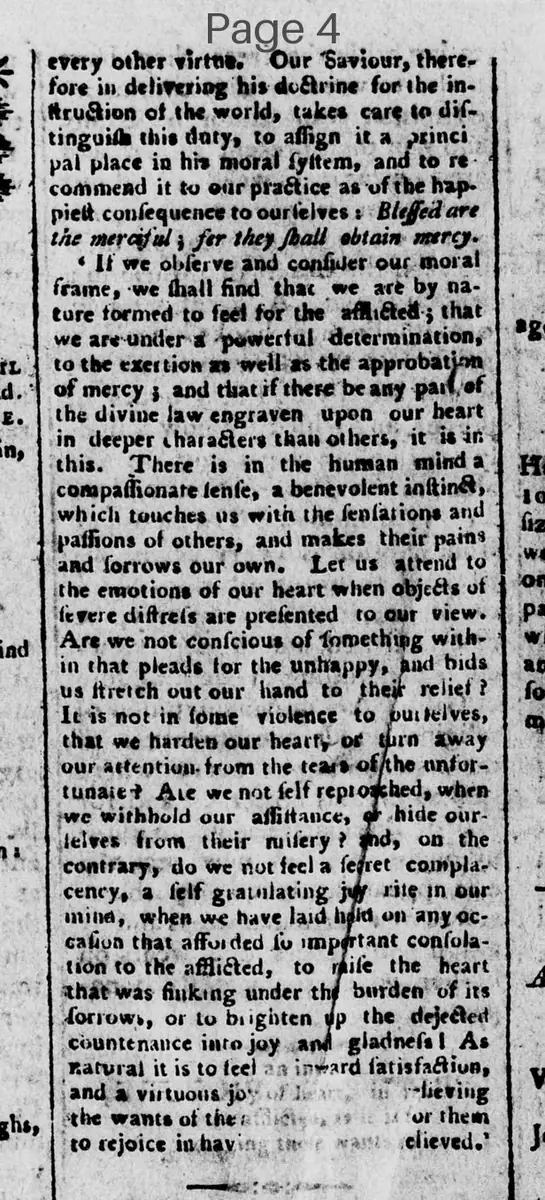
every other virtue. Our Saviour, therefore in delivering his doctrine for the instruction of the world, takes care to distinguish this duty, to assign it a principal place in his moral system, and to recommend it to our practice as of the happiest consequence to ourselves: Blessed are the merciful; for they shall obtain mercy.
If we observe and consider our moral frame, we shall find that we are by nature formed to feel for the afflicted; that we are under a powerful determination, to the exertion as well as the approbation of mercy; and that if there be any part of the divine law engraven upon our heart in deeper characters than others, it is this. There is in the human mind a compassionate sense, a benevolent instinct, which touches us with the sensations and passions of others, and makes their pains and sorrows our own. Let us attend to the emotions of our heart when objects of severe distress are presented to our view. Are we not conscious of something within that pleads for the unhappy, and bids us stretch out our hand to their relief? It is not without some violence to ourselves, that we harden our hearts or turn away our attention from the tears of the unfortunate Are we not self reproached, when we withhold our assistance, and hide ourselves from their misery? And, on the contrary do we not feel a secret complacency, a self-gratulating joy rise in our mind, when we have laid hold on any occasion that afforded us an opportunity to impart consolation to the afflicted, to raise the heart that was sinking under the burden of its sorrows, or to brighten up the dejected countenance into joy and gladness? As natural it is to feel an inward satisfaction, and a virtuous joy of heart, in relieving the wants of others as for them to rejoice in having a want relieved.
If we observe and consider our moral frame, we shall find that we are by nature formed to feel for the afflicted; that we are under a powerful determination, to the exertion as well as the approbation of mercy; and that if there be any part of the divine law engraven upon our heart in deeper characters than others, it is this. There is in the human mind a compassionate sense, a benevolent instinct, which touches us with the sensations and passions of others, and makes their pains and sorrows our own. Let us attend to the emotions of our heart when objects of severe distress are presented to our view. Are we not conscious of something within that pleads for the unhappy, and bids us stretch out our hand to their relief? It is not without some violence to ourselves, that we harden our hearts or turn away our attention from the tears of the unfortunate Are we not self reproached, when we withhold our assistance, and hide ourselves from their misery? And, on the contrary do we not feel a secret complacency, a self-gratulating joy rise in our mind, when we have laid hold on any occasion that afforded us an opportunity to impart consolation to the afflicted, to raise the heart that was sinking under the burden of its sorrows, or to brighten up the dejected countenance into joy and gladness? As natural it is to feel an inward satisfaction, and a virtuous joy of heart, in relieving the wants of others as for them to rejoice in having a want relieved.
What sub-type of article is it?
Essay
What themes does it cover?
Moral Virtue
Religious
What keywords are associated?
Mercy
Compassion
Benevolence
Moral Duty
Religious Doctrine
Literary Details
Subject
Blessed Are The Merciful; For They Shall Obtain Mercy
Key Lines
Blessed Are The Merciful; For They Shall Obtain Mercy.
There Is In The Human Mind A Compassionate Sense, A Benevolent Instinct, Which Touches Us With The Sensations And Passions Of Others, And Makes Their Pains And Sorrows Our Own.