Thank you for visiting SNEWPapers!
Sign up free
Literary
October 3, 1908
Custer Weekly Chronicle
Custer, Custer County, South Dakota
What is this article about?
In this excerpt from a historical romance set during Queen Mary's reign, Sir Anthony Cludde surrenders to Sheriff Sir Philip Clopton and Sir Thomas Greville amid accusations of treason. His nephew Francis Cludde dramatically intervenes with a sealed parchment, revealing his return from abroad to aid his uncle, turning the tense scene joyful for the household.
Clipping
OCR Quality
95%
Excellent
Full Text
Story of Francis Cludde
A Romance of Queen Mary's Reign.
BY STANLEY J. WEYMAN.
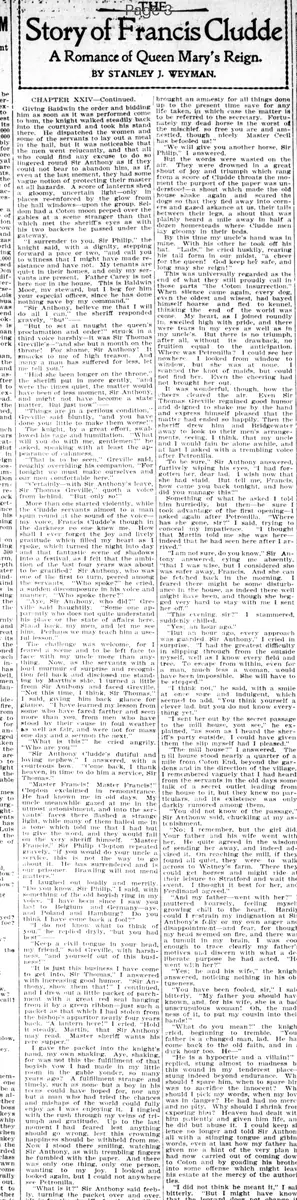
Giving Baldwin the order and bidding him as soon as it was performed come to him, the knight walked steadily back into the courtyard and took his stand there. He dispatched the women and some of the servants to lay out a meal in the hall, but it was noticeable that the men went reluctantly, and that all who could find any excuse to do so lingered round Sir Anthony as if they could not bear to abandon him, as if, even at the last moment, they had some vague notion of protecting their master at all hazards. A score of lanterns shed a gloomy, uncertain light—only in places reinforced by the glow from the hall windows—upon the group. Seldom had a Coton moon peeped over the gables at a scene stranger than that which met the sheriff's eyes as with his two backers he passed under the gateway.
"I surrender to you, Sir Philip," the knight said, with a dignity, stepping forward a pace or two, "and call you witness that I might have made resistance and have not. My tenants are quiet in their homes, and only my servants are present. Father Carey is not here nor in the house. This is Baldwin Moor, my steward, but I beg for him your especial offices, since he has done nothing save by my command."
"Sir Anthony, believe me that I will do all I can," the sheriff responded gravely, "but"
"But 'to set at naught the queen's proclamation and order!" struck in a third voice harshly—it was Sir Thomas Greville's—"and she but a month on the throne! For shame, Sir Anthony! It smacks to me of high treason. And many a man has suffered for less, let me tell you."
"Had she been longer on the throne," the sheriff put in more gently, "and were the times quiet, the matter would have been of less moment, Sir Anthony, and might not have become a state matter. But just now"
"Things are in a perilous condition," Greville said bluntly, "and you have done your little to make them worse!"
The knight, by a great effort, swallowed his rage and humiliation. "What will you do with me, gentlemen?" he asked, speaking with at least the appearance of calmness.
"That is to be seen," Greville said, roughly overriding his companion. "For tonight we must make ourselves and our men comfortable here."
"Certainly—with Sir Anthony's leave, Sir Thomas Greville," quoth a voice from behind. "But only so!"
More than one started violently, while the Cludde servants almost to a man spun round at the sound of the voice—my voice, Francis Cludde's though in the darkness no one knew me. How shall I ever forget the joy and lively gratitude which filled my heart as I spoke, which turned the night into day and that fantastic scene of shadows into a festival, as I felt that the ambition of the last four years was about to be gratified? Sir Anthony, who was one of the first to turn, peered among the servants. "Who spoke?" he cried, a sudden discomposure in his voice and manner. "Who spoke there?"
"Aye, Sir Anthony, who did?" Greville said haughtily. "Some one apparently who does not quite understand his place or the state of affairs here. Stand back, my men, and let me see him. Perhaps we may teach him a useful lesson."
The challenge was welcome, for I feared a scene and to be left face to face with my uncle more than anything. Now, as the servants with a loud murmur of surprise and recognition fell back and disclosed me standing by Martin's side, I turned a little from Sir Anthony and faced Greville.
"Not this time, I think, Sir Thomas," I said, giving him back glance for glance. "I have learned my lesson from some who have fared farther and seen more than you, from men who have stood by their cause in foul weather as well as fair, and were not for mass one day and a sermon the next."
…What is this?" he cried angrily. "Who are you?"
"Sir Anthony Cludde's dutiful and loving nephew," I answered, with a courteous bow. "Come back, I thank heaven, in time to do him a service, Sir Thomas."
"Master Francis! Master Francis!" Clopton exclaimed in remonstrance.
He had known me in old days. My uncle meanwhile gazed at me in the utmost astonishment, and into the servants' faces there flashed a strange light, while many of them hailed me in a tone which told me that I had but to give the word, and they would fall on the very sheriff himself. "Master Francis," Sir Philip Clopton repeated gravely, "if you would do your uncle a service, this is not the way to go about it. He has surrendered and is our prisoner. Brawling will not mend matters."
I laughed out loudly and merrily.
"Do you know, Sir Philip," I said, with something of the old boyish ring in my voice, "I have been since I saw you last to Belgium and Germany—aye, and Poland and Hamburg? Do you think I have come back a fool?"
"I do not know what to think of you," he replied dryly, "but you had best"
"Keep a civil tongue in your head, my friend," said Greville, with harshness, "and yourself out of this business!"
"It is just this business I have come to get into, Sir Thomas," I answered with increasing good humor. "Sir Anthony, show them that!" I continued, and I drew out a little packet of parchment with a great red seal hanging from it by a green ribbon—just such a packet as that which I had stolen from the bishop's apparitor nearly four years back. "A lantern here!" I cried. "Hold it steady, Martin, that Sir Anthony may read. Master sheriff wants his supper."
I gave the packet into the knight's hand, my own shaking. Aye, shaking, for was not this the fulfillment of that boyish vow I had made in my little room in the gable yonder, so many years ago? A fulfillment strange and timely, such as none but a boy in his teens could have hoped for, nor any but a man who had tried the chances and mishaps of the world could fully enjoy as I was enjoying it. I tingled with the rush through my veins of triumph and gratitude. Up to the last moment I had feared lest anything should go wrong, lest this crowning happiness should be withheld from me. Now I stood there smiling, watching Sir Anthony, as with trembling fingers he fumbled with the paper. And there was only one thing, only one person, wanting to my joy. I looked and looked again, but I could not anywhere see Petronilla.
A Romance of Queen Mary's Reign.
BY STANLEY J. WEYMAN.
Giving Baldwin the order and bidding him as soon as it was performed come to him, the knight walked steadily back into the courtyard and took his stand there. He dispatched the women and some of the servants to lay out a meal in the hall, but it was noticeable that the men went reluctantly, and that all who could find any excuse to do so lingered round Sir Anthony as if they could not bear to abandon him, as if, even at the last moment, they had some vague notion of protecting their master at all hazards. A score of lanterns shed a gloomy, uncertain light—only in places reinforced by the glow from the hall windows—upon the group. Seldom had a Coton moon peeped over the gables at a scene stranger than that which met the sheriff's eyes as with his two backers he passed under the gateway.
"I surrender to you, Sir Philip," the knight said, with a dignity, stepping forward a pace or two, "and call you witness that I might have made resistance and have not. My tenants are quiet in their homes, and only my servants are present. Father Carey is not here nor in the house. This is Baldwin Moor, my steward, but I beg for him your especial offices, since he has done nothing save by my command."
"Sir Anthony, believe me that I will do all I can," the sheriff responded gravely, "but"
"But 'to set at naught the queen's proclamation and order!" struck in a third voice harshly—it was Sir Thomas Greville's—"and she but a month on the throne! For shame, Sir Anthony! It smacks to me of high treason. And many a man has suffered for less, let me tell you."
"Had she been longer on the throne," the sheriff put in more gently, "and were the times quiet, the matter would have been of less moment, Sir Anthony, and might not have become a state matter. But just now"
"Things are in a perilous condition," Greville said bluntly, "and you have done your little to make them worse!"
The knight, by a great effort, swallowed his rage and humiliation. "What will you do with me, gentlemen?" he asked, speaking with at least the appearance of calmness.
"That is to be seen," Greville said, roughly overriding his companion. "For tonight we must make ourselves and our men comfortable here."
"Certainly—with Sir Anthony's leave, Sir Thomas Greville," quoth a voice from behind. "But only so!"
More than one started violently, while the Cludde servants almost to a man spun round at the sound of the voice—my voice, Francis Cludde's though in the darkness no one knew me. How shall I ever forget the joy and lively gratitude which filled my heart as I spoke, which turned the night into day and that fantastic scene of shadows into a festival, as I felt that the ambition of the last four years was about to be gratified? Sir Anthony, who was one of the first to turn, peered among the servants. "Who spoke?" he cried, a sudden discomposure in his voice and manner. "Who spoke there?"
"Aye, Sir Anthony, who did?" Greville said haughtily. "Some one apparently who does not quite understand his place or the state of affairs here. Stand back, my men, and let me see him. Perhaps we may teach him a useful lesson."
The challenge was welcome, for I feared a scene and to be left face to face with my uncle more than anything. Now, as the servants with a loud murmur of surprise and recognition fell back and disclosed me standing by Martin's side, I turned a little from Sir Anthony and faced Greville.
"Not this time, I think, Sir Thomas," I said, giving him back glance for glance. "I have learned my lesson from some who have fared farther and seen more than you, from men who have stood by their cause in foul weather as well as fair, and were not for mass one day and a sermon the next."
…What is this?" he cried angrily. "Who are you?"
"Sir Anthony Cludde's dutiful and loving nephew," I answered, with a courteous bow. "Come back, I thank heaven, in time to do him a service, Sir Thomas."
"Master Francis! Master Francis!" Clopton exclaimed in remonstrance.
He had known me in old days. My uncle meanwhile gazed at me in the utmost astonishment, and into the servants' faces there flashed a strange light, while many of them hailed me in a tone which told me that I had but to give the word, and they would fall on the very sheriff himself. "Master Francis," Sir Philip Clopton repeated gravely, "if you would do your uncle a service, this is not the way to go about it. He has surrendered and is our prisoner. Brawling will not mend matters."
I laughed out loudly and merrily.
"Do you know, Sir Philip," I said, with something of the old boyish ring in my voice, "I have been since I saw you last to Belgium and Germany—aye, and Poland and Hamburg? Do you think I have come back a fool?"
"I do not know what to think of you," he replied dryly, "but you had best"
"Keep a civil tongue in your head, my friend," said Greville, with harshness, "and yourself out of this business!"
"It is just this business I have come to get into, Sir Thomas," I answered with increasing good humor. "Sir Anthony, show them that!" I continued, and I drew out a little packet of parchment with a great red seal hanging from it by a green ribbon—just such a packet as that which I had stolen from the bishop's apparitor nearly four years back. "A lantern here!" I cried. "Hold it steady, Martin, that Sir Anthony may read. Master sheriff wants his supper."
I gave the packet into the knight's hand, my own shaking. Aye, shaking, for was not this the fulfillment of that boyish vow I had made in my little room in the gable yonder, so many years ago? A fulfillment strange and timely, such as none but a boy in his teens could have hoped for, nor any but a man who had tried the chances and mishaps of the world could fully enjoy as I was enjoying it. I tingled with the rush through my veins of triumph and gratitude. Up to the last moment I had feared lest anything should go wrong, lest this crowning happiness should be withheld from me. Now I stood there smiling, watching Sir Anthony, as with trembling fingers he fumbled with the paper. And there was only one thing, only one person, wanting to my joy. I looked and looked again, but I could not anywhere see Petronilla.
What sub-type of article is it?
Prose Fiction
What themes does it cover?
Political
Religious
Liberty Freedom
What keywords are associated?
Queen Mary Reign
Sir Anthony Cludde
Francis Cludde
Surrender
Treason
Historical Romance
Parchment Seal
Sheriff Clopton
What entities or persons were involved?
By Stanley J. Weyman.
Literary Details
Title
Story Of Francis Cludde A Romance Of Queen Mary's Reign.
Author
By Stanley J. Weyman.
Key Lines
"I Surrender To You, Sir Philip," The Knight Said, With A Dignity, Stepping Forward A Pace Or Two, "And Call You Witness That I Might Have Made Resistance And Have Not."
"But 'To Set At Naught The Queen's Proclamation And Order!" Struck In A Third Voice Harshly—It Was Sir Thomas Greville's—"And She But A Month On The Throne! For Shame, Sir Anthony! It Smacks To Me Of High Treason."
"Sir Anthony Cludde's Dutiful And Loving Nephew," I Answered, With A Courteous Bow. "Come Back, I Thank Heaven, In Time To Do Him A Service, Sir Thomas."
I Gave The Packet Into The Knight's Hand, My Own Shaking. Aye, Shaking, For Was Not This The Fulfillment Of That Boyish Vow I Had Made In My Little Room In The Gable Yonder, So Many Years Ago?