Thank you for visiting SNEWPapers!
Sign up free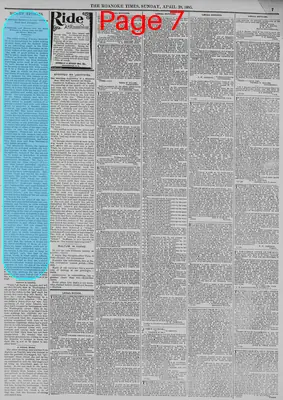
Literary
April 28, 1895
The Roanoke Times
Roanoke, Virginia
What is this article about?
This essay contrasts modern concise letter writing with the elaborate, posterity-focused epistles of the past, attributing the shift to rapid pace of life, journalism's prevalence, and telegraphic brevity. It cites Andrew Lang and examples from Austen, Shelley, Scott, and Thackeray.
Clipping

OCR Quality
95%
Excellent
Full Text
MODERN EPISTLES.
Difference Between Letter Writing Past and Present.
Conciseness and Brevity Now the Rule,
Whereas in Times Gone By People Wrote More for Posterity.
The letter writing of to-day bears little or no resemblance to letter writing of other days, and Mr. Andrew Lang in an interesting paper in the Illustrated London News discourses on the letter writers of the past, and says that "the lack of good letters in modern life" is not so much from the "lack of writers" as from the "lack of readers," and a long letter, say from Australia, is perhaps never read at all, and that we have become so frivolous "a man as far away as Samoa will write a note as if to a friend in the next street."
The pace at which we live, the rush and hurry of each day, are answerable in a measure for this change in our style of correspondence; but, above all, is it not the result of the flood of journalism which sweeps all before it? The letter writers of the past wrote for posterity, it is true, but also to keep their friends in touch with the topics of the day, political and social, says London Queen. Our newspapers do this for us to the fullest extent, and only the most private matters remain for the letter writer to record, matters of so private a nature that were such letters given to posterity a discreet editor would at once erase these confidences from his MS. The letter writer of to-day, unlike his predecessor, does not confide his experiences—whatever form they may have taken—to his friend and correspondent; and if he has anything worth saying on any particular subject he rushes into print forthwith, into the pages of one or other of the many magazines, or into the daily or weekly newspapers. Women are not one whit behind men in this respect, and newspaper and magazine readers are the recipients of their confidences, and what they have seen and done becomes at once public property.
The admirable diction, the vigorous English, the polished periods, the telling epigrams in the careful and well-thought-out essays of the day are not to be found as heretofore in private correspondence, but in magazine and journalistic literature. Mr. Lang remarks that the "fear or hope" of having their letters published "inspired many of the old eminent hands" to do their best for fame and posterity, as well as for their correspondents. Miss Austen "kept her wit for the world," and gave "flat gossip" to the "worthy, dull ladies" with whom she corresponded. Of "literary letters none excel-Shelley's." Scott's are simply "natural, business-like and unpretentious;" Thackeray, "though he lived in our railway days," and "should have written few letters," yet for "tone, style, wit and loving kindness" his are among the best in the world.
The points in the notes of the day—which have superseded letters—are conciseness and brevity. To write without preamble of any kind and to go to the root of the matter at once. Formerly, if anything in the way of a request was made, a suggestion as regards a plan to do something, or any one of the thousand social trifles that fill up leisure and life, it required a lead of some lines to introduce it, and oftener than not an apology also. But now almost telegraphic conciseness is the mode adopted, and aught else would read out of date; in truth, telegrams have not a little to do in forming the present form of letter writing, and have taught economy in the use of words. It may be said that the letters of to-day are the direct antithesis of those of yore. Then too many subjects could not be broached and commented upon; now the reverse is the rule, and to keep to one subject only, and that in the fewest words, is what society affects. Hence the brief notes we all receive and write; yet, brief as they are, a clever man or a talented woman conveys in a sentence or two the gist of the whole matter, epigrammatical in neatness and subtly humorous—a compensation small in its way, perhaps, for the lengthy epistles of the past, but all this workaday world has time either to write or to read.
Difference Between Letter Writing Past and Present.
Conciseness and Brevity Now the Rule,
Whereas in Times Gone By People Wrote More for Posterity.
The letter writing of to-day bears little or no resemblance to letter writing of other days, and Mr. Andrew Lang in an interesting paper in the Illustrated London News discourses on the letter writers of the past, and says that "the lack of good letters in modern life" is not so much from the "lack of writers" as from the "lack of readers," and a long letter, say from Australia, is perhaps never read at all, and that we have become so frivolous "a man as far away as Samoa will write a note as if to a friend in the next street."
The pace at which we live, the rush and hurry of each day, are answerable in a measure for this change in our style of correspondence; but, above all, is it not the result of the flood of journalism which sweeps all before it? The letter writers of the past wrote for posterity, it is true, but also to keep their friends in touch with the topics of the day, political and social, says London Queen. Our newspapers do this for us to the fullest extent, and only the most private matters remain for the letter writer to record, matters of so private a nature that were such letters given to posterity a discreet editor would at once erase these confidences from his MS. The letter writer of to-day, unlike his predecessor, does not confide his experiences—whatever form they may have taken—to his friend and correspondent; and if he has anything worth saying on any particular subject he rushes into print forthwith, into the pages of one or other of the many magazines, or into the daily or weekly newspapers. Women are not one whit behind men in this respect, and newspaper and magazine readers are the recipients of their confidences, and what they have seen and done becomes at once public property.
The admirable diction, the vigorous English, the polished periods, the telling epigrams in the careful and well-thought-out essays of the day are not to be found as heretofore in private correspondence, but in magazine and journalistic literature. Mr. Lang remarks that the "fear or hope" of having their letters published "inspired many of the old eminent hands" to do their best for fame and posterity, as well as for their correspondents. Miss Austen "kept her wit for the world," and gave "flat gossip" to the "worthy, dull ladies" with whom she corresponded. Of "literary letters none excel-Shelley's." Scott's are simply "natural, business-like and unpretentious;" Thackeray, "though he lived in our railway days," and "should have written few letters," yet for "tone, style, wit and loving kindness" his are among the best in the world.
The points in the notes of the day—which have superseded letters—are conciseness and brevity. To write without preamble of any kind and to go to the root of the matter at once. Formerly, if anything in the way of a request was made, a suggestion as regards a plan to do something, or any one of the thousand social trifles that fill up leisure and life, it required a lead of some lines to introduce it, and oftener than not an apology also. But now almost telegraphic conciseness is the mode adopted, and aught else would read out of date; in truth, telegrams have not a little to do in forming the present form of letter writing, and have taught economy in the use of words. It may be said that the letters of to-day are the direct antithesis of those of yore. Then too many subjects could not be broached and commented upon; now the reverse is the rule, and to keep to one subject only, and that in the fewest words, is what society affects. Hence the brief notes we all receive and write; yet, brief as they are, a clever man or a talented woman conveys in a sentence or two the gist of the whole matter, epigrammatical in neatness and subtly humorous—a compensation small in its way, perhaps, for the lengthy epistles of the past, but all this workaday world has time either to write or to read.
What sub-type of article is it?
Essay
What themes does it cover?
Social Manners
What keywords are associated?
Letter Writing
Modern Epistles
Journalism
Conciseness
Posterity
Correspondence
Social Topics
Brevity
Literary Details
Title
Modern Epistles.
Subject
Difference Between Letter Writing Past And Present
Key Lines
The Lack Of Good Letters In Modern Life" Is Not So Much From The "Lack Of Writers" As From The "Lack Of Readers,"
The Letter Writers Of The Past Wrote For Posterity, It Is True, But Also To Keep Their Friends In Touch With The Topics Of The Day, Political And Social,
Miss Austen "Kept Her Wit For The World," And Gave "Flat Gossip" To The "Worthy, Dull Ladies" With Whom She Corresponded.
Of "Literary Letters None Excel Shelley's."