Thank you for visiting SNEWPapers!
Sign up free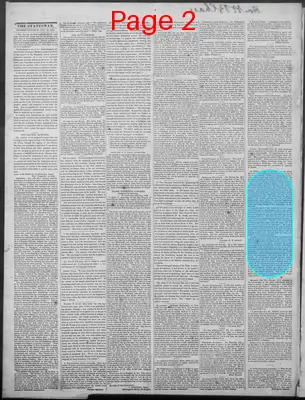
Letter to Editor
October 12, 1833
New Hampshire Statesman And State Journal
Concord, Merrimack County, New Hampshire
What is this article about?
A Salem clergyman corrects a newspaper error claiming he helped destroy tea during the Boston Tea Party on Dec. 16, 1773. At 22, he was a spectator on the ship, describes the calm destruction by 'Indians,' aftermath, and Admiral Montague's astonished reaction.
Clipping
OCR Quality
98%
Excellent
Full Text
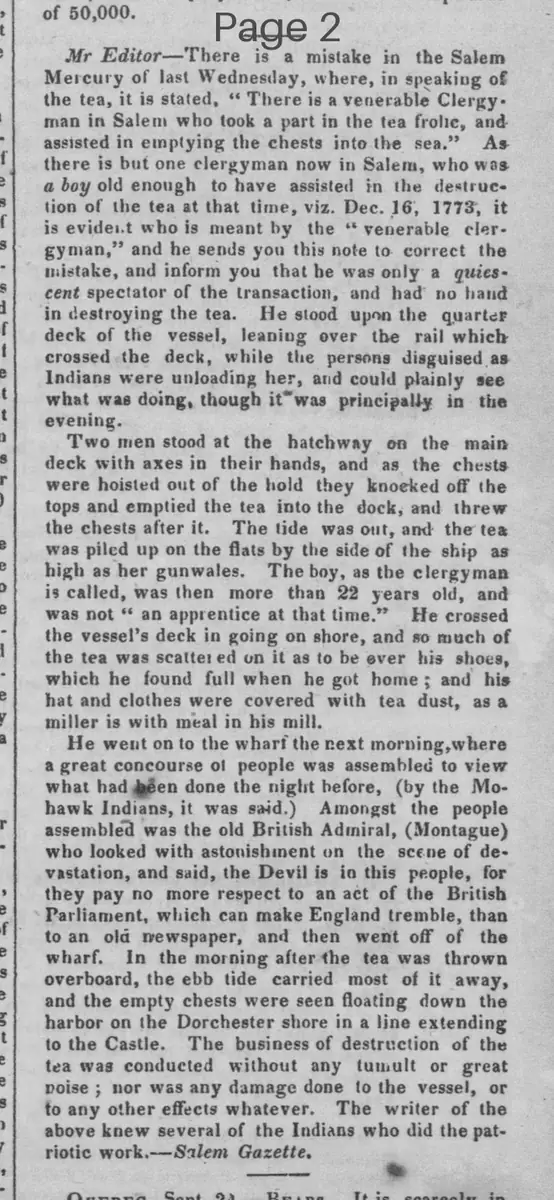
Mr Editor—There is a mistake in the Salem Mercury of last Wednesday, where, in speaking of the tea, it is stated, "There is a venerable Clergyman in Salem who took a part in the tea frolic, and assisted in emptying the chests into the sea." As there is but one clergyman now in Salem, who was a boy old enough to have assisted in the destruction of the tea at that time, viz. Dec. 16, 1773, it is evident who is meant by the "venerable clergyman," and he sends you this note to correct the mistake, and inform you that he was only a quiescent spectator of the transaction, and had no hand in destroying the tea. He stood upon the quarter deck of the vessel, leaning over the rail which crossed the deck, while the persons disguised as Indians were unloading her, and could plainly see what was doing, though it was principally in the evening.
Two men stood at the hatchway on the main deck with axes in their hands, and as the chests were hoisted out of the hold they knocked off the tops and emptied the tea into the dock, and threw the chests after it. The tide was out, and the tea was piled up on the flats by the side of the ship as high as her gunwales. The boy, as the clergyman is called, was then more than 22 years old, and was not "an apprentice at that time." He crossed the vessel's deck in going on shore, and so much of the tea was scattered on it as to be over his shoes, which he found full when he got home; and his hat and clothes were covered with tea dust, as a miller is with meal in his mill.
He went on to the wharf the next morning, where a great concourse of people was assembled to view what had been done the night before, (by the Mohawk Indians, it was said.) Amongst the people assembled was the old British Admiral, (Montague) who looked with astonishment on the scene of devastation, and said, the Devil is in this people, for they pay no more respect to an act of the British Parliament, which can make England tremble, than to an old newspaper, and then went off of the wharf. In the morning after the tea was thrown overboard, the ebb tide carried most of it away, and the empty chests were seen floating down the harbor on the Dorchester shore in a line extending to the Castle. The business of destruction of the tea was conducted without any tumult or great noise; nor was any damage done to the vessel, or to any other effects whatever. The writer of the above knew several of the Indians who did the patriotic work.—Salem Gazette.
Two men stood at the hatchway on the main deck with axes in their hands, and as the chests were hoisted out of the hold they knocked off the tops and emptied the tea into the dock, and threw the chests after it. The tide was out, and the tea was piled up on the flats by the side of the ship as high as her gunwales. The boy, as the clergyman is called, was then more than 22 years old, and was not "an apprentice at that time." He crossed the vessel's deck in going on shore, and so much of the tea was scattered on it as to be over his shoes, which he found full when he got home; and his hat and clothes were covered with tea dust, as a miller is with meal in his mill.
He went on to the wharf the next morning, where a great concourse of people was assembled to view what had been done the night before, (by the Mohawk Indians, it was said.) Amongst the people assembled was the old British Admiral, (Montague) who looked with astonishment on the scene of devastation, and said, the Devil is in this people, for they pay no more respect to an act of the British Parliament, which can make England tremble, than to an old newspaper, and then went off of the wharf. In the morning after the tea was thrown overboard, the ebb tide carried most of it away, and the empty chests were seen floating down the harbor on the Dorchester shore in a line extending to the Castle. The business of destruction of the tea was conducted without any tumult or great noise; nor was any damage done to the vessel, or to any other effects whatever. The writer of the above knew several of the Indians who did the patriotic work.—Salem Gazette.
What sub-type of article is it?
Informative
Historical
Reflective
What themes does it cover?
Taxation
Politics
What keywords are associated?
Boston Tea Party
Salem Clergyman
Tea Destruction
Admiral Montague
1773 Event
Historical Correction
What entities or persons were involved?
Mr Editor
Letter to Editor Details
Recipient
Mr Editor
Main Argument
the clergyman corrects the claim that he assisted in destroying the tea during the boston tea party on december 16, 1773; he was a 22-year-old spectator and did not participate.
Notable Details
- stood on quarter deck watching 'indians' unload and destroy tea chests
- tea piled high on flats, scattered on deck covering his shoes and clothes
- admiral montague's reaction: 'the devil is in this people'
- event conducted without tumult or damage to vessel
- knew several of the 'indians' who did the work