Thank you for visiting SNEWPapers!
Sign up free
Story
November 30, 1870
The Daily Dispatch
Richmond, Virginia
What is this article about?
A political commentary criticizing President Ulysses S. Grant for reversing his initial liberal policy on Virginia's readmission, alienating Southern support, and failing to prevent the Missouri Liberals' victory despite warnings to allies Newcomb, Easton, and Smith.
Clipping
OCR Quality
95%
Excellent
Full Text
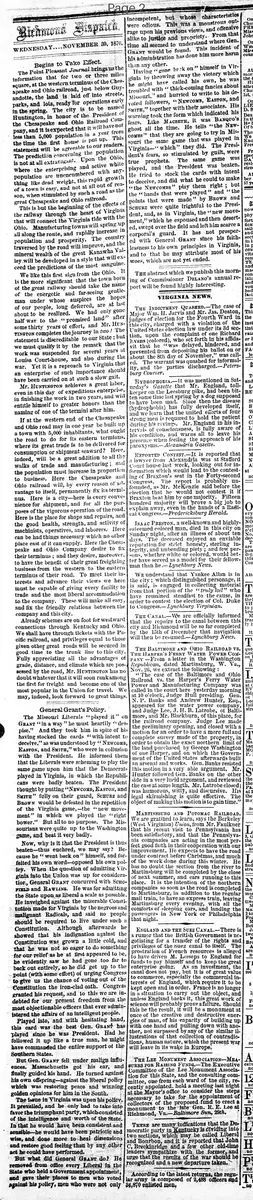
General Grant's Policy.
The Missouri Liberals "played it" on Grant "in a way" he must heartily "despise." And they took him in spite of his having stocked the cards "with intent to deceive," as was understood by "Newcomb, Easton, and Smith," who were in collusion with the President. He informed them that the Liberals were scheming to play the same game upon him that the Democrats played in Virginia, in which the Republicans were badly beaten. The President thought by putting "Newcomb, Easton, and Smith" fully on their guard, Schurz and Brown would be defeated in the repetition of the Virginia game—the "new movement" in which we played the "right bower." But all to no purpose. The Missourians were quite up to the Washington game, and beat it very badly.
Now, why is it that the President is thus beaten—thus euchred, we may say? Because he "went back on" himself, and forfeited his own word—opposed his own policy. When the question of admitting Virginia into the Union was up for consideration, General Grant concurred with Schofield and Rawlins. He was for admitting the State upon as liberal a scale as possible. He inveighed against the miserable Constitution made for Virginia by the negroes and malignant Radicals, and said no people should be required to live under such a Constitution. Although afterwards he showed that his indignation against the Constitution was grown a little cold, and that he was not so eager to do something for our relief as he at first appeared to be, he evidently saw he had gone too far to back out entirely, so he did get up to the point (with some effort) of urging Congress to give us the chance of voting out of the Constitution the iron-clad oath. Congress granted his request, and to this we are indebted for our present freedom from the most objectionable officers that ever administered the affairs of an intelligent people.
Played late, and with hesitating hand, this card was the best Gen. Grant has played since he was President. Had he followed it up like a true man, he might have commanded the entire support of the Southern States.
But Gen. Grant fell under malign influences. Massachusetts got his ear, and finally guided his hand. He turned against his own offspring—against the liberal policy which was restoring peace and winning golden opinions for him in the South. The issue in Virginia was upon his policy. It prevailed, and he only had to take into favor the triumphant party, which consisted of the intelligence and worth of the State. In that he would have been consistent and sensible—he would have been patriotic and wise, and done more to heal dissensions and restore good feeling than by any other act he could have performed.
But what did General Grant do? He removed from office every Liberal in the State who held a Government appointment, and gave their places to men who voted against his policy, men who were not only incompetent, but whose characteristics were odious. This was a monstrous outrage upon his previous views, and offensive alike to justice and propriety. From that time all seemed to understand where Gen. Grant would be found. This incident of his administration has done him more harm in Virginia by throwing away the victory which he might have called his own, be was troubled with "thick-coming fancies about Missouri," and hurried to write to his devoted followers, "Newcomb, Easton, and Smith," together with their associates. His warning took the form which indicated his ears. Like Macbeth, it was Banquo's ghost all the time. He tells "the Newcombs" that they are going to try in Missouri the same game that was played in Virginia—which they did. The President's fears, so stimulated by guilt, were true prophets. The same game was played, and the President was beaten.
He tried to stock the cards with intent to deceive, and did what he could to make "the Newcombs" play them right; but the "hands that were played" and "the points that were made" by Brown and Schurz were quite frightful to the President, and, as in Virginia, the "new movement," which he espoused and then deserted, swept over the field and left him scarce a corporal's guard. It has not prospered with General Grant since his faithlessness to his own principles in Virginia, and to that he may attribute most of his woes, which are not yet ended.
Having "gone back on" himself in Virginia by throwing away the victory which he might have called his own, be was troubled with "thick-coming fancies about Missouri," and hurried to write to his devoted followers, "Newcomb, Easton, and Smith," together with their associates. His warning took the form which indicated his ears. Like Macbeth, it was Banquo's ghost all the time. He tells "the Newcombs" that they are going to try in Missouri the same game that was played in Virginia—which they did. The President's fears, so stimulated by guilt, were true prophets. The same game was played, and the President was beaten.
He tried to stock the cards with intent to deceive, and did what he could to make "the Newcombs" play them right; but the "hands that were played" and "the points that were made" by Brown and Schurz were quite frightful to the President, and, as in Virginia, the "new movement," which he espoused and then deserted, swept over the field and left him scarce a corporal's guard. It has not prospered with General Grant since his faithlessness to his own principles in Virginia, and to that he may attribute most of his woes, which are not yet ended.
The Missouri Liberals "played it" on Grant "in a way" he must heartily "despise." And they took him in spite of his having stocked the cards "with intent to deceive," as was understood by "Newcomb, Easton, and Smith," who were in collusion with the President. He informed them that the Liberals were scheming to play the same game upon him that the Democrats played in Virginia, in which the Republicans were badly beaten. The President thought by putting "Newcomb, Easton, and Smith" fully on their guard, Schurz and Brown would be defeated in the repetition of the Virginia game—the "new movement" in which we played the "right bower." But all to no purpose. The Missourians were quite up to the Washington game, and beat it very badly.
Now, why is it that the President is thus beaten—thus euchred, we may say? Because he "went back on" himself, and forfeited his own word—opposed his own policy. When the question of admitting Virginia into the Union was up for consideration, General Grant concurred with Schofield and Rawlins. He was for admitting the State upon as liberal a scale as possible. He inveighed against the miserable Constitution made for Virginia by the negroes and malignant Radicals, and said no people should be required to live under such a Constitution. Although afterwards he showed that his indignation against the Constitution was grown a little cold, and that he was not so eager to do something for our relief as he at first appeared to be, he evidently saw he had gone too far to back out entirely, so he did get up to the point (with some effort) of urging Congress to give us the chance of voting out of the Constitution the iron-clad oath. Congress granted his request, and to this we are indebted for our present freedom from the most objectionable officers that ever administered the affairs of an intelligent people.
Played late, and with hesitating hand, this card was the best Gen. Grant has played since he was President. Had he followed it up like a true man, he might have commanded the entire support of the Southern States.
But Gen. Grant fell under malign influences. Massachusetts got his ear, and finally guided his hand. He turned against his own offspring—against the liberal policy which was restoring peace and winning golden opinions for him in the South. The issue in Virginia was upon his policy. It prevailed, and he only had to take into favor the triumphant party, which consisted of the intelligence and worth of the State. In that he would have been consistent and sensible—he would have been patriotic and wise, and done more to heal dissensions and restore good feeling than by any other act he could have performed.
But what did General Grant do? He removed from office every Liberal in the State who held a Government appointment, and gave their places to men who voted against his policy, men who were not only incompetent, but whose characteristics were odious. This was a monstrous outrage upon his previous views, and offensive alike to justice and propriety. From that time all seemed to understand where Gen. Grant would be found. This incident of his administration has done him more harm in Virginia by throwing away the victory which he might have called his own, be was troubled with "thick-coming fancies about Missouri," and hurried to write to his devoted followers, "Newcomb, Easton, and Smith," together with their associates. His warning took the form which indicated his ears. Like Macbeth, it was Banquo's ghost all the time. He tells "the Newcombs" that they are going to try in Missouri the same game that was played in Virginia—which they did. The President's fears, so stimulated by guilt, were true prophets. The same game was played, and the President was beaten.
He tried to stock the cards with intent to deceive, and did what he could to make "the Newcombs" play them right; but the "hands that were played" and "the points that were made" by Brown and Schurz were quite frightful to the President, and, as in Virginia, the "new movement," which he espoused and then deserted, swept over the field and left him scarce a corporal's guard. It has not prospered with General Grant since his faithlessness to his own principles in Virginia, and to that he may attribute most of his woes, which are not yet ended.
Having "gone back on" himself in Virginia by throwing away the victory which he might have called his own, be was troubled with "thick-coming fancies about Missouri," and hurried to write to his devoted followers, "Newcomb, Easton, and Smith," together with their associates. His warning took the form which indicated his ears. Like Macbeth, it was Banquo's ghost all the time. He tells "the Newcombs" that they are going to try in Missouri the same game that was played in Virginia—which they did. The President's fears, so stimulated by guilt, were true prophets. The same game was played, and the President was beaten.
He tried to stock the cards with intent to deceive, and did what he could to make "the Newcombs" play them right; but the "hands that were played" and "the points that were made" by Brown and Schurz were quite frightful to the President, and, as in Virginia, the "new movement," which he espoused and then deserted, swept over the field and left him scarce a corporal's guard. It has not prospered with General Grant since his faithlessness to his own principles in Virginia, and to that he may attribute most of his woes, which are not yet ended.
What sub-type of article is it?
Historical Event
Biography
What themes does it cover?
Betrayal
Fortune Reversal
Moral Virtue
What keywords are associated?
Grant Policy
Missouri Liberals
Virginia Readmission
Political Reversal
Liberal Movement
Presidential Interference
What entities or persons were involved?
General Grant
Schurz
Brown
Newcomb
Easton
Smith
Schofield
Rawlins
Where did it happen?
Virginia, Missouri
Story Details
Key Persons
General Grant
Schurz
Brown
Newcomb
Easton
Smith
Schofield
Rawlins
Location
Virginia, Missouri
Story Details
President Grant initially supported a liberal policy for Virginia's readmission but reversed course under Northern influences, removing Liberals from office and alienating Southern support. Despite warning allies in Missouri, the Liberals defeated his faction using similar tactics.