Thank you for visiting SNEWPapers!
Sign up free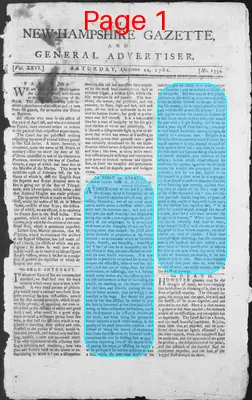
Literary
October 12, 1782
The New Hampshire Gazette And General Advertiser
Portsmouth, Exeter, Rockingham County, New Hampshire
What is this article about?
An essay condemning avarice as a base passion that excludes Christian virtues like charity and generosity. It portrays the covetous man as envious, miserly, and uncharitable, driven by greed that leads to ruin and spiritual peril, quoting Seneca and Jesus to emphasize moral and religious consequences.
Clipping
OCR Quality
95%
Excellent
Full Text
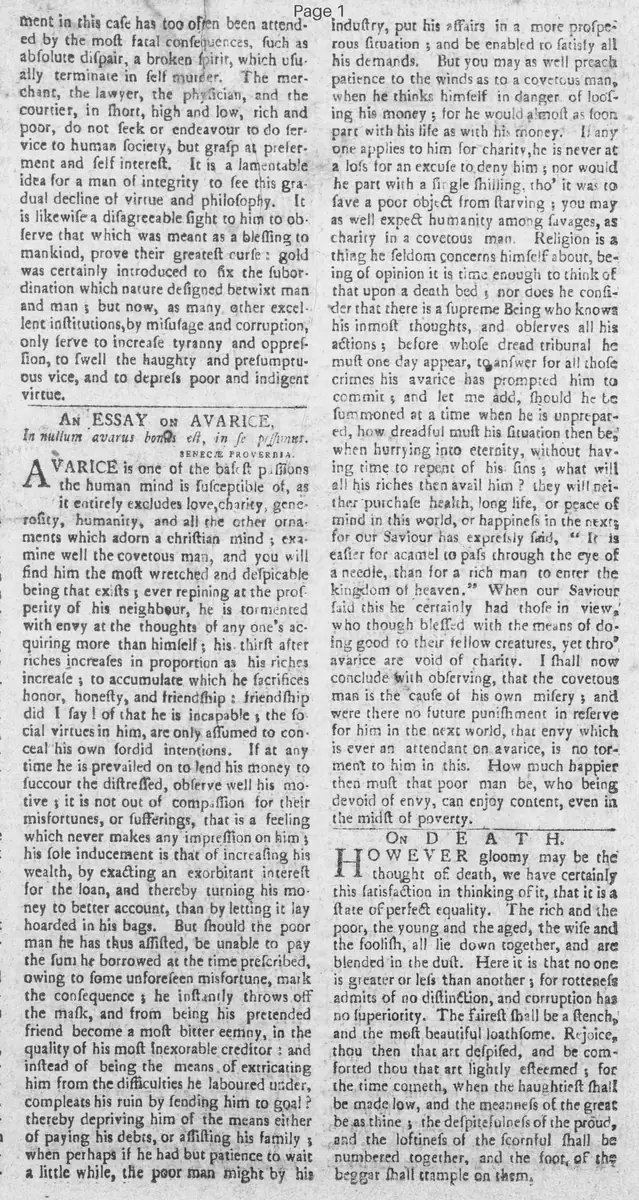
AN ESSAY ON AVARICE.
In nullum avarus bonus est, in se pessimus.
SENECA PROVERBIA.
AVARICE is one of the basest passions the human mind is susceptible of, as it entirely excludes love, charity, generosity, humanity, and all the other ornaments which adorn a Christian mind: examine well the covetous man, and you will find him the most wretched and despicable being that exists; ever repining at the prosperity of his neighbour, he is tormented with envy at the thoughts of any one's acquiring more than himself: his thirst after riches increases in proportion as his riches increase: to accumulate which he sacrifices honor, honesty, and friendship: friendship did I say! of that he is incapable; the social virtues in him, are only assumed to conceal his own sordid intentions. If at any time he is prevailed on to lend his money to succour the distressed, observe well his motive; it is not out of compassion for their misfortunes, or sufferings, that is a feeling which never makes any impression on him; his sole inducement is that of increasing his wealth, by exacting an exorbitant interest for the loan, and thereby turning his money to better account, than by letting it lay hoarded in his bags. But should the poor man he has thus assisted, be unable to pay the sum he borrowed at the time prescribed, owing to some unforeseen misfortune, mark the consequence; he instantly throws off the mask, and from being his pretended friend become a most bitter enemy, in the quality of his most inexorable creditor: and instead of being the means of extricating him from the difficulties he laboured under, completes his ruin by sending him to gaol; thereby depriving him of the means either of paying his debts, or assisting his family; when perhaps if he had but patience to wait a little while, the poor man might by his industry, put his affairs in a more prosperous situation; and be enabled to satisfy all his demands. But you may as well preach patience to the winds as to a covetous man, when he thinks himself in danger of losing his money; for he would almost as soon part with his life as with his money. If any one applies to him for charity, he is never at a loss for an excuse to deny him; nor would he part with a single shilling, tho' it was to save a poor object from starving: you may as well expect humanity among savages, as charity in a covetous man. Religion is a thing he seldom concerns himself about, being of opinion it is time enough to think of that upon a death bed; nor does he consider that there is a supreme Being who knows his inmost thoughts, and observes all his actions; before whose dread tribunal he must one day appear, to answer for all those crimes his avarice has prompted him to commit; and let me add, should he be summoned at a time when he is unprepared, how dreadful must his situation then be, when hurrying into eternity, without having time to repent of his sins: what will all his riches then avail him? they will neither purchase health, long life, or peace of mind in this world, or happiness in the next; for our Saviour has expressly said, "It is easier for a camel to pass through the eye of a needle, than for a rich man to enter the kingdom of heaven." When our Saviour said this he certainly had those in view, who though blessed with the means of doing good to their fellow creatures, yet thro' avarice are void of charity. I shall now conclude with observing, that the covetous man is the cause of his own misery; and were there no future punishment in reserve for him in the next world, that envy which is ever an attendant on avarice, is no torment to him in this. How much happier then must that poor man be, who being devoid of envy, can enjoy content, even in the midst of poverty.
In nullum avarus bonus est, in se pessimus.
SENECA PROVERBIA.
AVARICE is one of the basest passions the human mind is susceptible of, as it entirely excludes love, charity, generosity, humanity, and all the other ornaments which adorn a Christian mind: examine well the covetous man, and you will find him the most wretched and despicable being that exists; ever repining at the prosperity of his neighbour, he is tormented with envy at the thoughts of any one's acquiring more than himself: his thirst after riches increases in proportion as his riches increase: to accumulate which he sacrifices honor, honesty, and friendship: friendship did I say! of that he is incapable; the social virtues in him, are only assumed to conceal his own sordid intentions. If at any time he is prevailed on to lend his money to succour the distressed, observe well his motive; it is not out of compassion for their misfortunes, or sufferings, that is a feeling which never makes any impression on him; his sole inducement is that of increasing his wealth, by exacting an exorbitant interest for the loan, and thereby turning his money to better account, than by letting it lay hoarded in his bags. But should the poor man he has thus assisted, be unable to pay the sum he borrowed at the time prescribed, owing to some unforeseen misfortune, mark the consequence; he instantly throws off the mask, and from being his pretended friend become a most bitter enemy, in the quality of his most inexorable creditor: and instead of being the means of extricating him from the difficulties he laboured under, completes his ruin by sending him to gaol; thereby depriving him of the means either of paying his debts, or assisting his family; when perhaps if he had but patience to wait a little while, the poor man might by his industry, put his affairs in a more prosperous situation; and be enabled to satisfy all his demands. But you may as well preach patience to the winds as to a covetous man, when he thinks himself in danger of losing his money; for he would almost as soon part with his life as with his money. If any one applies to him for charity, he is never at a loss for an excuse to deny him; nor would he part with a single shilling, tho' it was to save a poor object from starving: you may as well expect humanity among savages, as charity in a covetous man. Religion is a thing he seldom concerns himself about, being of opinion it is time enough to think of that upon a death bed; nor does he consider that there is a supreme Being who knows his inmost thoughts, and observes all his actions; before whose dread tribunal he must one day appear, to answer for all those crimes his avarice has prompted him to commit; and let me add, should he be summoned at a time when he is unprepared, how dreadful must his situation then be, when hurrying into eternity, without having time to repent of his sins: what will all his riches then avail him? they will neither purchase health, long life, or peace of mind in this world, or happiness in the next; for our Saviour has expressly said, "It is easier for a camel to pass through the eye of a needle, than for a rich man to enter the kingdom of heaven." When our Saviour said this he certainly had those in view, who though blessed with the means of doing good to their fellow creatures, yet thro' avarice are void of charity. I shall now conclude with observing, that the covetous man is the cause of his own misery; and were there no future punishment in reserve for him in the next world, that envy which is ever an attendant on avarice, is no torment to him in this. How much happier then must that poor man be, who being devoid of envy, can enjoy content, even in the midst of poverty.
What sub-type of article is it?
Essay
What themes does it cover?
Moral Virtue
Religious
What keywords are associated?
Avarice
Covetousness
Greed
Charity
Envy
Christian Virtue
Moral Ruin
Religious Judgment
Literary Details
Title
An Essay On Avarice.
Key Lines
In Nullum Avarus Bonus Est, In Se Pessimus.
Avarice Is One Of The Basest Passions The Human Mind Is Susceptible Of, As It Entirely Excludes Love, Charity, Generosity, Humanity, And All The Other Ornaments Which Adorn A Christian Mind
It Is Easier For A Camel To Pass Through The Eye Of A Needle, Than For A Rich Man To Enter The Kingdom Of Heaven.
The Covetous Man Is The Cause Of His Own Misery; And Were There No Future Punishment In Reserve For Him In The Next World, That Envy Which Is Ever An Attendant On Avarice, Is No Torment To Him In This.
How Much Happier Then Must That Poor Man Be, Who Being Devoid Of Envy, Can Enjoy Content, Even In The Midst Of Poverty.