Thank you for visiting SNEWPapers!
Sign up free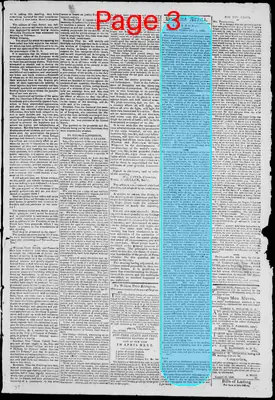
Editorial
February 3, 1809
Virginia Argus
Richmond, Virginia
What is this article about?
The editorial praises Charleston's patriotic support for the 1809 Embargo Act, contrasting it with Boston's disaffected response, and rebuts a critic defending Scotch immigrants while criticizing embargo opponents as unpatriotic, especially foreign influences seeking re-colonization.
Clipping

OCR Quality
98%
Excellent
Full Text
RICHMOND:
FRIDAY, FEBRUARY 3, 1809.
We regret very much that the great mass of matter which presses upon us in this day's Argus, prevents us from presenting to our readers the truly patriotic proceedings of the citizens of Charleston at their late meeting. The conduct of the people of Charleston when contrasted with that of the people of Boston, renders their political character brilliant and lovely to the eye, whilst it casts around the latter the darkest shades of ignominy and disaffection. Their address teems with the genuine sentiments of republicans, and the most spirited determinations to support the laws of their country. Let the following resolutions which we have extracted, speak for themselves--
1. Resolved, that we will by every legal and honorable means in our power, endeavor to frustrate the wicked designs of those unprincipled characters who shall presume to violate the laws. 3. Resolved, that we who compose this association, are ready and willing upon all emergencies to risk our lives, persons and property in defence of the rights of our common country.
5. Resolved, that the chairman of this association be requested to wait on the collector, and tender our services agreeably to the 11th section of the act "to enforce and make more effectual an act laying an embargo," approved 9th of January, 1809.
--How opposite is the address of the selectmen of Boston on the 20th of January, to summon a meeting of the freeholders "to take into consideration the alarming situation of our public affairs, to express their solemn opinion thereon, to address the legislature of this state (if they shall see cause) to interpose for their constitutional relief against the late arbitrary, unnecessary, and unjust violation of the rights of the people; and to take such other peaceable and orderly measures as to the said inhabitants may seem proper and expedient." This almost amounts to an appeal to their legislature for disunion. We trust, however, that the legislature will frown upon the attempt with the most expressive indignation.
We owe an apology to the author of the following luminous and philological production for not having inserted it in a preceding paper. But as it is not of that stupendous importance, we must supplicate his pardon for the delay. The delightful morceau is now presented to our readers.
We would fain enquire of this redoubted champion of Scotch faith and principle, what induces him to say that he does not believe "that the remarks in our paper of the 20th were written by us." We are always obliged to our correspondents for their communications, but we never have yet passed them to our own credit by shuffling them under the editorial head.
We will not say "that we never wrote a word which when dying, we could wish to blot out," but we do say that the remarks alluded to in this elegant tit bit, were written by us, and that if we had nothing more to answer for than those, we might with safety make use of the exclamation. But, most potent, grave and reverend critic, what are we to understand from the following remarks--"it is well known, (speaking of the Scotch) that their conduct when they come here, is strictly moral, and that when they exhibit a contrary conduct, they have abandoned their first faith, and suffered the influence of example to corrupt their first principles." The inference is no less unavoidable, than it is truly astonishing, that when these mercenary adventurers first arrive, they are fully possessed of their native purity and excellence, and that if they should perchance become corrupted, it arises from the influence of our example! American corruption!
There is so much ignorance betrayed by the interrogative "Who is Piutus?" that we shall forbear to give any answer. It is true that a contrariety of opinion exists in regard to the embargo. Where this opinion is honest, the individual cannot be censured, but if under the influence of this opinion he violates the laws of his country or encourages any other person to do it, he is guilty of moral and political turpitude. If an American conceives that the embargo is an impolitic measure, his love for his country ought to forbid his violation. This restraint, however, we must acknowledge, has been frequently disregarded. But with respect to Scotchmen and Englishmen, the disciples of monarchy, and the enemies to free government, they will of course censure any measure which is calculated to retaliate upon British perfidy and injustice.
People of this description who feel no restraint from patriotism in violating the laws of a country, and indeed whose proverbial love of pelf, almost excludes the idea of hindrance where the object is attainable, ought at this critical and embarrassing period, to be viewed with extreme diffidence and distrust. It is easy to perceive from the tenor of this scroll of words, that the writer is not an American, for none, we believe, would pronounce a person a Reprobate, for Comparing the base and unprincipled ministry of Britain to those of Pandemonium. We have already taken up too much time with this half-witted production, but the writer seems so very anxious to display his literary prowess, that we could not forbear from indulging him.
We will therefore leave him to his meditations by only reminding him of a poetic distich.
"Some have at first for wits, then Poets past.
Turn'd critics next, and prov'd plain fools at last."
NOTE.
We are not so intolerant as to intend by the above remarks an unqualified denunciation of all Scotchmen. We know very well that there are good and bad belonging to every possible denomination.
We mean those however who take an active and hostile part in politics, and who would wish to see us again re-colonized. Of this description we fear that there are too many.
FRIDAY, FEBRUARY 3, 1809.
We regret very much that the great mass of matter which presses upon us in this day's Argus, prevents us from presenting to our readers the truly patriotic proceedings of the citizens of Charleston at their late meeting. The conduct of the people of Charleston when contrasted with that of the people of Boston, renders their political character brilliant and lovely to the eye, whilst it casts around the latter the darkest shades of ignominy and disaffection. Their address teems with the genuine sentiments of republicans, and the most spirited determinations to support the laws of their country. Let the following resolutions which we have extracted, speak for themselves--
1. Resolved, that we will by every legal and honorable means in our power, endeavor to frustrate the wicked designs of those unprincipled characters who shall presume to violate the laws. 3. Resolved, that we who compose this association, are ready and willing upon all emergencies to risk our lives, persons and property in defence of the rights of our common country.
5. Resolved, that the chairman of this association be requested to wait on the collector, and tender our services agreeably to the 11th section of the act "to enforce and make more effectual an act laying an embargo," approved 9th of January, 1809.
--How opposite is the address of the selectmen of Boston on the 20th of January, to summon a meeting of the freeholders "to take into consideration the alarming situation of our public affairs, to express their solemn opinion thereon, to address the legislature of this state (if they shall see cause) to interpose for their constitutional relief against the late arbitrary, unnecessary, and unjust violation of the rights of the people; and to take such other peaceable and orderly measures as to the said inhabitants may seem proper and expedient." This almost amounts to an appeal to their legislature for disunion. We trust, however, that the legislature will frown upon the attempt with the most expressive indignation.
We owe an apology to the author of the following luminous and philological production for not having inserted it in a preceding paper. But as it is not of that stupendous importance, we must supplicate his pardon for the delay. The delightful morceau is now presented to our readers.
We would fain enquire of this redoubted champion of Scotch faith and principle, what induces him to say that he does not believe "that the remarks in our paper of the 20th were written by us." We are always obliged to our correspondents for their communications, but we never have yet passed them to our own credit by shuffling them under the editorial head.
We will not say "that we never wrote a word which when dying, we could wish to blot out," but we do say that the remarks alluded to in this elegant tit bit, were written by us, and that if we had nothing more to answer for than those, we might with safety make use of the exclamation. But, most potent, grave and reverend critic, what are we to understand from the following remarks--"it is well known, (speaking of the Scotch) that their conduct when they come here, is strictly moral, and that when they exhibit a contrary conduct, they have abandoned their first faith, and suffered the influence of example to corrupt their first principles." The inference is no less unavoidable, than it is truly astonishing, that when these mercenary adventurers first arrive, they are fully possessed of their native purity and excellence, and that if they should perchance become corrupted, it arises from the influence of our example! American corruption!
There is so much ignorance betrayed by the interrogative "Who is Piutus?" that we shall forbear to give any answer. It is true that a contrariety of opinion exists in regard to the embargo. Where this opinion is honest, the individual cannot be censured, but if under the influence of this opinion he violates the laws of his country or encourages any other person to do it, he is guilty of moral and political turpitude. If an American conceives that the embargo is an impolitic measure, his love for his country ought to forbid his violation. This restraint, however, we must acknowledge, has been frequently disregarded. But with respect to Scotchmen and Englishmen, the disciples of monarchy, and the enemies to free government, they will of course censure any measure which is calculated to retaliate upon British perfidy and injustice.
People of this description who feel no restraint from patriotism in violating the laws of a country, and indeed whose proverbial love of pelf, almost excludes the idea of hindrance where the object is attainable, ought at this critical and embarrassing period, to be viewed with extreme diffidence and distrust. It is easy to perceive from the tenor of this scroll of words, that the writer is not an American, for none, we believe, would pronounce a person a Reprobate, for Comparing the base and unprincipled ministry of Britain to those of Pandemonium. We have already taken up too much time with this half-witted production, but the writer seems so very anxious to display his literary prowess, that we could not forbear from indulging him.
We will therefore leave him to his meditations by only reminding him of a poetic distich.
"Some have at first for wits, then Poets past.
Turn'd critics next, and prov'd plain fools at last."
NOTE.
We are not so intolerant as to intend by the above remarks an unqualified denunciation of all Scotchmen. We know very well that there are good and bad belonging to every possible denomination.
We mean those however who take an active and hostile part in politics, and who would wish to see us again re-colonized. Of this description we fear that there are too many.
What sub-type of article is it?
Economic Policy
Partisan Politics
Foreign Affairs
What keywords are associated?
Embargo Support
Charleston Patriotism
Boston Disaffection
Scotch Critics
British Perfidy
American Laws
What entities or persons were involved?
Citizens Of Charleston
People Of Boston
Selectmen Of Boston
Scotchmen
Englishmen
British Ministry
Editorial Details
Primary Topic
Support For The Embargo Act Against British Aggression And Criticism Of Domestic And Foreign Opposition
Stance / Tone
Strongly Patriotic And Pro Embargo, Critical Of Disaffection And Foreign Influences
Key Figures
Citizens Of Charleston
People Of Boston
Selectmen Of Boston
Scotchmen
Englishmen
British Ministry
Key Arguments
Charleston's Resolutions Demonstrate True Republican Patriotism In Supporting Embargo Laws
Boston's Call For Legislative Interposition Borders On Disunion And Deserves Indignation
Opposition To Embargo Is Acceptable If Honest But Violation Of Laws Is Turpitude
Scotch And English Critics Of Embargo Lack Patriotism And Seek To Undermine Free Government
Foreign Born Agitators Promoting Law Violation Should Be Viewed With Distrust
Americans Must Defend Country Despite Policy Disagreements