Thank you for visiting SNEWPapers!
Sign up free
Poem
June 30, 1869
The States And Union
Ashland, Ashland County, Ohio
What is this article about?
The poem describes the angelic, unseen burial of Moses in Moab as per Deuteronomy, contrasting it with human funerals for warriors, poets, and sages, emphasizing divine mystery, grace, and the prophet's eternal significance.
Clipping
OCR Quality
95%
Excellent
Full Text
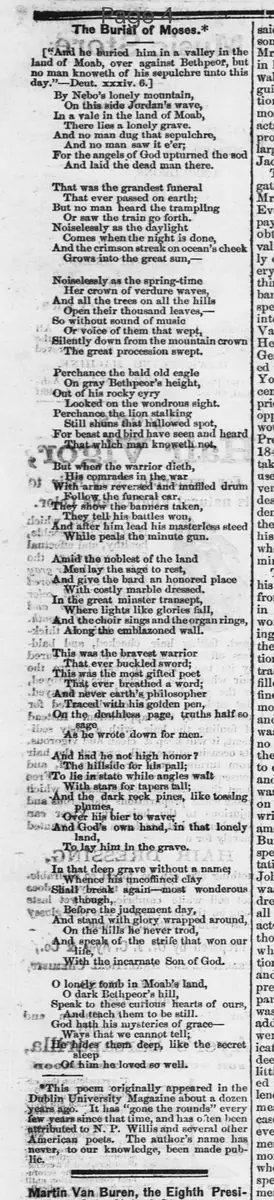
The Burial of Moses.
["And he buried him in a valley in the land of Moab, over against Bethpeor, but no man knoweth of his sepulchre unto this day." Deut. xxxiv. 6.]
By Nebo's lonely mountain,
On this side Jordan's wave,
In a vale in the land of Moab,
There lies a lonely grave.
And no man dug that sepulchre,
And no man saw it e'er:
For the angels of God upturned the sod
And laid the dead man there.
That was the grandest funeral
That ever passed on earth;
But no man heard the trampling,
Or saw the train go forth.
Noiselessly as the daylight
Comes when the night is done,
And the crimson streak on ocean's cheek
Grows into the great sun,
Noiselessly as the spring-time
Her crown of verdure waves,
And all the trees on all the hills
Open their thousand leaves,
So without sound of music
Or voice of them that wept,
Silently down from the mountain
The great procession swept.
Perchance the bald old eagle
On gray Bethpeor's height,
Out of his rocky eyry
Looked on the wondrous sight.
Perchance the lion stalking
Still shuns that hallowed spot;
For beast and bird have seen and heard,
That which man knoweth not.
But when the warrior dieth,
His comrades in the war,
With arms reversed and muffled drum,
Follow the funeral car;
They show the banners taken,
They tell his battles won,
And after him lead his masterless steed,
While peals the minute gun.
Amid the noblest of the land
Men lay the sage to rest,
And give the bard an honored place
With costly marble dressed
In the great minster transept,
Where lights like glories fall,
And the choir sings and the organ rings
Along the emblazoned wall.
This was the bravest warrior
That ever buckled sword;
This was the most gifted poet
That ever breathed a word;
And gave earth's philosopher
To trace with his golden pen,
On the depthless page, truths half so sage,
He wrote down for men.
And had not high honor?
The hillside for his pall;
To lie in state while angels wait
With stars for tapers tall;
And God, own hand, in that lonely land,
To lay him in the grave
In that deep grave without a name,
Whence his uncoffined clay
Shall break again, most wondrous thought,
Before the judgement day,
And stand with glory wrapped around
On the hills he never trod.
And speak of the strife that won our life
With the incarnate Son of God.
O lonely tomb in Moab's land!
O dark Bethpeor's hill!
Speak to these curious hearts of ours,
And teach them to be still.
God hath his mysteries of grace,
Ways that we cannot tell;
A voice from the stars, a whisper on earth,
The still small voice of the spheres.
Sleep on, his loved and his own,
His voice hath ceased to toll.
*This poem originally appeared in the Dublin University Magazine about a dozen years ago. It has "gone the rounds" every few years since that time, and has often been attributed to N. P. Willis and several other American poets. The author's name has never, to our knowledge, been made public.
["And he buried him in a valley in the land of Moab, over against Bethpeor, but no man knoweth of his sepulchre unto this day." Deut. xxxiv. 6.]
By Nebo's lonely mountain,
On this side Jordan's wave,
In a vale in the land of Moab,
There lies a lonely grave.
And no man dug that sepulchre,
And no man saw it e'er:
For the angels of God upturned the sod
And laid the dead man there.
That was the grandest funeral
That ever passed on earth;
But no man heard the trampling,
Or saw the train go forth.
Noiselessly as the daylight
Comes when the night is done,
And the crimson streak on ocean's cheek
Grows into the great sun,
Noiselessly as the spring-time
Her crown of verdure waves,
And all the trees on all the hills
Open their thousand leaves,
So without sound of music
Or voice of them that wept,
Silently down from the mountain
The great procession swept.
Perchance the bald old eagle
On gray Bethpeor's height,
Out of his rocky eyry
Looked on the wondrous sight.
Perchance the lion stalking
Still shuns that hallowed spot;
For beast and bird have seen and heard,
That which man knoweth not.
But when the warrior dieth,
His comrades in the war,
With arms reversed and muffled drum,
Follow the funeral car;
They show the banners taken,
They tell his battles won,
And after him lead his masterless steed,
While peals the minute gun.
Amid the noblest of the land
Men lay the sage to rest,
And give the bard an honored place
With costly marble dressed
In the great minster transept,
Where lights like glories fall,
And the choir sings and the organ rings
Along the emblazoned wall.
This was the bravest warrior
That ever buckled sword;
This was the most gifted poet
That ever breathed a word;
And gave earth's philosopher
To trace with his golden pen,
On the depthless page, truths half so sage,
He wrote down for men.
And had not high honor?
The hillside for his pall;
To lie in state while angels wait
With stars for tapers tall;
And God, own hand, in that lonely land,
To lay him in the grave
In that deep grave without a name,
Whence his uncoffined clay
Shall break again, most wondrous thought,
Before the judgement day,
And stand with glory wrapped around
On the hills he never trod.
And speak of the strife that won our life
With the incarnate Son of God.
O lonely tomb in Moab's land!
O dark Bethpeor's hill!
Speak to these curious hearts of ours,
And teach them to be still.
God hath his mysteries of grace,
Ways that we cannot tell;
A voice from the stars, a whisper on earth,
The still small voice of the spheres.
Sleep on, his loved and his own,
His voice hath ceased to toll.
*This poem originally appeared in the Dublin University Magazine about a dozen years ago. It has "gone the rounds" every few years since that time, and has often been attributed to N. P. Willis and several other American poets. The author's name has never, to our knowledge, been made public.
What keywords are associated?
Burial Moses
Angels Funeral
Biblical Elegy
Moab Valley
Divine Mystery
Prophet Death
Religious Procession
Gods Grace
Judgement Day
Moab Tomb
Bethpeor Hill
Warrior Poet
Sage Philosopher
Unseen Funeral
Angels Burial
Deuteronomy Verse
Dublin Magazine
Anonymous Poet
N P Willis Attribution
American Poets Misattribution
Poem Details
Title
The Burial Of Moses.
Subject
Burial Of Moses
Form / Style
Rhymed Quatrains
Key Lines
By Nebo's Lonely Mountain,
On This Side Jordan's Wave,
In A Vale In The Land Of Moab,
There Lies A Lonely Grave.
That Was The Grandest Funeral
That Ever Passed On Earth;
But No Man Heard The Trampling,
Or Saw The Train Go Forth.
This Was The Bravest Warrior
That Ever Buckled Sword;
This Was The Most Gifted Poet
That Ever Breathed A Word;
O Lonely Tomb In Moab's Land!
O Dark Bethpeor's Hill!
Speak To These Curious Hearts Of Ours,
And Teach Them To Be Still.