Thank you for visiting SNEWPapers!
Sign up free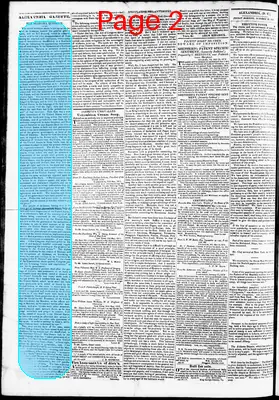
Domestic News
October 18, 1833
Phenix Gazette
Alexandria, Virginia
What is this article about?
An article defends the U.S. federal government's exclusive authority over Indian lands in Alabama, citing historical cessions and constitutional provisions. It dismisses nullification sentiments and justifies the use of force to remove squatter Owens from unauthorized settlement.
Clipping

OCR Quality
75%
Good
Full Text
THE ALABAMA QUESTION.
The recent attempts made to get up an excitement in Alabama, against the general government, will we feel assured, result in complete failure and to the utter disappointment of those among us, who hail with exultation, every symptom of discontent or disaffection in a Southern State, as indicating the approaching consummation of their hopes, in the formation of a Southern Confederacy. Opinion is certainly divided in Alabama as to the propriety, or rather expediency of the course adopted by the general government for the assertion of its rights—but it is only in the comparatively small portion of the State, infected with nullification, that the right of the government to manage the Indian Territory and expel intruders in its own way, is seriously questioned. The Alabama case is entirely different from that of Georgia;—in the former there exists no claim on the part of the State to the Indian lands, either as an incident of original sovereignty, or as derived from treaty; and therefore there cannot possibly be any question of reserved rights or State sovereignty involved in it. A brief reference to some historical facts and to the acts of the Federal Government, and of Alabama herself, connected with the admission of the latter into the Union, will set the matter in a clear and conclusive light. The territory now composing the States of Alabama and Mississippi, formerly belonged to Georgia, and in 1802 she ceded to the United States, in the language of the first article of the cession "all the right, title and claim, which the said State has to the jurisdiction and soil" of that territory. This then was a complete investiture of the United States with all right to the lands now lying within the limits of Alabama, and of jurisdiction over them by the authority competent to make the grant, and there cannot therefore be any dispute about the title of the United States to both soil and jurisdiction, unless it has been subsequently divested by some act of the general government, in favor of the State of Alabama. But so far from this being the case, in regard to the Indian lands, that on the admission of Alabama into the Union, the right of the United States to those lands was, by a provident foresight to meet the present emergency, expressly reserved. The 4th Sec. of the act of Congress admitting that State into this Union, enacts "that before she shall be admitted a Convention of her people shall provide by an Ordinance irrevocable without the consent of the United States, that the people inhabiting the said State do agree and declare, that they ever disclaim all right and title to the waste and unappropriated lands lying within said territory; and that the same shall be and remain at the entire disposition of the United States;" other restrictions in the same section are imposed upon the legislation of the State. "The Convention (says a writer in an Alabama paper) did make the agreement and disclaimer required; and we in whose name and by whose instructions they acted, have no right now to gainsay their act. We have received the consideration upon which this agreement was made. The bounties and blessings of the government have been poured out upon us. Protection and peace under it, we have enjoyed, and we cannot at this day refuse to pay the price."
The people of Alabama, having thus in the very act of forming themselves a State, the sole and entire disposition of the United States." it is ridiculous to talk of the sovereignty of Alabama being concerned in the expulsion of squatters and intruders by the United States: nor is it within the province of the authorities of Alabama to say, in what manner, or by what means the United States shall exercise their sovereignty over their own territory. This would be the plain dictate of reason and common sense had the matter rested on implication alone; but we find a provision in the Constitution which renders controversy inadmissible, if not impossible. "The Congress shall have power to dispose of and make all needful rules and regulations respecting the territory or the property belonging to the United States." The Indian lands in Alabama by the cession of Georgia and the recognition of Alabama, on becoming a State, become and continue to be "territory belonging to the U. States;" and under the clause of the Constitution above quoted, Congress passed the following "rules and regulations," or law for its government:
If any person or persons shall after the passage of this act, take possession of, or make a settlement upon any lands ceded or secured to the United States by any treaty made with a foreign power, by a cession from any State to the United States, which lands shall not have been previously sold, ceded or leased by the United States, or the claim to which lands by such person or persons shall not have been previously recognized and confirmed by the United States, or if any shall cause such lands to be thus occupied, taken possession of, or settled, it shall be lawful for the President of the United States to direct the Marshal, or the officer acting as Marshal, in the manner herein after mentioned, and also to take such other measures, and to employ such military force, as he may judge necessary and proper to remove, from lands, ceded or secured to the United States, by treaty or cession as aforesaid, any person or persons, who shall hereafter take possession of the same, or make or attempt to make a settlement thereon until authorized by law."
Now, what are the facts of the case, about which such a clamor has been raised in and out of Alabama, by the hostile and the disaffected, to the American Union? One Owens had, in the very language of the law "taken possession of, or made a settlement on lands ceded to the United States, by a cession from a State," without right, either by purchase or permission, and, "the President of the United States directed the Marshal' to remove him, but he resisting, and threatening violence, it became necessary "to employ such force." to aid the Marshal in the execution of his duty, and he still resisting with a violent "aggressor yet those who were charged with ,..' ss unfortunately, but still justified ly .eof them The case is precise- tat of a heriffor constable killing .. atn foree, the executiou ofpro- rono: properiy-.if the officer sheds .:ajv.ae oust atone for it on the tasirily, and unavoidably, he will
The recent attempts made to get up an excitement in Alabama, against the general government, will we feel assured, result in complete failure and to the utter disappointment of those among us, who hail with exultation, every symptom of discontent or disaffection in a Southern State, as indicating the approaching consummation of their hopes, in the formation of a Southern Confederacy. Opinion is certainly divided in Alabama as to the propriety, or rather expediency of the course adopted by the general government for the assertion of its rights—but it is only in the comparatively small portion of the State, infected with nullification, that the right of the government to manage the Indian Territory and expel intruders in its own way, is seriously questioned. The Alabama case is entirely different from that of Georgia;—in the former there exists no claim on the part of the State to the Indian lands, either as an incident of original sovereignty, or as derived from treaty; and therefore there cannot possibly be any question of reserved rights or State sovereignty involved in it. A brief reference to some historical facts and to the acts of the Federal Government, and of Alabama herself, connected with the admission of the latter into the Union, will set the matter in a clear and conclusive light. The territory now composing the States of Alabama and Mississippi, formerly belonged to Georgia, and in 1802 she ceded to the United States, in the language of the first article of the cession "all the right, title and claim, which the said State has to the jurisdiction and soil" of that territory. This then was a complete investiture of the United States with all right to the lands now lying within the limits of Alabama, and of jurisdiction over them by the authority competent to make the grant, and there cannot therefore be any dispute about the title of the United States to both soil and jurisdiction, unless it has been subsequently divested by some act of the general government, in favor of the State of Alabama. But so far from this being the case, in regard to the Indian lands, that on the admission of Alabama into the Union, the right of the United States to those lands was, by a provident foresight to meet the present emergency, expressly reserved. The 4th Sec. of the act of Congress admitting that State into this Union, enacts "that before she shall be admitted a Convention of her people shall provide by an Ordinance irrevocable without the consent of the United States, that the people inhabiting the said State do agree and declare, that they ever disclaim all right and title to the waste and unappropriated lands lying within said territory; and that the same shall be and remain at the entire disposition of the United States;" other restrictions in the same section are imposed upon the legislation of the State. "The Convention (says a writer in an Alabama paper) did make the agreement and disclaimer required; and we in whose name and by whose instructions they acted, have no right now to gainsay their act. We have received the consideration upon which this agreement was made. The bounties and blessings of the government have been poured out upon us. Protection and peace under it, we have enjoyed, and we cannot at this day refuse to pay the price."
The people of Alabama, having thus in the very act of forming themselves a State, the sole and entire disposition of the United States." it is ridiculous to talk of the sovereignty of Alabama being concerned in the expulsion of squatters and intruders by the United States: nor is it within the province of the authorities of Alabama to say, in what manner, or by what means the United States shall exercise their sovereignty over their own territory. This would be the plain dictate of reason and common sense had the matter rested on implication alone; but we find a provision in the Constitution which renders controversy inadmissible, if not impossible. "The Congress shall have power to dispose of and make all needful rules and regulations respecting the territory or the property belonging to the United States." The Indian lands in Alabama by the cession of Georgia and the recognition of Alabama, on becoming a State, become and continue to be "territory belonging to the U. States;" and under the clause of the Constitution above quoted, Congress passed the following "rules and regulations," or law for its government:
If any person or persons shall after the passage of this act, take possession of, or make a settlement upon any lands ceded or secured to the United States by any treaty made with a foreign power, by a cession from any State to the United States, which lands shall not have been previously sold, ceded or leased by the United States, or the claim to which lands by such person or persons shall not have been previously recognized and confirmed by the United States, or if any shall cause such lands to be thus occupied, taken possession of, or settled, it shall be lawful for the President of the United States to direct the Marshal, or the officer acting as Marshal, in the manner herein after mentioned, and also to take such other measures, and to employ such military force, as he may judge necessary and proper to remove, from lands, ceded or secured to the United States, by treaty or cession as aforesaid, any person or persons, who shall hereafter take possession of the same, or make or attempt to make a settlement thereon until authorized by law."
Now, what are the facts of the case, about which such a clamor has been raised in and out of Alabama, by the hostile and the disaffected, to the American Union? One Owens had, in the very language of the law "taken possession of, or made a settlement on lands ceded to the United States, by a cession from a State," without right, either by purchase or permission, and, "the President of the United States directed the Marshal' to remove him, but he resisting, and threatening violence, it became necessary "to employ such force." to aid the Marshal in the execution of his duty, and he still resisting with a violent "aggressor yet those who were charged with ,..' ss unfortunately, but still justified ly .eof them The case is precise- tat of a heriffor constable killing .. atn foree, the executiou ofpro- rono: properiy-.if the officer sheds .:ajv.ae oust atone for it on the tasirily, and unavoidably, he will
What sub-type of article is it?
Politics
Indian Affairs
What keywords are associated?
Alabama Question
Indian Territory
Federal Authority
Nullification
Squatters
Owens Removal
What entities or persons were involved?
Owens
Where did it happen?
Alabama
Domestic News Details
Primary Location
Alabama
Key Persons
Owens
Outcome
force employed to remove owens, resulting in possible deaths justified as necessary
Event Details
Federal government asserts rights over Indian lands ceded by Georgia and reserved upon Alabama's statehood; law authorizes removal of unauthorized settlers like Owens, who resisted marshal, necessitating military force