Thank you for visiting SNEWPapers!
Sign up free
Literary
September 29, 1825
The Virginian
Lynchburg, Virginia
What is this article about?
A philosophical essay reflecting on the fear of death, the loss of youthful friends, the seeming prematurity of deaths at different life stages, and the enduring legacy of great minds, concluding with a catalog of historical figures in the 'temple of death.'
Clipping
OCR Quality
95%
Excellent
Full Text
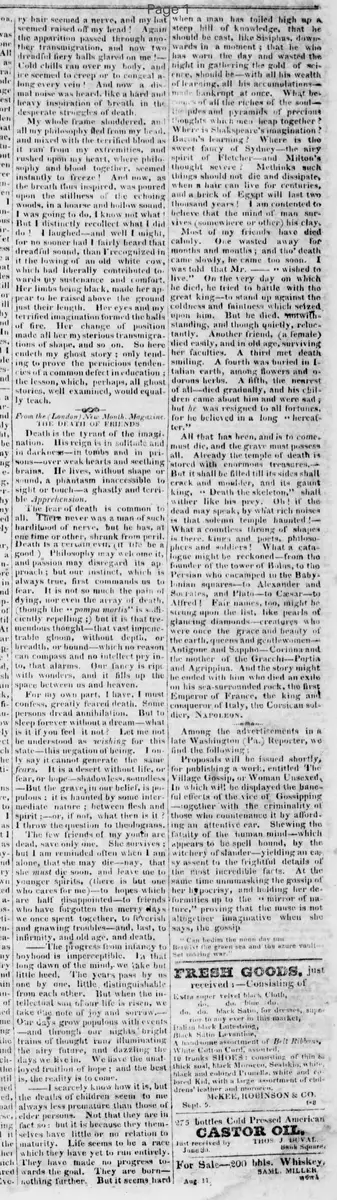
THE DEATH OF FRIENDS
Death is the tyrant of the imagination. His reign is in solitude and
in darkness—in tombs and in prisons—over weak hearts and seething
brains. He lives, without shape or
sound, a phantasm inaccessible to
sight or touch—a ghastly and terrible Apprehension.
The fear of death is common to
all, There never was a man of such
hardihood of nerve, but he has, at
one time or other. shrunk from peril.
Death is a certain evil, (if there be a
good) Philosophy may welcome it,
and passion may disregard its approach; but our instinct, which is
always true, first commands us to
fear. It is not so much the pain of
dying. nor even the array of death.
(though the "pompa mortis" is sufficiently repelling ;) but it is that tremendous thought—that vast impenetrable gloom, without depth, or
breadth, or bound—which no reason
can compass and no intellect pry into, that alarms. Our fancy is ripe
with wonders, and it fills up the
space between us and heaven.
For my own part, I have. I must
confess, greatly feared death. Some
persons dread annihilation. But to
sleep forever without a dream—what
is it if you feel it not? Let me not
be understood as wishing for this
state—this negation of being. I only say it cannot generate the same
fears. It is a desert without life, or
fear, or hope—shadowless, soundless
—But the grave, in our belief, is populous : it is haunted by some intermediate nature ; between flesh and
spirit ;—or, if not, what then is it?
I throw the question to theologians.
The few friends of my youth are
dead, save only one. She survives :
but I am reminded often when I am
alone, that she may die—nay, that
she must die soon, and leave me to
younger spirits, (there is but one
who cares for me)—to hopes which
are half disappointed—to friends
who have forgotten the merry days
we once spent together, to feverish
and gnawing troubles—and, last, to
infirmity, and old age, and death.
—The progress from infancy to
boyhood is imperceptible. In that
long dawn of the mind, we take but
little heed. The years pass by us
one by one, little, distinguishable
from each other, But when the intellectual sun of our life is risen, we
take due note of joy and sorrow.—
Our days grow populous with events
—and through our nights bright
trains of thought run illuminating
the airy future, and dazzling the
days we live in. We have the unalloyed fruition of hope; and the best
is, the reality is to come.
—I scarcely know how it is, but
the deaths of children seem to me
always less premature than those of
elder persons. Not that they are in
fact so: but it is because they themselves have little or no relation to
maturity. Life seems to be a race
which they have yet to run entirely.
They have made no progress towards the goal. They are born—
nothing further. But it seems hard
when a man has toiled high up a
steep hill of knowledge. that he
should be cast, like Sisyphus, down
wards in a moment ; that he who
has worn the day and wasted the
night in gathering the gold of science, should be—with all his wealth
of learning. all his accumulations—
made bankrupt at once. What becomes of all the riches of the soul—
the piles and pyramids of precious
thoughts which men heap together?
Where is Shakspeare's imagination?
Bacon's learning? Where is the
sweet fancy of Sidney—the airy
spirit of Fletcher—and Milton's
thought severe ? Methinks such
things should not die and dissipate,
when a hair can live for centuries,
and a brick of Egypt will last two
thousand years ! I am contented to
believe that the mind of man survives (somewhere or other) his days
Most of my friends have died
calmly. One wasted away for
months and months; and tho' death
came slowly, he came too soon. I
was told that Mr. —nn "wished to
live." On the very day on which
he died, he tried to battle with the
great king—to stand up against the
coldness and faintness which seized
upon him. But he died, notwithstanding, and though quietly, reluctantly. Another friend, (a female)
died easily, and in old age, surviving
her faculties. A third met death
smiling. A fourth was buried in Italian earth, among flowers and odorous herbs. A fifth, the nearest
of all—died gradually, and his children came about him and were sad ;
but he was resigned to all fortunes.
for he believed in a long "hereafter."
All that has been, and is to come.
must die, and the grave must possess
all. Already the temple of death is
stored with enormous treasures.—
But it shall be filled till its sides shall
crack and moulder, and its gaunt
king, "Death the skeleton," shall
wither like his prey. Oh! if the
dead may speak, by what rich noises
is that solemn temple haunted !—
What a countless throng of shades
is there. kings and poets, philosophers and soldiers! What a catalogue might be reckoned—from the
founder of the tower of Babel, to the
Persian who encamped in the Babylonian squares—to Alexander and
Socrates, and Plato—to Caesar—to
Alfred ! Fair names, too, might be
strung upon the list, like pearls of
glancing diamonds—creatures who
were once the grace and beauty of
the earth, queens and gentlewomen—a
Antigone and Sappho— Corinna and
the mother of the Gracchi—Partia
and Agrippina. And the story might
be ended with him who died an exile
on his sea-surrounded rock, the first
Emperor of France, the king and
conqueror of Italy, the Corsican soldier, NAPOLEON.
Death is the tyrant of the imagination. His reign is in solitude and
in darkness—in tombs and in prisons—over weak hearts and seething
brains. He lives, without shape or
sound, a phantasm inaccessible to
sight or touch—a ghastly and terrible Apprehension.
The fear of death is common to
all, There never was a man of such
hardihood of nerve, but he has, at
one time or other. shrunk from peril.
Death is a certain evil, (if there be a
good) Philosophy may welcome it,
and passion may disregard its approach; but our instinct, which is
always true, first commands us to
fear. It is not so much the pain of
dying. nor even the array of death.
(though the "pompa mortis" is sufficiently repelling ;) but it is that tremendous thought—that vast impenetrable gloom, without depth, or
breadth, or bound—which no reason
can compass and no intellect pry into, that alarms. Our fancy is ripe
with wonders, and it fills up the
space between us and heaven.
For my own part, I have. I must
confess, greatly feared death. Some
persons dread annihilation. But to
sleep forever without a dream—what
is it if you feel it not? Let me not
be understood as wishing for this
state—this negation of being. I only say it cannot generate the same
fears. It is a desert without life, or
fear, or hope—shadowless, soundless
—But the grave, in our belief, is populous : it is haunted by some intermediate nature ; between flesh and
spirit ;—or, if not, what then is it?
I throw the question to theologians.
The few friends of my youth are
dead, save only one. She survives :
but I am reminded often when I am
alone, that she may die—nay, that
she must die soon, and leave me to
younger spirits, (there is but one
who cares for me)—to hopes which
are half disappointed—to friends
who have forgotten the merry days
we once spent together, to feverish
and gnawing troubles—and, last, to
infirmity, and old age, and death.
—The progress from infancy to
boyhood is imperceptible. In that
long dawn of the mind, we take but
little heed. The years pass by us
one by one, little, distinguishable
from each other, But when the intellectual sun of our life is risen, we
take due note of joy and sorrow.—
Our days grow populous with events
—and through our nights bright
trains of thought run illuminating
the airy future, and dazzling the
days we live in. We have the unalloyed fruition of hope; and the best
is, the reality is to come.
—I scarcely know how it is, but
the deaths of children seem to me
always less premature than those of
elder persons. Not that they are in
fact so: but it is because they themselves have little or no relation to
maturity. Life seems to be a race
which they have yet to run entirely.
They have made no progress towards the goal. They are born—
nothing further. But it seems hard
when a man has toiled high up a
steep hill of knowledge. that he
should be cast, like Sisyphus, down
wards in a moment ; that he who
has worn the day and wasted the
night in gathering the gold of science, should be—with all his wealth
of learning. all his accumulations—
made bankrupt at once. What becomes of all the riches of the soul—
the piles and pyramids of precious
thoughts which men heap together?
Where is Shakspeare's imagination?
Bacon's learning? Where is the
sweet fancy of Sidney—the airy
spirit of Fletcher—and Milton's
thought severe ? Methinks such
things should not die and dissipate,
when a hair can live for centuries,
and a brick of Egypt will last two
thousand years ! I am contented to
believe that the mind of man survives (somewhere or other) his days
Most of my friends have died
calmly. One wasted away for
months and months; and tho' death
came slowly, he came too soon. I
was told that Mr. —nn "wished to
live." On the very day on which
he died, he tried to battle with the
great king—to stand up against the
coldness and faintness which seized
upon him. But he died, notwithstanding, and though quietly, reluctantly. Another friend, (a female)
died easily, and in old age, surviving
her faculties. A third met death
smiling. A fourth was buried in Italian earth, among flowers and odorous herbs. A fifth, the nearest
of all—died gradually, and his children came about him and were sad ;
but he was resigned to all fortunes.
for he believed in a long "hereafter."
All that has been, and is to come.
must die, and the grave must possess
all. Already the temple of death is
stored with enormous treasures.—
But it shall be filled till its sides shall
crack and moulder, and its gaunt
king, "Death the skeleton," shall
wither like his prey. Oh! if the
dead may speak, by what rich noises
is that solemn temple haunted !—
What a countless throng of shades
is there. kings and poets, philosophers and soldiers! What a catalogue might be reckoned—from the
founder of the tower of Babel, to the
Persian who encamped in the Babylonian squares—to Alexander and
Socrates, and Plato—to Caesar—to
Alfred ! Fair names, too, might be
strung upon the list, like pearls of
glancing diamonds—creatures who
were once the grace and beauty of
the earth, queens and gentlewomen—a
Antigone and Sappho— Corinna and
the mother of the Gracchi—Partia
and Agrippina. And the story might
be ended with him who died an exile
on his sea-surrounded rock, the first
Emperor of France, the king and
conqueror of Italy, the Corsican soldier, NAPOLEON.
What sub-type of article is it?
Essay
What themes does it cover?
Death Mortality
Friendship
What keywords are associated?
Death
Friends
Mortality
Fear
Legacy
Philosophy
Historical Figures
Literary Details
Title
The Death Of Friends
Subject
Reflection On The Death Of Friends And Fear Of Mortality
Key Lines
Death Is The Tyrant Of The Imagination. His Reign Is In Solitude And In Darkness—In Tombs And In Prisons—Over Weak Hearts And Seething Brains.
The Fear Of Death Is Common To All, There Never Was A Man Of Such Hardihood Of Nerve, But He Has, At One Time Or Other. Shrunk From Peril.
What Becomes Of All The Riches Of The Soul—The Piles And Pyramids Of Precious Thoughts Which Men Heap Together? Where Is Shakspeare's Imagination? Bacon's Learning?
All That Has Been, And Is To Come. Must Die, And The Grave Must Possess All.
And The Story Might Be Ended With Him Who Died An Exile On His Sea Surrounded Rock, The First Emperor Of France, The King And Conqueror Of Italy, The Corsican Soldier, Napoleon.