Thank you for visiting SNEWPapers!
Sign up free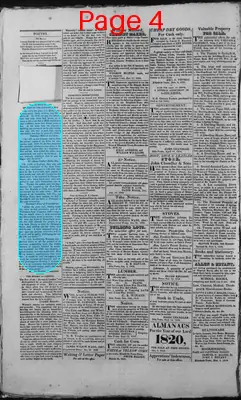
Literary
February 8, 1820
Elizabeth Town Gazette
Elizabeth, Union County, New Jersey
What is this article about?
A collection of historical anecdotes from various sources detailing the high cost and persecution faced in producing and distributing English translations of the Bible, including prices in the 13th century, printing controversies in 1461, and suppressions under Henry VIII in the 1520s-1530s.
Clipping
OCR Quality
95%
Excellent
Full Text
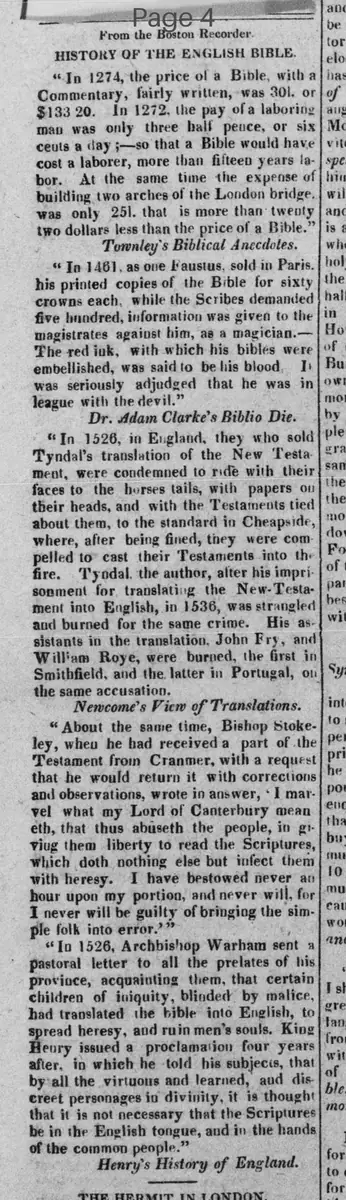
From the Boston Recorder,
HISTORY OF THE ENGLISH BIBLE
"In 1274, the price of a Bible, with a Commentary, fairly written, was 30l. or $133 20. In 1272, the pay of a laboring man was only three half pence, or six cents a day; so that a Bible would have cost a laborer, more than fifteen years labor. At the same time the expense of building two arches of the London bridge, was only 25l. that is more than twenty two dollars less than the price of a Bible."
Townley's Biblical Anecdotes.
"In 1461, as one Faustus, sold in Paris, his printed copies of the Bible for sixty crowns each, while the Scribes demanded five hundred, information was given to the magistrates against him, as a magician.-- The red ink, with which his bibles were embellished, was said to be his blood, I was seriously adjudged that he was in league with the devil."
Dr. Adam Clarke's Biblio Die.
"In 1526, in England, they who sold Tyndal's translation of the New Testament, were condemned to ride with their faces to the horses tails, with papers on their heads, and with the Testaments tied about them, to the standard in Cheapside, where, after being fined, they were compelled to cast their Testaments into the fire. Tyndal, the author, after his imprisonment for translating the New-Testament into English, in 1536, was strangled and burned for the same crime. His assistants in the translation, John Fry, and William Roye, were burned, the first in Smithfield, and the latter in Portugal, on the same accusation."
Newcome's View of Translations.
"About the same time, Bishop Stokely, when he had received a part of the Testament from Cranmer, with a request that he would return it with corrections and observations, wrote in answer, I marvel what my Lord of Canterbury meaneth, that thus abuseth the people, in giving them liberty to read the Scriptures, which doth nothing else but infect them with heresy. I have bestowed never an hour upon my portion, and never will, for I never will be guilty of bringing the simple folk into error."
"In 1526, Archbishop Warham sent a pastoral letter to all the prelates of his province, acquainting them, that certain children of iniquity, blinded by malice, had translated the bible into English, to spread heresy, and ruin men's souls. King Henry issued a proclamation four years after, in which he told his subjects, that by all the virtuous and learned, and discreet personages in divinity, it is thought that it is not necessary that the Scriptures be in the English tongue, and in the hands of the common people."
Henry's History of England.
HISTORY OF THE ENGLISH BIBLE
"In 1274, the price of a Bible, with a Commentary, fairly written, was 30l. or $133 20. In 1272, the pay of a laboring man was only three half pence, or six cents a day; so that a Bible would have cost a laborer, more than fifteen years labor. At the same time the expense of building two arches of the London bridge, was only 25l. that is more than twenty two dollars less than the price of a Bible."
Townley's Biblical Anecdotes.
"In 1461, as one Faustus, sold in Paris, his printed copies of the Bible for sixty crowns each, while the Scribes demanded five hundred, information was given to the magistrates against him, as a magician.-- The red ink, with which his bibles were embellished, was said to be his blood, I was seriously adjudged that he was in league with the devil."
Dr. Adam Clarke's Biblio Die.
"In 1526, in England, they who sold Tyndal's translation of the New Testament, were condemned to ride with their faces to the horses tails, with papers on their heads, and with the Testaments tied about them, to the standard in Cheapside, where, after being fined, they were compelled to cast their Testaments into the fire. Tyndal, the author, after his imprisonment for translating the New-Testament into English, in 1536, was strangled and burned for the same crime. His assistants in the translation, John Fry, and William Roye, were burned, the first in Smithfield, and the latter in Portugal, on the same accusation."
Newcome's View of Translations.
"About the same time, Bishop Stokely, when he had received a part of the Testament from Cranmer, with a request that he would return it with corrections and observations, wrote in answer, I marvel what my Lord of Canterbury meaneth, that thus abuseth the people, in giving them liberty to read the Scriptures, which doth nothing else but infect them with heresy. I have bestowed never an hour upon my portion, and never will, for I never will be guilty of bringing the simple folk into error."
"In 1526, Archbishop Warham sent a pastoral letter to all the prelates of his province, acquainting them, that certain children of iniquity, blinded by malice, had translated the bible into English, to spread heresy, and ruin men's souls. King Henry issued a proclamation four years after, in which he told his subjects, that by all the virtuous and learned, and discreet personages in divinity, it is thought that it is not necessary that the Scriptures be in the English tongue, and in the hands of the common people."
Henry's History of England.
What sub-type of article is it?
Essay
What themes does it cover?
Religious
Political
What keywords are associated?
English Bible
Translation History
Persecution
Tyndale
Scripture Access
Historical Anecdotes
What entities or persons were involved?
From The Boston Recorder
Literary Details
Title
History Of The English Bible
Author
From The Boston Recorder
Subject
History Of English Bible Translations And Persecutions
Key Lines
In 1274, The Price Of A Bible, With A Commentary, Fairly Written, Was 30l. Or $133 20. In 1272, The Pay Of A Laboring Man Was Only Three Half Pence, Or Six Cents A Day; So That A Bible Would Have Cost A Laborer, More Than Fifteen Years Labor.
In 1526, In England, They Who Sold Tyndal's Translation Of The New Testament, Were Condemned To Ride With Their Faces To The Horses Tails... Tyndal, The Author... Was Strangled And Burned For The Same Crime.
King Henry Issued A Proclamation Four Years After, In Which He Told His Subjects, That By All The Virtuous And Learned... It Is Thought That It Is Not Necessary That The Scriptures Be In The English Tongue, And In The Hands Of The Common People.