Thank you for visiting SNEWPapers!
Sign up free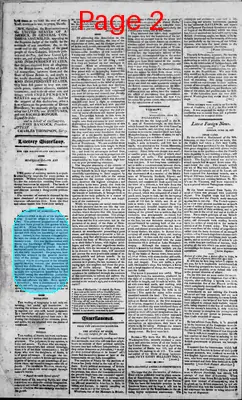
Literary
July 4, 1810
The Rhode Island Republican
Newport, Newport County, Rhode Island
What is this article about?
This essay explores the ancient origins of agriculture, beginning in the Garden of Eden where Adam and Eve were tasked with tilling the soil. After their expulsion, Cain preserved the knowledge. The flood interrupted progress, but Noah revived it by planting vineyards and cultivating the earth, spreading its benefits across the East.
Clipping
OCR Quality
98%
Excellent
Full Text
ANTIQUITY OF AGRICULTURE
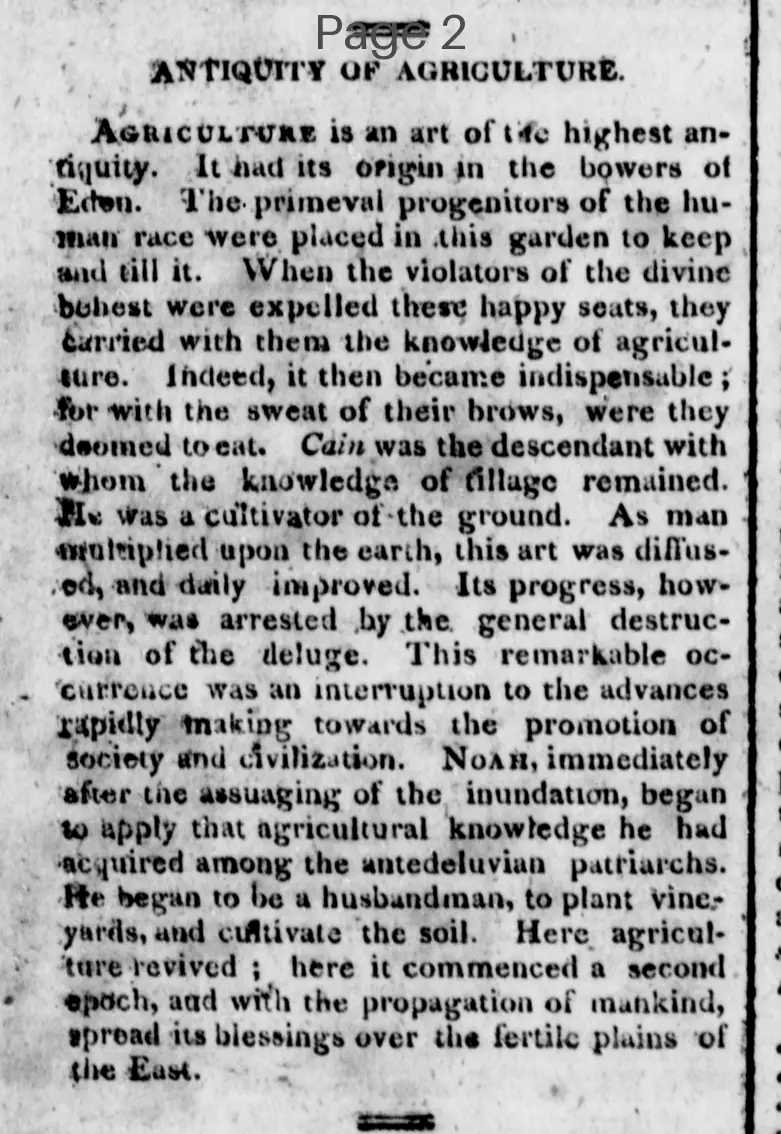
Agriculture is an art of the highest antiquity. It had its origin in the bowers of Eden. The primeval progenitors of the human race were placed in this garden to keep and till it. When the violators of the divine behest were expelled these happy seats, they carried with them the knowledge of agriculture. Indeed, it then became indispensable; for with the sweat of their brows, were they doomed to eat. Cain was the descendant with whom the knowledge of tillage remained. He was a cultivator of the ground. As man multiplied upon the earth, this art was diffused, and daily improved. Its progress, however, was arrested by the general destruction of the deluge. This remarkable occurrence was an interruption to the advances rapidly making towards the promotion of society and civilization. Noah, immediately after the assuaging of the inundation, began to apply that agricultural knowledge he had acquired among the antediluvian patriarchs. He began to be a husbandman, to plant vineyards, and cultivate the soil. Here agriculture revived; here it commenced a second epoch, and with the propagation of mankind, spread its blessings over the fertile plains of the East.
Agriculture is an art of the highest antiquity. It had its origin in the bowers of Eden. The primeval progenitors of the human race were placed in this garden to keep and till it. When the violators of the divine behest were expelled these happy seats, they carried with them the knowledge of agriculture. Indeed, it then became indispensable; for with the sweat of their brows, were they doomed to eat. Cain was the descendant with whom the knowledge of tillage remained. He was a cultivator of the ground. As man multiplied upon the earth, this art was diffused, and daily improved. Its progress, however, was arrested by the general destruction of the deluge. This remarkable occurrence was an interruption to the advances rapidly making towards the promotion of society and civilization. Noah, immediately after the assuaging of the inundation, began to apply that agricultural knowledge he had acquired among the antediluvian patriarchs. He began to be a husbandman, to plant vineyards, and cultivate the soil. Here agriculture revived; here it commenced a second epoch, and with the propagation of mankind, spread its blessings over the fertile plains of the East.
What sub-type of article is it?
Essay
What themes does it cover?
Agriculture Rural
Religious
What keywords are associated?
Agriculture
Antiquity
Eden
Cain
Noah
Deluge
Tillage
Husbandman
Vineyards
Civilization
Literary Details
Title
Antiquity Of Agriculture
Subject
On The Origins Of Agriculture From Biblical Times
Key Lines
Agriculture Is An Art Of The Highest Antiquity. It Had Its Origin In The Bowers Of Eden.
The Primeval Progenitors Of The Human Race Were Placed In This Garden To Keep And Till It.
Cain Was The Descendant With Whom The Knowledge Of Tillage Remained. He Was A Cultivator Of The Ground.
Noah, Immediately After The Assuaging Of The Inundation, Began To Apply That Agricultural Knowledge He Had Acquired Among The Antediluvian Patriarchs.
Here Agriculture Revived; Here It Commenced A Second Epoch, And With The Propagation Of Mankind, Spread Its Blessings Over The Fertile Plains Of The East.