Thank you for visiting SNEWPapers!
Sign up free
Randolph County Journal
Winchester, Randolph County, Indiana
What is this article about?
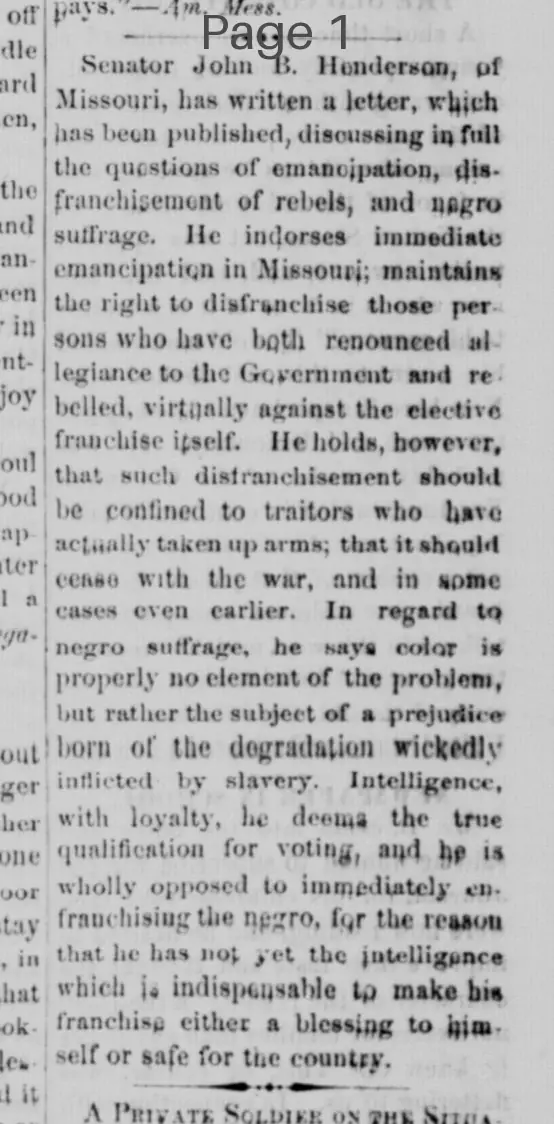
Senator John B. Henderson of Missouri published a letter endorsing immediate emancipation in Missouri, limited disfranchisement to armed rebels ending with the war, and opposing immediate negro suffrage due to insufficient intelligence among them.
Clipping
OCR Quality
Full Text
What sub-type of article is it?
What keywords are associated?
What entities or persons were involved?
Where did it happen?
Domestic News Details
Primary Location
Missouri
Key Persons
Event Details
Senator John B. Henderson of Missouri has written and published a letter discussing emancipation, disfranchisement of rebels, and negro suffrage. He endorses immediate emancipation in Missouri; maintains the right to disfranchise persons who have renounced allegiance and rebelled against the elective franchise. He holds that such disfranchisement should be confined to traitors who have actually taken up arms; that it should cease with the war, and in some cases even earlier. In regard to negro suffrage, he says color is properly no element of the problem, but rather the subject of a prejudice born of the degradation wickedly inflicted by slavery. Intelligence, with loyalty, he deems the true qualification for voting, and he is wholly opposed to immediately enfranchising the negro, for the reason that he has not yet the intelligence which is indispensable to make his franchise either a blessing to himself or safe for the country.