Thank you for visiting SNEWPapers!
Sign up free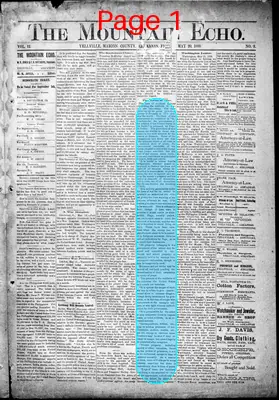
Story
May 20, 1898
The Mountain Echo
Yellville, Marion County, Arkansas
What is this article about?
Overview of international laws of war from the 1874 Brussels code and Francis Lieber's instructions for the US Army, detailing permissible tactics, protections for non-combatants and property, and restrictions based on honor and justice.
Clipping

OCR Quality
98%
Excellent
Full Text
The Laws of War.
The laws of civilized nations concerning the methods of warfare are interesting. The code drawn up by the great powers of Europe at Brussels in 1874 governs the world. The laws of this government are contained in 'Instructions for the government of the Armies of the United States in the Field,' as prepared by Francis Lieber. The provisions of this treatise are similar to those contained in the code adopted by the powers at Brussels. Some of the propositions laid down are that "the ultimate object of all wars is a renewed state of peace. No conventional restriction of the modes adopted to injure the enemy is any longer admitted, but the laws of war impose many limitations and restrictions on principles of honor, faith and justice.
"It is lawful to starve hostile belligerents, whether armed or unarmed; to destroy the lives and limbs of all enemies whose destruction is unavoidable in prosecuting the war; to capture and destroy the enemy's property and his routes or channels of commerce, and to make use of all deceptions that do not involve the breaking of faith.
"It is entirely permissible under the laws of war for an enemy to bombard an unfortified city without giving the least warning of his purpose, although he may, if he desires give time to non-combatants to be removed. This is ordinarily done, though if time were in question it might easily be disregarded. Flags, usually yellow, are put in such cases to mark the locations of hospitals, and the enemy is required to avoid firing on them. There have been occasions when the enemy has required a town about to be bombarded to designate museums, libraries and art collections by flags, so as to avoid their destruction.
"All property belonging to the government of the enemy may be seized and converted to use. Church and school property is generally held to be exempt from permanent confiscation, though it may be temporarily used. Museums and art works may be carried off, and held pending the determination of their ownership by treaty of peace.
The persons of the residents of the countries the United States may invade are inviolate.
"It is against the usages of modern war to refuse to give quarter, except when in extreme dangers, though being incumbered by prisoners, or in the case of troops who masquerade in the enemy's uniform or who fight without authorization by their government.
"It is permissible for the army to levy temporary loans or impose taxes, or billet soldiers, in an invaded country.
"Correspondents, sutlers, etc.; may be held as prisoners of war. Chaplains, doctors, nurses, etc., are not, except in extreme cases.
Prisoners may be shot if they attempt to escape, but cannot legally be punished after recapture.
"Private property, including money or other valuables. found on the person of prisoners, is not to be confiscated. except in case of extreme necessity. As a matter of facts, there will always be some robbery sometime but there is less robbery than in time of peace.
Flags of truce are inviolate, but firing is not required to cease on the appearance, and should the bearer be killed by accident: it furnishes ground for complaint."
The laws of civilized nations concerning the methods of warfare are interesting. The code drawn up by the great powers of Europe at Brussels in 1874 governs the world. The laws of this government are contained in 'Instructions for the government of the Armies of the United States in the Field,' as prepared by Francis Lieber. The provisions of this treatise are similar to those contained in the code adopted by the powers at Brussels. Some of the propositions laid down are that "the ultimate object of all wars is a renewed state of peace. No conventional restriction of the modes adopted to injure the enemy is any longer admitted, but the laws of war impose many limitations and restrictions on principles of honor, faith and justice.
"It is lawful to starve hostile belligerents, whether armed or unarmed; to destroy the lives and limbs of all enemies whose destruction is unavoidable in prosecuting the war; to capture and destroy the enemy's property and his routes or channels of commerce, and to make use of all deceptions that do not involve the breaking of faith.
"It is entirely permissible under the laws of war for an enemy to bombard an unfortified city without giving the least warning of his purpose, although he may, if he desires give time to non-combatants to be removed. This is ordinarily done, though if time were in question it might easily be disregarded. Flags, usually yellow, are put in such cases to mark the locations of hospitals, and the enemy is required to avoid firing on them. There have been occasions when the enemy has required a town about to be bombarded to designate museums, libraries and art collections by flags, so as to avoid their destruction.
"All property belonging to the government of the enemy may be seized and converted to use. Church and school property is generally held to be exempt from permanent confiscation, though it may be temporarily used. Museums and art works may be carried off, and held pending the determination of their ownership by treaty of peace.
The persons of the residents of the countries the United States may invade are inviolate.
"It is against the usages of modern war to refuse to give quarter, except when in extreme dangers, though being incumbered by prisoners, or in the case of troops who masquerade in the enemy's uniform or who fight without authorization by their government.
"It is permissible for the army to levy temporary loans or impose taxes, or billet soldiers, in an invaded country.
"Correspondents, sutlers, etc.; may be held as prisoners of war. Chaplains, doctors, nurses, etc., are not, except in extreme cases.
Prisoners may be shot if they attempt to escape, but cannot legally be punished after recapture.
"Private property, including money or other valuables. found on the person of prisoners, is not to be confiscated. except in case of extreme necessity. As a matter of facts, there will always be some robbery sometime but there is less robbery than in time of peace.
Flags of truce are inviolate, but firing is not required to cease on the appearance, and should the bearer be killed by accident: it furnishes ground for complaint."
What sub-type of article is it?
Historical Event
Curiosity
What themes does it cover?
Justice
Moral Virtue
What keywords are associated?
Laws Of War
Brussels Code
Francis Lieber
Warfare Regulations
Prisoner Treatment
Property Seizure
Bombardment Rules
What entities or persons were involved?
Francis Lieber
Where did it happen?
Brussels
Story Details
Key Persons
Francis Lieber
Location
Brussels
Event Date
1874
Story Details
The article outlines key provisions of the laws of war from the 1874 Brussels code and Lieber's US Army instructions, including permissible harms to enemies, protections for non-combatants, property rights, treatment of prisoners, and restrictions on deceptions and seizures.