Thank you for visiting SNEWPapers!
Sign up free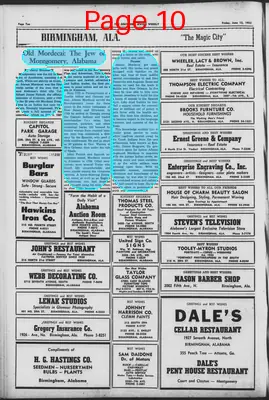
The Southern Jewish Weekly
Jacksonville, Duval County, Florida
What is this article about?
Biography of Abram Mordecai, first white settler in Montgomery, Alabama, a Jewish Revolutionary War veteran who traded with Creek Indians, married a Native woman, ransomed captives, and pioneered cotton farming in the region from 1789 onward.
Clipping
OCR Quality
Full Text
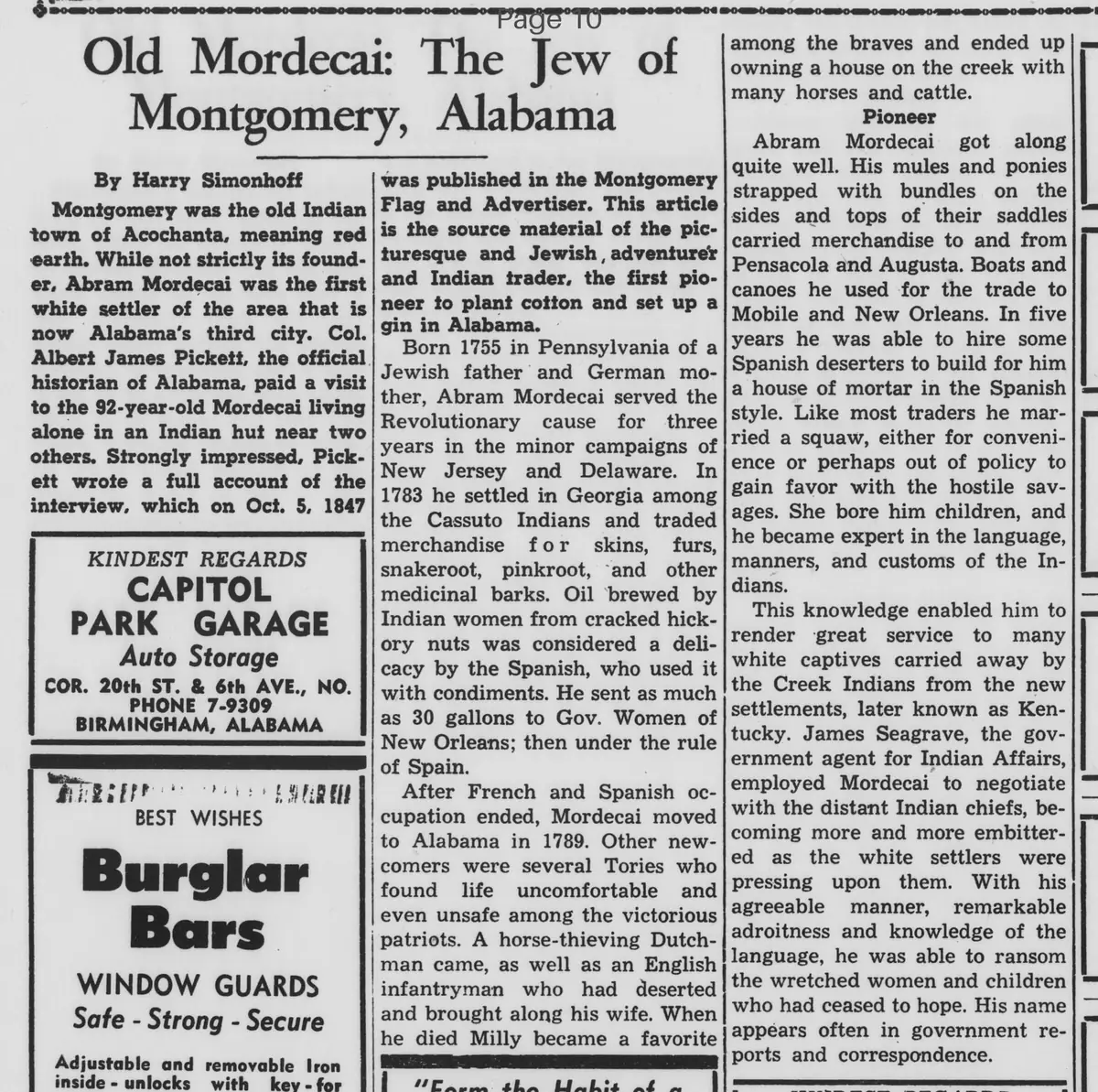
By Harry Simonhoff
Montgomery was the old Indian town of Acochanta, meaning red earth. While not strictly its founder, Abram Mordecai was the first white settler of the area that is now Alabama's third city. Col. Albert James Pickett, the official historian of Alabama, paid a visit to the 92-year-old Mordecai living alone in an Indian hut near two others. Strongly impressed, Pickett wrote a full account of the interview, which on Oct. 5, 1847 was published in the Montgomery Flag and Advertiser. This article is the source material of the picturesque and Jewish adventurer and Indian trader, the first pioneer to plant cotton and set up a gin in Alabama.
Born 1755 in Pennsylvania of a Jewish father and German mother, Abram Mordecai served the Revolutionary cause for three years in the minor campaigns of New Jersey and Delaware. In 1783 he settled in Georgia among the Cassuto Indians and traded merchandise for skins, furs, snakeroot, pinkroot, and other medicinal barks. Oil brewed by Indian women from cracked hickory nuts was considered a delicacy by the Spanish, who used it with condiments. He sent as much as 30 gallons to Gov. Miro of New Orleans; then under the rule of Spain.
After French and Spanish occupation ended, Mordecai moved to Alabama in 1789. Other newcomers were several Tories who found life uncomfortable and even unsafe among the victorious patriots. A horse-thieving Dutchman came, as well as an English infantryman who had deserted and brought along his wife. When he died Milly became a favorite among the braves and ended up owning a house on the creek with many horses and cattle.
Pioneer Abram Mordecai got along quite well. His mules and ponies strapped with bundles on the sides and tops of their saddles carried merchandise to and from Pensacola and Augusta. Boats and canoes he used for the trade to Mobile and New Orleans. In five years he was able to hire some Spanish deserters to build for him a house of mortar in the Spanish style. Like most traders he married a squaw, either for convenience or perhaps out of policy to gain favor with the hostile savages. She bore him children, and he became expert in the language, manners, and customs of the Indians.
This knowledge enabled him to render great service to many white captives carried away by the Creek Indians from the new settlements, later known as Kentucky. James Seagrave, the government agent for Indian Affairs, employed Mordecai to negotiate with the distant Indian chiefs, becoming more and more embittered as the white settlers were pressing upon them. With his agreeable manner, remarkable adroitness and knowledge of the language, he was able to ransom the wretched women and children who had ceased to hope. His name appears often in government reports and correspondence.
What sub-type of article is it?
What themes does it cover?
What keywords are associated?
What entities or persons were involved?
Where did it happen?
Story Details
Key Persons
Location
Montgomery, Alabama; Georgia; Pensacola; Augusta; Mobile; New Orleans
Event Date
Born 1755; Settled Georgia 1783; Moved To Alabama 1789; Interview Oct. 5, 1847
Story Details
Abram Mordecai, born 1755 in Pennsylvania to Jewish father and German mother, served in Revolutionary War, traded with Creek Indians in Georgia from 1783, moved to Alabama 1789, built house, married Indian woman, ransomed white captives, first to plant cotton and set up gin in Alabama.