Thank you for visiting SNEWPapers!
Sign up free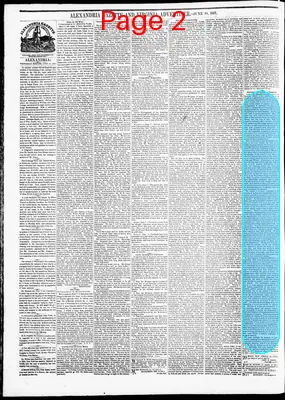
Editorial
June 10, 1857
Alexandria Gazette
Alexandria, Alexandria County, District Of Columbia
What is this article about?
The editorial laments a gloomy business outlook due to a cold spring delaying activity, poor wheat harvests from worms and harsh winter in Maryland and elsewhere, high provisions prices burdening laborers and capitalists, money scarcity from excessive imports and western speculations, and anticipated drop in summer travel affecting hotels, railroads, and steamboats. It urges caution, the cash system over credit, and economical living.
Clipping

OCR Quality
98%
Excellent
Full Text
Business and Business Prospects.
It must be admitted that the aspect of the business affairs of the country is not as bright as is generally the case at this season. The unusual backwardness of the Spring appears to have had a very depressing effect upon various kinds of business, and to this circumstance is attributed the want of activity in commercial matters generally which always follows the departure of Winter and the advent of the warm weather. The Spring this year is hardly perceptible. May has been very cold; and it would seem as if we were to leap suddenly from the chilliness of March into the heat of July. Why this should so seriously affect business we know not, unless it is that a large amount of labor which is usually required in Spring, has this year been dispensed with altogether. Indeed, it would seem that we have lost a season—and generally speaking, a very important season in a business point of view. It is truly to be hoped that a double activity will be experienced in the Summer and Fall months to make amends for it.
But we are sorry to say the Summer prospect is not over bright. In four or five weeks the grain harvest will be upon us, and although there is a promise of a fair yield of wheat in the South including Virginia, the accounts from nearly all parts of Maryland, and many other producing districts, speak of the ravages of the worm in the wheat as likely to diminish the result of the farmers' labor, already much lessened by the severity of the past Winter. Provisions of all kinds are now very high and though this may be but of little moment immediately to the rich, the laboring classes who have not had their usual employment suffer severely, and so will the capitalist in the end: for the absence of a demand for labor soon makes its effects felt through all classes of society.—Even in the West where living is proverbially cheap, the prices of provisions this season have alarmingly advanced: and to judge from the accounts of cattle dying for want of water, fatal epidemics among the swine, and the enhanced rates demanded for breadstuffs for home consumption, the usually large supplies can hardly be expected.
We observe a frequent complaint of the scarcity of money and attempts are made in various quarters to account for coming pecuniary embarrassments which many confidently predict. As has been the case for many years past this is charged to excessive importations to be paid for in coin, and now the Eastern merchants complain that land speculations in the West absorb too much of the capital which ought to find its way to Eastern marts. There is no doubt that a general extravagance resulting from a period of prosperity may be charged with its full share of the apprehended evils and there is quite as little doubt that the country labors under a very defective policy in importing from abroad much that we could manufacture at home, and thus withholding employment from our own people. Possibly all these causes combine to produce effects which may be seriously felt before the remedy is applied. What that remedy is time will disclose. Of one thing we feel very certain, which is that small capitalists must abandon the credit and fall back on the cash system, which is undoubtedly the only true mode of carrying on business to the best advantage, except in large mercantile transactions. We know it is hard to lay aside old customs, but we are satisfied that experience proves the truth of this every day, and those who adopt it will abate much of the evil now complained of. It has this great advantage, that those who adopt it, both in buying and selling, are compelled to live within their means.
We have spoken of financial difficulties in connection with short crops and consequent high prices because of the intimate relation they bear to each other, the former being almost inevitably the result of the latter. The reader may have seen notices of recent meetings of hotel keepers in New York for the purpose of raising the price of board. In ordinary times this could be done without difficulty, but in the present case obstacles presented themselves which demanded consideration, the chief of which was that a large decrease in summer travel is expected this season. The anticipated falling off may be in some measure attributed to the bad feeling engendered by the course of political parties against the institutions of the South, but as the portion of Southern travel that would be diverted from this cause would be comparatively small, and on account of the increased price of board none at all, the inference is that an apprehension of a general scarcity of money is the true cause. The evils which will ensue from this diminution of travel can hardly be calculated. Millions of dollars are invested in hotels, watering places and summer resorts, and thousands of people are depending on these establishments for employment and the consumption of supplies. Then again must be considered the falling off of the receipts from travel on thousands of miles of railroads and hundreds of steamboats, while in no case are the expenses of those modes of travel seriously diminished. All this tells in the aggregate, and not only the laboring man, but the capitalist who expects his rents and dividends, will feel the necessity of a more economical mode of living and expenditure, to which we must come before a healthy condition of things is restored.
We may perhaps be accused of unnecessarily croaking over anticipated evils, but we are sure no thinking man will object to a seasonable warning, even if it be unpalatable. Should we induce one of our readers to act cautiously and save himself from bankruptcy and his friends from embarrassment, we shall think our effort has not been in vain.—Balt. Amer.
It must be admitted that the aspect of the business affairs of the country is not as bright as is generally the case at this season. The unusual backwardness of the Spring appears to have had a very depressing effect upon various kinds of business, and to this circumstance is attributed the want of activity in commercial matters generally which always follows the departure of Winter and the advent of the warm weather. The Spring this year is hardly perceptible. May has been very cold; and it would seem as if we were to leap suddenly from the chilliness of March into the heat of July. Why this should so seriously affect business we know not, unless it is that a large amount of labor which is usually required in Spring, has this year been dispensed with altogether. Indeed, it would seem that we have lost a season—and generally speaking, a very important season in a business point of view. It is truly to be hoped that a double activity will be experienced in the Summer and Fall months to make amends for it.
But we are sorry to say the Summer prospect is not over bright. In four or five weeks the grain harvest will be upon us, and although there is a promise of a fair yield of wheat in the South including Virginia, the accounts from nearly all parts of Maryland, and many other producing districts, speak of the ravages of the worm in the wheat as likely to diminish the result of the farmers' labor, already much lessened by the severity of the past Winter. Provisions of all kinds are now very high and though this may be but of little moment immediately to the rich, the laboring classes who have not had their usual employment suffer severely, and so will the capitalist in the end: for the absence of a demand for labor soon makes its effects felt through all classes of society.—Even in the West where living is proverbially cheap, the prices of provisions this season have alarmingly advanced: and to judge from the accounts of cattle dying for want of water, fatal epidemics among the swine, and the enhanced rates demanded for breadstuffs for home consumption, the usually large supplies can hardly be expected.
We observe a frequent complaint of the scarcity of money and attempts are made in various quarters to account for coming pecuniary embarrassments which many confidently predict. As has been the case for many years past this is charged to excessive importations to be paid for in coin, and now the Eastern merchants complain that land speculations in the West absorb too much of the capital which ought to find its way to Eastern marts. There is no doubt that a general extravagance resulting from a period of prosperity may be charged with its full share of the apprehended evils and there is quite as little doubt that the country labors under a very defective policy in importing from abroad much that we could manufacture at home, and thus withholding employment from our own people. Possibly all these causes combine to produce effects which may be seriously felt before the remedy is applied. What that remedy is time will disclose. Of one thing we feel very certain, which is that small capitalists must abandon the credit and fall back on the cash system, which is undoubtedly the only true mode of carrying on business to the best advantage, except in large mercantile transactions. We know it is hard to lay aside old customs, but we are satisfied that experience proves the truth of this every day, and those who adopt it will abate much of the evil now complained of. It has this great advantage, that those who adopt it, both in buying and selling, are compelled to live within their means.
We have spoken of financial difficulties in connection with short crops and consequent high prices because of the intimate relation they bear to each other, the former being almost inevitably the result of the latter. The reader may have seen notices of recent meetings of hotel keepers in New York for the purpose of raising the price of board. In ordinary times this could be done without difficulty, but in the present case obstacles presented themselves which demanded consideration, the chief of which was that a large decrease in summer travel is expected this season. The anticipated falling off may be in some measure attributed to the bad feeling engendered by the course of political parties against the institutions of the South, but as the portion of Southern travel that would be diverted from this cause would be comparatively small, and on account of the increased price of board none at all, the inference is that an apprehension of a general scarcity of money is the true cause. The evils which will ensue from this diminution of travel can hardly be calculated. Millions of dollars are invested in hotels, watering places and summer resorts, and thousands of people are depending on these establishments for employment and the consumption of supplies. Then again must be considered the falling off of the receipts from travel on thousands of miles of railroads and hundreds of steamboats, while in no case are the expenses of those modes of travel seriously diminished. All this tells in the aggregate, and not only the laboring man, but the capitalist who expects his rents and dividends, will feel the necessity of a more economical mode of living and expenditure, to which we must come before a healthy condition of things is restored.
We may perhaps be accused of unnecessarily croaking over anticipated evils, but we are sure no thinking man will object to a seasonable warning, even if it be unpalatable. Should we induce one of our readers to act cautiously and save himself from bankruptcy and his friends from embarrassment, we shall think our effort has not been in vain.—Balt. Amer.
What sub-type of article is it?
Economic Policy
Trade Or Commerce
Agriculture
What keywords are associated?
Business Prospects
Poor Harvest
Money Scarcity
High Prices
Summer Travel
Cash System
Economic Caution
What entities or persons were involved?
Eastern Merchants
Western Land Speculators
New York Hotel Keepers
Southern Travelers
Political Parties
Editorial Details
Primary Topic
Gloomy Business Prospects Due To Weather, Poor Harvests, And Financial Strains
Stance / Tone
Cautionary And Pessimistic Warning Urging Economic Caution
Key Figures
Eastern Merchants
Western Land Speculators
New York Hotel Keepers
Southern Travelers
Political Parties
Key Arguments
Cold Spring Delayed Business Activity And Labor
Worm Ravages And Harsh Winter Threaten Wheat Yields In Maryland And Elsewhere
High Provisions Prices Burden Laborers And Eventually Capitalists
Money Scarcity From Excessive Imports, Western Speculations, And Extravagance
Advocate Cash System Over Credit For Small Capitalists
Expected Drop In Summer Travel Due To Money Fears And Politics Affects Hotels, Railroads, Steamboats
Urge Economical Living To Restore Healthy Conditions