Thank you for visiting SNEWPapers!
Sign up free
Literary
July 8, 1790
The New Hampshire Gazette And General Advertiser
Portsmouth, Rockingham County, New Hampshire
What is this article about?
In this allegorical dialogue, the Author interrogates Time about its pale visage, scythe, and tablet, learning of countless generations passed, destroyed cities like Troy and Babylon, innumerable deaths, and Time's call for moderation among the living before the Author's own end.
Clipping
OCR Quality
98%
Excellent
Full Text
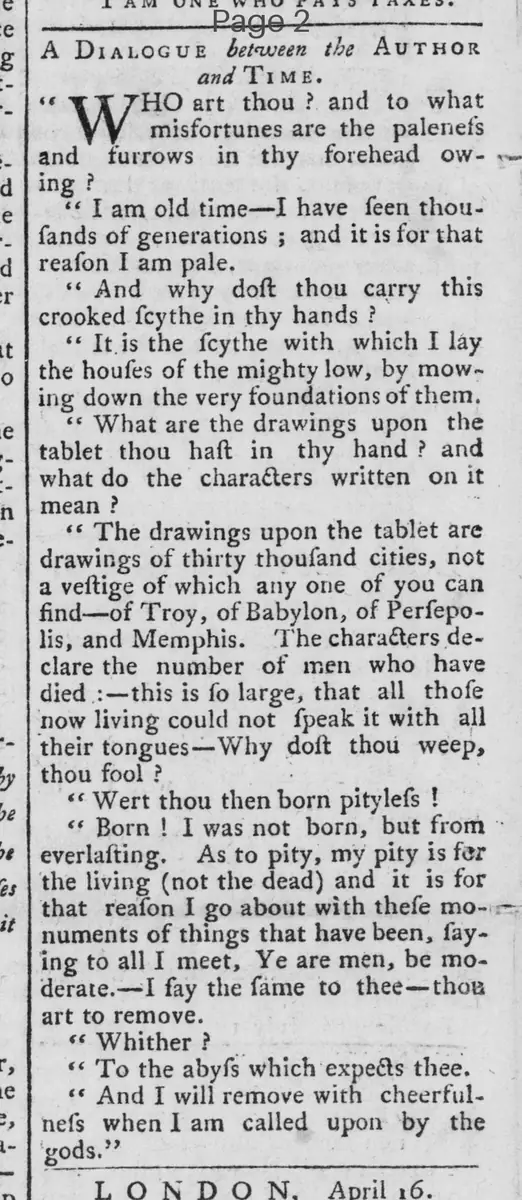
A DIALOGUE between the Author and TIME.
Who art thou? and to what misfortunes are the paleness and furrows in thy forehead owing
I am old time—I have seen thousands of generations; and it is for that reason I am pale.
And why dost thou carry this crooked scythe in thy hands?
It is the scythe with which I lay the houses of the mighty low, by mowing down the very foundations of them.
What are the drawings upon the tablet thou hast in thy hand? and what do the characters written on it mean?
The drawings upon the tablet are drawings of thirty thousand cities, not a vestige of which any one of you can find—of Troy, of Babylon, of Persepolis, and Memphis. The characters declare the number of men who have died:—this is so large, that all those now living could not speak it with all their tongues—Why dost thou weep, thou fool?
Wert thou then born pitiless!
Born! I was not born. but from everlasting. As to pity, my pity is for the living (not the dead) and it is for that reason I go about with thee monuments of things that have been, saying to all I meet, Ye are men, be moderate.—I say the same to thee—thou art to remove.
Whither?
To the abyss which expects thee.
And I will remove with cheerfulness when I am called upon by the gods.
Who art thou? and to what misfortunes are the paleness and furrows in thy forehead owing
I am old time—I have seen thousands of generations; and it is for that reason I am pale.
And why dost thou carry this crooked scythe in thy hands?
It is the scythe with which I lay the houses of the mighty low, by mowing down the very foundations of them.
What are the drawings upon the tablet thou hast in thy hand? and what do the characters written on it mean?
The drawings upon the tablet are drawings of thirty thousand cities, not a vestige of which any one of you can find—of Troy, of Babylon, of Persepolis, and Memphis. The characters declare the number of men who have died:—this is so large, that all those now living could not speak it with all their tongues—Why dost thou weep, thou fool?
Wert thou then born pitiless!
Born! I was not born. but from everlasting. As to pity, my pity is for the living (not the dead) and it is for that reason I go about with thee monuments of things that have been, saying to all I meet, Ye are men, be moderate.—I say the same to thee—thou art to remove.
Whither?
To the abyss which expects thee.
And I will remove with cheerfulness when I am called upon by the gods.
What sub-type of article is it?
Dialogue
Allegory
What themes does it cover?
Death Mortality
Moral Virtue
What keywords are associated?
Dialogue With Time
Mortality
Ancient Cities
Transience
Moderation
Literary Details
Title
A Dialogue Between The Author And Time.
Key Lines
I Am Old Time—I Have Seen Thousands Of Generations; And It Is For That Reason I Am Pale.
The Drawings Upon The Tablet Are Drawings Of Thirty Thousand Cities, Not A Vestige Of Which Any One Of You Can Find—Of Troy, Of Babylon, Of Persepolis, And Memphis.
The Characters Declare The Number Of Men Who Have Died:—This Is So Large, That All Those Now Living Could Not Speak It With All Their Tongues—Why Dost Thou Weep, Thou Fool?
My Pity Is For The Living (Not The Dead) And It Is For That Reason I Go About With Thee Monuments Of Things That Have Been, Saying To All I Meet, Ye Are Men, Be Moderate.—I Say The Same To Thee—Thou Art To Remove.