Thank you for visiting SNEWPapers!
Sign up free
Literary
July 15, 1859
Montgomery County Sentinel
Rockville, Gaithersburg, Montgomery County, Maryland
What is this article about?
Essay by Helen Marr examining the profound influence of mothers on the intellectual and moral characters of famous sons, including Sir Walter Scott, Byron, Napoleon, Burns, Bacon, Nero, Washington, Jay, Henry, and the Adamses, highlighting both positive and negative impacts.
Clipping
OCR Quality
95%
Excellent
Full Text
Selected Miscellany.
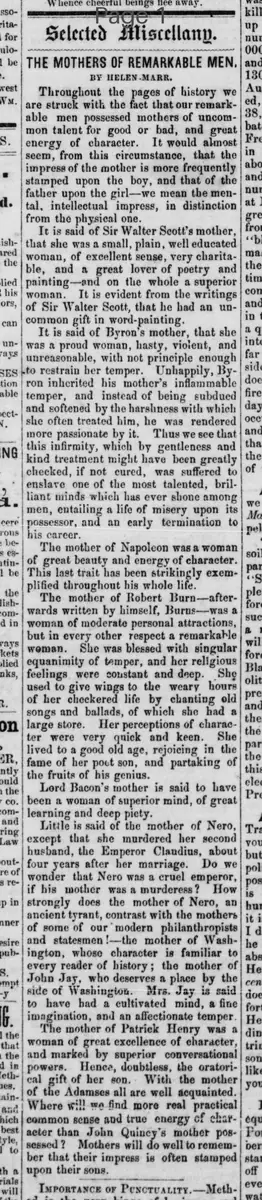
THE MOTHERS OF REMARKABLE MEN
BY
HELEN MARR.
Throughout the pages of history we are struck with the fact that our remarkable men possessed mothers of uncommon talent for good or bad, and great energy of character. It would almost seem, from this circumstance, that the impress of the mother is more frequently stamped upon the boy, and that of the father upon the girl—we mean the mental, intellectual impress, in distinction from the physical one.
It is said of Sir Walter Scott's mother, that she was a small, plain, well educated woman, of excellent sense, very charitable, and a great lover of poetry and painting—and on the whole a superior woman. It is evident from the writings of Sir Walter Scott, that he had an uncommon gift in word-painting.
It is said of Byron's mother, that she was a proud woman, hasty, violent, and unreasonable, with not principle enough to restrain her temper. Unhappily, Byron inherited his mother's inflammable temper, and instead of being subdued and softened by the harshness with which she often treated him, he was rendered more passionate by it. Thus we see that this infirmity, which by gentleness and kind treatment might have been greatly checked, if not cured, was suffered to enslave one of the most talented, brilliant minds which has ever shone among men, entailing a life of misery upon its possessor, and an early termination to his career.
The mother of Napoleon was a woman of great beauty and energy of character. This last trait has been strikingly exemplified throughout his whole life.
The mother of Robert Burns—afterwards written by himself, Burns—was a woman of moderate personal attractions, but in every other respect a remarkable woman. She was blessed with singular equanimity of temper, and her religious feelings were constant and deep. She used to give wings to the weary hours of her checkered life by chanting old songs and ballads, of which she had a large store. Her perceptions of character were very quick and keen. She lived to a good old age, rejoicing in the fame of her poet son, and partaking of the fruits of his genius.
Lord Bacon's mother is said to have been a woman of superior mind, of great learning and deep piety.
Little is said of the mother of Nero, except that she murdered her second husband, the Emperor Claudius, about four years after her marriage. Do we wonder that Nero was a cruel emperor, if his mother was a murderess? How strongly does the mother of Nero, an ancient tyrant, contrast with the mothers of some of our modern philanthropists and statesmen!—the mother of Washington, whose character is familiar to every reader of history; the mother of John Jay, who deserves a place by the side of Washington. Mrs. Jay is said to have had a cultivated mind, a fine imagination, and an affectionate temper.
The mother of Patrick Henry was a woman of great excellence of character, and marked by superior conversational powers. Hence, doubtless, the oratorical gift of her son. With the mother of the Adamses all are well acquainted. Where will we find more real practical common sense and true energy of character than John Quincy's mother possessed? Mothers will do well to remember that their impress is often stamped upon their sons.
THE MOTHERS OF REMARKABLE MEN
BY
HELEN MARR.
Throughout the pages of history we are struck with the fact that our remarkable men possessed mothers of uncommon talent for good or bad, and great energy of character. It would almost seem, from this circumstance, that the impress of the mother is more frequently stamped upon the boy, and that of the father upon the girl—we mean the mental, intellectual impress, in distinction from the physical one.
It is said of Sir Walter Scott's mother, that she was a small, plain, well educated woman, of excellent sense, very charitable, and a great lover of poetry and painting—and on the whole a superior woman. It is evident from the writings of Sir Walter Scott, that he had an uncommon gift in word-painting.
It is said of Byron's mother, that she was a proud woman, hasty, violent, and unreasonable, with not principle enough to restrain her temper. Unhappily, Byron inherited his mother's inflammable temper, and instead of being subdued and softened by the harshness with which she often treated him, he was rendered more passionate by it. Thus we see that this infirmity, which by gentleness and kind treatment might have been greatly checked, if not cured, was suffered to enslave one of the most talented, brilliant minds which has ever shone among men, entailing a life of misery upon its possessor, and an early termination to his career.
The mother of Napoleon was a woman of great beauty and energy of character. This last trait has been strikingly exemplified throughout his whole life.
The mother of Robert Burns—afterwards written by himself, Burns—was a woman of moderate personal attractions, but in every other respect a remarkable woman. She was blessed with singular equanimity of temper, and her religious feelings were constant and deep. She used to give wings to the weary hours of her checkered life by chanting old songs and ballads, of which she had a large store. Her perceptions of character were very quick and keen. She lived to a good old age, rejoicing in the fame of her poet son, and partaking of the fruits of his genius.
Lord Bacon's mother is said to have been a woman of superior mind, of great learning and deep piety.
Little is said of the mother of Nero, except that she murdered her second husband, the Emperor Claudius, about four years after her marriage. Do we wonder that Nero was a cruel emperor, if his mother was a murderess? How strongly does the mother of Nero, an ancient tyrant, contrast with the mothers of some of our modern philanthropists and statesmen!—the mother of Washington, whose character is familiar to every reader of history; the mother of John Jay, who deserves a place by the side of Washington. Mrs. Jay is said to have had a cultivated mind, a fine imagination, and an affectionate temper.
The mother of Patrick Henry was a woman of great excellence of character, and marked by superior conversational powers. Hence, doubtless, the oratorical gift of her son. With the mother of the Adamses all are well acquainted. Where will we find more real practical common sense and true energy of character than John Quincy's mother possessed? Mothers will do well to remember that their impress is often stamped upon their sons.
What sub-type of article is it?
Essay
What themes does it cover?
Moral Virtue
Political
What keywords are associated?
Mothers Influence
Remarkable Men
Character Formation
Historical Figures
Maternal Legacy
What entities or persons were involved?
By Helen Marr
Literary Details
Title
The Mothers Of Remarkable Men
Author
By Helen Marr
Subject
Influence Of Mothers On The Character Of Remarkable Men
Key Lines
It Would Almost Seem, From This Circumstance, That The Impress Of The Mother Is More Frequently Stamped Upon The Boy, And That Of The Father Upon The Girl—We Mean The Mental, Intellectual Impress, In Distinction From The Physical One.
Thus We See That This Infirmity, Which By Gentleness And Kind Treatment Might Have Been Greatly Checked, If Not Cured, Was Suffered To Enslave One Of The Most Talented, Brilliant Minds Which Has Ever Shone Among Men, Entailing A Life Of Misery Upon Its Possessor, And An Early Termination To His Career.
Mothers Will Do Well To Remember That Their Impress Is Often Stamped Upon Their Sons.