Thank you for visiting SNEWPapers!
Sign up free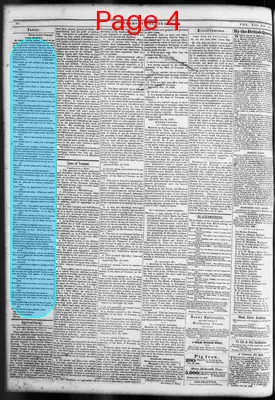
Letter to Editor
January 8, 1840
Vermont Telegraph
Brandon, Rutland County, Vermont
What is this article about?
Poetic letter to the editor by J. Holcomb defends abolitionists against being labeled as having a 'bad spirit,' drawing parallels to biblical times, apostles, Luther, temperance reformers, and urging emancipation of slaves for a national Jubilee.
Clipping

OCR Quality
95%
Excellent
Full Text
Mr. Editor:-
Having frequently heard the language of the above caption applied to abolitionists, my thoughts have run back some centuries, and I have come to the conclusion that this, their substitute argument, well accords with those used by the opposers of truth in former years and ages. I will give you a sketch of my thoughts on the same in verse; and you may do as you please as to inserting them.
J. HOLCOMB.
Wake—wake my dull powers, and now sing of the morn,
When the news came to earth, that a Savior was born.
Wake, and join in the song which was sung at his birth.
Angels sung, 'good will to men, and peace' on the earth.'
What peace, and to whom, did this blessed news come?
To the man who'll refuse to make heaven his home
On the terms of the gospel, and Jesus denies?
Or the church that's corrupt, and afresh crucifies?
Nay, peace comes not to those, says our Savior and Lord,
'I came not to bring—peace, but instead bring the sword.'
'Unto those who obey, peace like rivers shall flow,
But to those who reject, an eternity's woe.'
Wo to scribe—pharisee—lawyer—hypocrite too—
For ye'll not become wise, but prevent those who do.'
A bad spirit these honorable men testified—
Then away with this man, he must be crucified.
This blest Savior was slain, but the third day arose,
And ascended triumphant o'er death and his foes.
Then apostles were sent to preach Christ crucified.
For proclaiming these truths, nearly all of them died."
Why this? Some of their hearers were men of renown,
And accused them of turning the world upside down.
A bad spirit—the craftsmen of Ephesus cried—
'Our great goddess Diana has been much belied.'
Then the multitude raised a most thundering roar
Saying, great is Diana, for two hours or more.
Yes, this was their argument. O, what the powers
Of these men must be, thus to bellow two hours!
When Luther proclaimed the old church in an error,
The priest and the scribe, strove to fill him with terror
'Imprison the heretic, crush the bad spirit—
He's dividing the church, heaven he can't inherit.'
When gross drunkenness raged, and the remedies o tried,
Had all failed of success, and the sure cure applied
Both the priest and the layman exclaimed in a rage,
'You'll destroy our church-union, if you thus engage.'
O, this blessed rum-union! What man would destroy
And deprive such a church, of its bacchanal joy?
Then the slave had a friend who was honest bold,
And he says to the oppressor, release your strong hold
On your victim. Tis robbery—sure a great sin,
To enslave your own brother. To-day then begin,
And restore him his freedom. O, no, says the other,
The Bible gives sanction t'enslaving my brother:
But oppression I hate, and the man I despise
Who will practice it. Ah my friend here the sin lies—
In your claiming as property, under your laws,
A man and a brother, and this, sir, is the cause
Of denouncing you thus. Drive this, sir, from your door
And the blessing of God rest on you and the poor.
Other voices now rise in behalf of the slave—
Saying to the slave-holder, this favor we crave,
Release all your bondmen to-day—set them free—
That there be in this nation a great Jubilee.'
While addressing them thus, their apologists say,
'Not so fast'—They get hit—'a bad spirit'—foul play,
Cry then prudent abettors, 'and we now declare,
That you're getting the strong lion roused from his lair,
And you'll sever the union, tears and blood will soon flow,
And our church and our nation be plunged in deep woe.'
O, the awful forebodings which these men endure;
But the truth we'll apply, and effect slavery's cure.
Like the firemen, with engines, at the fountain we'll stand,
Aiming hose at the fire, we'll not harm head or hand,
Should you come to our ranks; but if not we must say,
As your friends, you had better keep out of the way,
For the fair car of freedom is fast rolling on;
Soon its foes will be crushed, and the victory won.
Then awake, my dull powers, and sing of the dawn
Of that Jubilee-day, when curs'd slavery's gone.
When all men shall be free—free in Jesus, and then
Will the land shout arise, Alleluia, Amen.
By the hand of violence.
Wm. Lloyd Garrison.
Slavery.
Having frequently heard the language of the above caption applied to abolitionists, my thoughts have run back some centuries, and I have come to the conclusion that this, their substitute argument, well accords with those used by the opposers of truth in former years and ages. I will give you a sketch of my thoughts on the same in verse; and you may do as you please as to inserting them.
J. HOLCOMB.
Wake—wake my dull powers, and now sing of the morn,
When the news came to earth, that a Savior was born.
Wake, and join in the song which was sung at his birth.
Angels sung, 'good will to men, and peace' on the earth.'
What peace, and to whom, did this blessed news come?
To the man who'll refuse to make heaven his home
On the terms of the gospel, and Jesus denies?
Or the church that's corrupt, and afresh crucifies?
Nay, peace comes not to those, says our Savior and Lord,
'I came not to bring—peace, but instead bring the sword.'
'Unto those who obey, peace like rivers shall flow,
But to those who reject, an eternity's woe.'
Wo to scribe—pharisee—lawyer—hypocrite too—
For ye'll not become wise, but prevent those who do.'
A bad spirit these honorable men testified—
Then away with this man, he must be crucified.
This blest Savior was slain, but the third day arose,
And ascended triumphant o'er death and his foes.
Then apostles were sent to preach Christ crucified.
For proclaiming these truths, nearly all of them died."
Why this? Some of their hearers were men of renown,
And accused them of turning the world upside down.
A bad spirit—the craftsmen of Ephesus cried—
'Our great goddess Diana has been much belied.'
Then the multitude raised a most thundering roar
Saying, great is Diana, for two hours or more.
Yes, this was their argument. O, what the powers
Of these men must be, thus to bellow two hours!
When Luther proclaimed the old church in an error,
The priest and the scribe, strove to fill him with terror
'Imprison the heretic, crush the bad spirit—
He's dividing the church, heaven he can't inherit.'
When gross drunkenness raged, and the remedies o tried,
Had all failed of success, and the sure cure applied
Both the priest and the layman exclaimed in a rage,
'You'll destroy our church-union, if you thus engage.'
O, this blessed rum-union! What man would destroy
And deprive such a church, of its bacchanal joy?
Then the slave had a friend who was honest bold,
And he says to the oppressor, release your strong hold
On your victim. Tis robbery—sure a great sin,
To enslave your own brother. To-day then begin,
And restore him his freedom. O, no, says the other,
The Bible gives sanction t'enslaving my brother:
But oppression I hate, and the man I despise
Who will practice it. Ah my friend here the sin lies—
In your claiming as property, under your laws,
A man and a brother, and this, sir, is the cause
Of denouncing you thus. Drive this, sir, from your door
And the blessing of God rest on you and the poor.
Other voices now rise in behalf of the slave—
Saying to the slave-holder, this favor we crave,
Release all your bondmen to-day—set them free—
That there be in this nation a great Jubilee.'
While addressing them thus, their apologists say,
'Not so fast'—They get hit—'a bad spirit'—foul play,
Cry then prudent abettors, 'and we now declare,
That you're getting the strong lion roused from his lair,
And you'll sever the union, tears and blood will soon flow,
And our church and our nation be plunged in deep woe.'
O, the awful forebodings which these men endure;
But the truth we'll apply, and effect slavery's cure.
Like the firemen, with engines, at the fountain we'll stand,
Aiming hose at the fire, we'll not harm head or hand,
Should you come to our ranks; but if not we must say,
As your friends, you had better keep out of the way,
For the fair car of freedom is fast rolling on;
Soon its foes will be crushed, and the victory won.
Then awake, my dull powers, and sing of the dawn
Of that Jubilee-day, when curs'd slavery's gone.
When all men shall be free—free in Jesus, and then
Will the land shout arise, Alleluia, Amen.
By the hand of violence.
Wm. Lloyd Garrison.
Slavery.
What sub-type of article is it?
Poetic
Persuasive
Religious
What themes does it cover?
Slavery Abolition
Religion
Morality
What keywords are associated?
Abolitionists
Bad Spirit
Slavery
Historical Parallels
Religious Reform
Emancipation
Jubilee
What entities or persons were involved?
J. Holcomb
Mr. Editor
Letter to Editor Details
Author
J. Holcomb
Recipient
Mr. Editor
Main Argument
accusations of abolitionists having a 'bad spirit' echo historical oppositions to truth from biblical times through luther and temperance reformers; urges immediate emancipation of slaves as a moral and religious imperative to end slavery and achieve a jubilee.
Notable Details
References To Jesus' Birth And Teachings
Apostles Preaching Christ Crucified
Ephesus Craftsmen Defending Diana
Martin Luther's Reformation
Temperance Movement Against Drunkenness
Biblical Sanction Debate On Slavery
Call For National Jubilee