Thank you for visiting SNEWPapers!
Sign up free
Literary
January 25, 1934
Watauga Democrat
Boone, Watauga County, North Carolina
What is this article about?
This essay reflects on the biblical Israelites' 40-year wilderness journey from Egypt to the Promised Land under Moses, their transformation from slaves to a self-governing nation, Moses' death, Joshua's conquest of Canaan, and a brief mention of the Judges, teasing next week's coverage of Samuel, Saul, and David.
Clipping
OCR Quality
98%
Excellent
Full Text
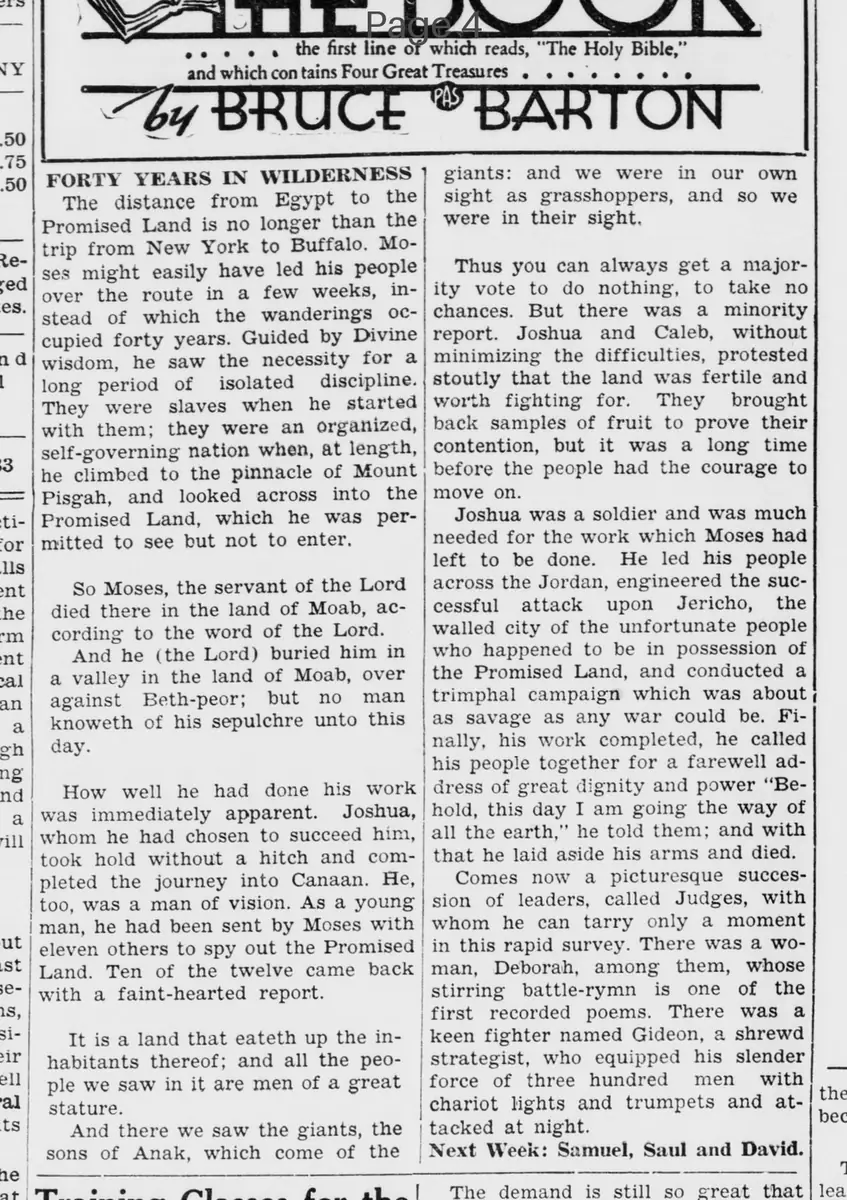
FORTY YEARS IN THE WILDERNESS
The distance from Egypt to the Promised Land is no longer than the trip from New York to Buffalo. Moses might easily have led his people over the route in a few weeks, instead of which the wanderings occupied forty years. Guided by Divine wisdom, he saw the necessity for a long period of isolated discipline.
They were slaves when he started with them; they were an organized, self-governing nation when, at length, he climbed to the pinnacle of Mount Pisgah, and looked across into the Promised Land, which he was permitted to see but not to enter.
So Moses, the servant of the Lord died there in the land of Moab, according to the word of the Lord. And he (the Lord) buried him in a valley in the land of Moab, over against Beth-peor; but no man knoweth of his sepulchre unto this day.
How well he had done his work was immediately apparent. Joshua, whom he had chosen to succeed him, took hold without a hitch and completed the journey into Canaan. He, too, was a man of vision. As a young man, he had been sent by Moses with eleven others to spy out the Promised Land. Ten of the twelve came back with a faint-hearted report.
It is a land that eateth up the inhabitants thereof; and all the people we saw in it are men of a great stature. And there we saw the giants, the sons of Anak, which come of the giants: and we were in our own sight as grasshoppers, and so we were in their sight.
Thus you can always get a majority vote to do nothing, to take no chances. But there was a minority report. Joshua and Caleb, without minimizing the difficulties, protested stoutly that the land was fertile and worth fighting for. They brought back samples of fruit to prove their contention, but it was a long time before the people had the courage to move on.
Joshua was a soldier and was much needed for the work which Moses had left to be done. He led his people across the Jordan, engineered the successful attack upon Jericho, the walled city of the unfortunate people who happened to be in possession of the Promised Land, and conducted a triumphant campaign which was about as savage as any war could be. Finally, his work completed, he called his people together for a farewell address of great dignity and power. "Behold, this day I am going the way of all the earth," he told them: and with that he laid aside his arms and died.
Comes now a picturesque succession of leaders, called Judges, with whom he can tarry only a moment in this rapid survey. There was a woman, Deborah, among them, whose stirring battle-hymn is one of the first recorded poems. There was a keen fighter named Gideon, a shrewd strategist, who equipped his slender force of three hundred men with chariot lights and trumpets and attacked at night.
Next Week: Samuel, Saul and David.
The distance from Egypt to the Promised Land is no longer than the trip from New York to Buffalo. Moses might easily have led his people over the route in a few weeks, instead of which the wanderings occupied forty years. Guided by Divine wisdom, he saw the necessity for a long period of isolated discipline.
They were slaves when he started with them; they were an organized, self-governing nation when, at length, he climbed to the pinnacle of Mount Pisgah, and looked across into the Promised Land, which he was permitted to see but not to enter.
So Moses, the servant of the Lord died there in the land of Moab, according to the word of the Lord. And he (the Lord) buried him in a valley in the land of Moab, over against Beth-peor; but no man knoweth of his sepulchre unto this day.
How well he had done his work was immediately apparent. Joshua, whom he had chosen to succeed him, took hold without a hitch and completed the journey into Canaan. He, too, was a man of vision. As a young man, he had been sent by Moses with eleven others to spy out the Promised Land. Ten of the twelve came back with a faint-hearted report.
It is a land that eateth up the inhabitants thereof; and all the people we saw in it are men of a great stature. And there we saw the giants, the sons of Anak, which come of the giants: and we were in our own sight as grasshoppers, and so we were in their sight.
Thus you can always get a majority vote to do nothing, to take no chances. But there was a minority report. Joshua and Caleb, without minimizing the difficulties, protested stoutly that the land was fertile and worth fighting for. They brought back samples of fruit to prove their contention, but it was a long time before the people had the courage to move on.
Joshua was a soldier and was much needed for the work which Moses had left to be done. He led his people across the Jordan, engineered the successful attack upon Jericho, the walled city of the unfortunate people who happened to be in possession of the Promised Land, and conducted a triumphant campaign which was about as savage as any war could be. Finally, his work completed, he called his people together for a farewell address of great dignity and power. "Behold, this day I am going the way of all the earth," he told them: and with that he laid aside his arms and died.
Comes now a picturesque succession of leaders, called Judges, with whom he can tarry only a moment in this rapid survey. There was a woman, Deborah, among them, whose stirring battle-hymn is one of the first recorded poems. There was a keen fighter named Gideon, a shrewd strategist, who equipped his slender force of three hundred men with chariot lights and trumpets and attacked at night.
Next Week: Samuel, Saul and David.
What sub-type of article is it?
Essay
Journey Narrative
What themes does it cover?
Religious
Liberty Freedom
Political
What keywords are associated?
Exodus
Moses
Joshua
Wilderness
Promised Land
Judges
Biblical History
Literary Details
Title
Forty Years In The Wilderness
Key Lines
So Moses, The Servant Of The Lord Died There In The Land Of Moab, According To The Word Of The Lord. And He (The Lord) Buried Him In A Valley In The Land Of Moab, Over Against Beth Peor; But No Man Knoweth Of His Sepulchre Unto This Day.
It Is A Land That Eateth Up The Inhabitants Thereof; And All The People We Saw In It Are Men Of A Great Stature. And There We Saw The Giants, The Sons Of Anak, Which Come Of The Giants: And We Were In Our Own Sight As Grasshoppers, And So We Were In Their Sight.
Behold, This Day I Am Going The Way Of All The Earth,