Thank you for visiting SNEWPapers!
Sign up free
Literary
April 14, 1849
Arkansas Intelligencer
Van Buren, Crawford County, Arkansas
What is this article about?
An essay by Laman Blanchard exploring the irony of how people mistreat their closest friends more than strangers, using examples from social dinners, punctuality, and everyday liberties taken in friendship.
Clipping
OCR Quality
98%
Excellent
Full Text
FRIENDSHIP.
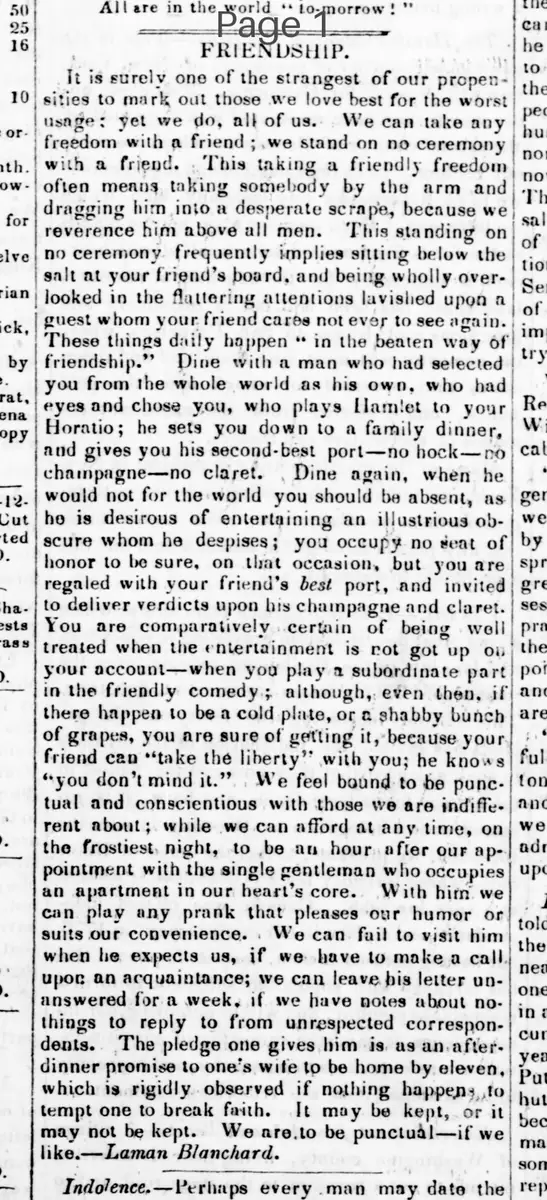
It is surely one of the strangest of our propensities to mark out those we love best for the worst usage: yet we do, all of us. We can take any freedom with a friend; we stand on no ceremony with a friend. This taking a friendly freedom often means taking somebody by the arm and dragging him into a desperate scrape, because we reverence him above all men. This standing on no ceremony frequently implies sitting below the salt at your friend's board, and being wholly overlooked in the flattering attentions lavished upon a guest whom your friend cares not ever to see again. These things daily happen "in the beaten way of friendship." Dine with a man who had selected you from the whole world as his own, who had eyes and chose you, who plays Hamlet to your Horatio; he sets you down to a family dinner, and gives you his second-best port—no hock—no champagne—no claret. Dine again, when he would not for the world you should be absent, as he is desirous of entertaining an illustrious obscure whom he despises; you occupy no seat of honor to be sure, on that occasion, but you are regaled with your friend's best port, and invited to deliver verdicts upon his champagne and claret. You are comparatively certain of being well treated when the entertainment is not got up on your account—when you play a subordinate part in the friendly comedy; although, even then, if there happen to be a cold plate, or a shabby bunch of grapes, you are sure of getting it, because your friend can take the liberty "with you; he knows you don't mind it." We feel bound to be punctual and conscientious with those we are indifferent about; while we can afford at any time, on the frostiest night, to be an hour after our appointment with the single gentleman who occupies an apartment in our heart's core. With him we can play any prank that pleases our humor or suits our convenience. We can fail to visit him when he expects us, if we have to make a call upon an acquaintance; we can leave his letter unanswered for a week, if we have notes about no-things to reply to from unrespected correspondents. The pledge one gives him is as an after-dinner promise to one's wife to be home by eleven, which is rigidly observed if nothing happens, to tempt one to break faith. It may be kept, or it may not be kept. We are to be punctual—if we like.—Laman Blanchard.
It is surely one of the strangest of our propensities to mark out those we love best for the worst usage: yet we do, all of us. We can take any freedom with a friend; we stand on no ceremony with a friend. This taking a friendly freedom often means taking somebody by the arm and dragging him into a desperate scrape, because we reverence him above all men. This standing on no ceremony frequently implies sitting below the salt at your friend's board, and being wholly overlooked in the flattering attentions lavished upon a guest whom your friend cares not ever to see again. These things daily happen "in the beaten way of friendship." Dine with a man who had selected you from the whole world as his own, who had eyes and chose you, who plays Hamlet to your Horatio; he sets you down to a family dinner, and gives you his second-best port—no hock—no champagne—no claret. Dine again, when he would not for the world you should be absent, as he is desirous of entertaining an illustrious obscure whom he despises; you occupy no seat of honor to be sure, on that occasion, but you are regaled with your friend's best port, and invited to deliver verdicts upon his champagne and claret. You are comparatively certain of being well treated when the entertainment is not got up on your account—when you play a subordinate part in the friendly comedy; although, even then, if there happen to be a cold plate, or a shabby bunch of grapes, you are sure of getting it, because your friend can take the liberty "with you; he knows you don't mind it." We feel bound to be punctual and conscientious with those we are indifferent about; while we can afford at any time, on the frostiest night, to be an hour after our appointment with the single gentleman who occupies an apartment in our heart's core. With him we can play any prank that pleases our humor or suits our convenience. We can fail to visit him when he expects us, if we have to make a call upon an acquaintance; we can leave his letter unanswered for a week, if we have notes about no-things to reply to from unrespected correspondents. The pledge one gives him is as an after-dinner promise to one's wife to be home by eleven, which is rigidly observed if nothing happens, to tempt one to break faith. It may be kept, or it may not be kept. We are to be punctual—if we like.—Laman Blanchard.
What sub-type of article is it?
Essay
What themes does it cover?
Friendship
Social Manners
What keywords are associated?
Friendship
Social Liberties
Irony In Relationships
Punctuality
Dining Etiquette
What entities or persons were involved?
Laman Blanchard
Literary Details
Title
Friendship.
Author
Laman Blanchard
Subject
On The Ironies Of Friendship
Key Lines
It Is Surely One Of The Strangest Of Our Propensities To Mark Out Those We Love Best For The Worst Usage: Yet We Do, All Of Us.
We Can Take Any Freedom With A Friend; We Stand On No Ceremony With A Friend.
You Are Comparatively Certain Of Being Well Treated When The Entertainment Is Not Got Up On Your Account—When You Play A Subordinate Part In The Friendly Comedy;
We Feel Bound To Be Punctual And Conscientious With Those We Are Indifferent About; While We Can Afford At Any Time... To Be An Hour After Our Appointment With The Single Gentleman Who Occupies An Apartment In Our Heart's Core.