Thank you for visiting SNEWPapers!
Sign up free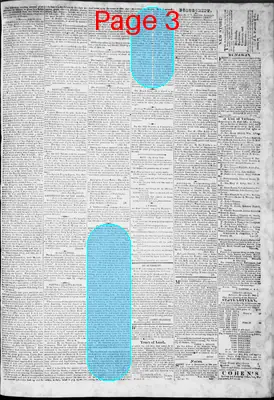
Story
January 10, 1823
The Virginian
Lynchburg, Virginia
What is this article about?
In Connecticut, a Revolutionary War veteran father watches his young son attempt to ford a swollen Naugatuck River after a storm. When the boy panics, the father sternly commands him to cling to his horse, saving his life and teaching fortitude in danger.
Clipping
OCR Quality
95%
Excellent
Full Text
From the Detroit Gazette.
UNCOMMON SELF-POSSESSION.
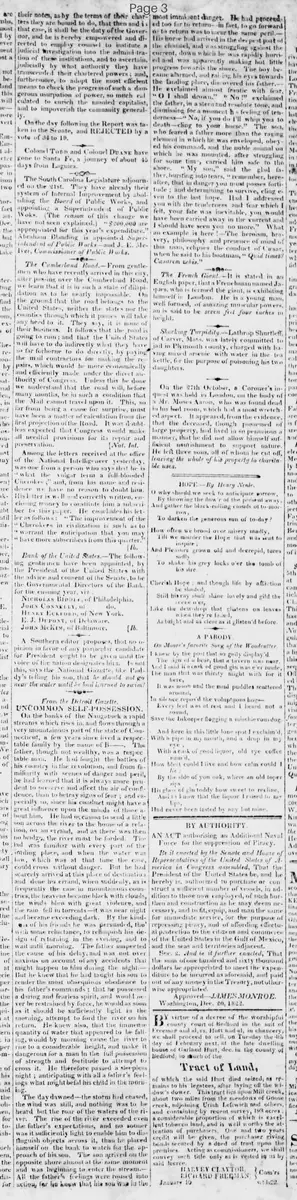
On the banks of the Naugatuck a rapid stream which rises in, and flows through a very mountainous part of the state of Connecticut, a few years since lived a respectable family by the name of B——. The father, though not wealthy, was a respectable man. He had fought the battles of his country in the revolution, and from familiarity with scenes of danger and peril, he had learned that it is always more prudent to preserve and affect the air of confidence, than to betray signs of fear; and especially so, since his conduct might have a great influence upon the minds of those about him. He had occasion to send a little son across the river to the house of a relation, on an errand, and as there was then no bridge, the river must be forded. The lad was familiar with every part of the fording place, and when the water was low, which was at that time the case, could cross without danger. But he had scarcely arrived at this place of destination and done his errand, when suddenly, as is frequently the case in mountainous countries, the heavens became black with clouds, the winds blew with great violence, and the rain fell in torrents—it was near night and became exceeding dark. By the kindness of his friends he was persuaded, though with some reluctance, to relinquish his design of returning in the evening, and to wait until morning. The father suspected the cause of his delay, and was not over anxious on account of any accidents that might happen to him during the night.—But he knew that he had taught his son to render the most obsequious obedience to his father's commands; that he possessed a daring and fearless spirit, and would never be restrained by force, he would as soon as it should be sufficiently light in the morning, attempt to ford the river on his return. He knew also, that the immense quantity of water that appeared to be falling, would by morning cause the river to rise to a considerable height, and make it dangerous for a man in the full possession of strength and fortitude to attempt to cross it. He therefore passed a sleepless night; anticipating with all a father's feelings what might befall his child in the morning.
The day dawned—the storm had ceased. the wind was still, and nothing was to be heard but the roar of the waters of the river. The rise of the river exceeded even the father's expectations, and no sooner was it sufficiently light to enable him to distinguish objects across it, than he placed himself on the bank to watch for the approach of his son, The son arrived on the opposite shore almost at the same moment and was beginning to enter the stream.—All the father's feelings were roused into action. for he knew that his son was in the most imminent danger. He had proceeded too far to return— in fact, to go forward or to return was to incur the same peril.—His horse had arrived in the deepest part of the channel, and was struggling against the current, down which he was rapidly hurried and was apparently making but little progress towards the shore. The boy became alarmed, and raising his eyes towards the landing place, discovered his father.—He exclaimed almost frantic with fear. "O I shall drown." "No!" exclaimed the father, in a stern and resolute tone, and dismissing, for a moment his feeling of tenderness—"No, if you do I'll whip you to death clinging to your horse." The son, who feared a father more than the raging element in which he was enveloped, obeyed his command, and the noble animal on which he was mounted, after struggling for some time carried him safe to the shore. "My son," said the glad father, bursting into tears, "remember, hereafter, that in danger you must possess fortitude: and determining to survive, cling even to the last hope. Had I addressed you with the tenderness and fear which I felt, your fate was inevitable, you would have been carried away in the current and I should have seen you no more." What an example is here!—The heroism, bravery, philosophy and presence of mind of this man, eclipses the conduct of Caesar, when he said to his boatman, "Quid times? Caesarem vehis."
UNCOMMON SELF-POSSESSION.
On the banks of the Naugatuck a rapid stream which rises in, and flows through a very mountainous part of the state of Connecticut, a few years since lived a respectable family by the name of B——. The father, though not wealthy, was a respectable man. He had fought the battles of his country in the revolution, and from familiarity with scenes of danger and peril, he had learned that it is always more prudent to preserve and affect the air of confidence, than to betray signs of fear; and especially so, since his conduct might have a great influence upon the minds of those about him. He had occasion to send a little son across the river to the house of a relation, on an errand, and as there was then no bridge, the river must be forded. The lad was familiar with every part of the fording place, and when the water was low, which was at that time the case, could cross without danger. But he had scarcely arrived at this place of destination and done his errand, when suddenly, as is frequently the case in mountainous countries, the heavens became black with clouds, the winds blew with great violence, and the rain fell in torrents—it was near night and became exceeding dark. By the kindness of his friends he was persuaded, though with some reluctance, to relinquish his design of returning in the evening, and to wait until morning. The father suspected the cause of his delay, and was not over anxious on account of any accidents that might happen to him during the night.—But he knew that he had taught his son to render the most obsequious obedience to his father's commands; that he possessed a daring and fearless spirit, and would never be restrained by force, he would as soon as it should be sufficiently light in the morning, attempt to ford the river on his return. He knew also, that the immense quantity of water that appeared to be falling, would by morning cause the river to rise to a considerable height, and make it dangerous for a man in the full possession of strength and fortitude to attempt to cross it. He therefore passed a sleepless night; anticipating with all a father's feelings what might befall his child in the morning.
The day dawned—the storm had ceased. the wind was still, and nothing was to be heard but the roar of the waters of the river. The rise of the river exceeded even the father's expectations, and no sooner was it sufficiently light to enable him to distinguish objects across it, than he placed himself on the bank to watch for the approach of his son, The son arrived on the opposite shore almost at the same moment and was beginning to enter the stream.—All the father's feelings were roused into action. for he knew that his son was in the most imminent danger. He had proceeded too far to return— in fact, to go forward or to return was to incur the same peril.—His horse had arrived in the deepest part of the channel, and was struggling against the current, down which he was rapidly hurried and was apparently making but little progress towards the shore. The boy became alarmed, and raising his eyes towards the landing place, discovered his father.—He exclaimed almost frantic with fear. "O I shall drown." "No!" exclaimed the father, in a stern and resolute tone, and dismissing, for a moment his feeling of tenderness—"No, if you do I'll whip you to death clinging to your horse." The son, who feared a father more than the raging element in which he was enveloped, obeyed his command, and the noble animal on which he was mounted, after struggling for some time carried him safe to the shore. "My son," said the glad father, bursting into tears, "remember, hereafter, that in danger you must possess fortitude: and determining to survive, cling even to the last hope. Had I addressed you with the tenderness and fear which I felt, your fate was inevitable, you would have been carried away in the current and I should have seen you no more." What an example is here!—The heroism, bravery, philosophy and presence of mind of this man, eclipses the conduct of Caesar, when he said to his boatman, "Quid times? Caesarem vehis."
What sub-type of article is it?
Heroic Act
Survival
Personal Triumph
What themes does it cover?
Bravery Heroism
Family
Survival
What keywords are associated?
River Crossing
Bravery
Father Son
Self Possession
Heroic Command
Survival Lesson
What entities or persons were involved?
Father (B——)
Son
Where did it happen?
Banks Of The Naugatuck River, Connecticut
Story Details
Key Persons
Father (B——)
Son
Location
Banks Of The Naugatuck River, Connecticut
Event Date
A Few Years Since
Story Details
A father, veteran of the Revolution, commands his panicking son to cling to his horse while fording a swollen river after a storm, saving him through stern resolve and teaching fortitude over fear.