Thank you for visiting SNEWPapers!
Sign up free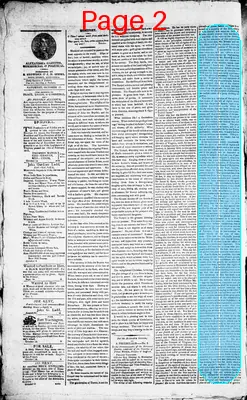
Letter to Editor
October 17, 1812
Alexandria Gazette, Commercial And Political
Alexandria, Virginia
What is this article about?
A letter criticizes the general ticket law for electing presidential electors in Virginia, arguing it denies districts the right to choose their own representatives, violates the state constitution and bill of rights, and enables legislative caucuses to effectively select electors, undermining republican principles and echoing British tyranny.
Clipping

OCR Quality
95%
Excellent
Full Text
prevail--suppose James H. Hooe is elected by a majority of the freeholders
of this district, and suppose John T.
Brooke should receive only one-fourth
or one-fifth of the votes of the district,
yet, by the operation of this oppressive
general ticket law, Mr. Brooke and not
Mr. Hooe will be the elector; contrary
to the expressed opinion of the people
of the district. If the election should
thus terminate, will the opinion of the
people of this district be represented
fairly & honestly by Mr. Brooke? It will
not? Would an elector, not chosen by
the people of the district, speak their
sentiments? Surely not. I ask my candid and dispassionate fellow-citizens
whether this is freedom of election?—
Will you be truly and fairly represented in the electoral assembly? You must
say no. If this be the real operation of
this law, will any dispassionate, honest
man pretend that one of the dearest
rights of freemen is not most daringly
taken from the people, by this law, and
that for the hateful purpose of promoting the selfish views of a party striving for
power.
This law is a violation of the spirit of
that clause of the bill of rights which
says that the people have a right to an
uniform government ;---by which is
clearly meant, that the laws should not
be unnecessarily changed for party purposes, and that each section of the people should be represented by the man of
their own choice, who knows their interests and wishes, who feels as they feel
and is responsible to them. The principle of this law is no better, and is as
bad, as that contended for by the British
parliament, which was, to make laws to
bind us without our consent. This pretension was one of the causes that led
to our revolutionary war.
If the legislature could, consistently
with the spirit of our bill of rights and
our constitution, make such a law as the
one you are called upon to vote under,
and if the people are so degraded as
tamely to submit to it, I ask you, if party purposes should require it, what is to
prevent the same legislature from declaring that the members of Congress,
the members of the House of Delegates,
and the Senators in the State Legislature, shall, in future, be elected by a
general ticket? The principle has been
established from party motives, and the
people, in a most shameful and dastardly manner, have submitted to the ignominious yoke. Our forefathers, in their
declaration of independence, complained
most justly that the British king had abolished our most valuable laws, and altered fundamentally the forms of our governments.
No man acquainted with
the history of that day will say that this
general ticket law is less oppressive and
degrading than the conduct of the British king. I, for one, feel myself degraded by the sad knowledge that my
countrymen have so long submitted,
without a murmur, to the slavish condition which this law has placed them in.
I feel my rights invaded by it, as every
American, who loves his country, must,
and cannot forbear exclaiming, that a
people who can tamely submit to such a
violation of one of the dearest rights
of freemen, "are fit instruments to
make slaves of the rest of mankind. This law was originally passed
for no other purpose than that of endeavoring by it to elect into the office of
President a particular character. This
motive, dishonorable to those who proposed and voted for the law, was avowed, at the time, and cannot be contradicted. Can it, then, be possible, that you
will promote the views of such people,
by voting for their candidates, who had
rather, than not gratify the ambition of
a particular man, sacrifice the rights of
the people. A principle of this kind induced them to adopt the dangerous maxim, that the end justifies the means.
The operation of this law leads to an
inevitable violation of the third clause of
the state constitution, which declares,
"that the legislative, executive and judiciary departments shall be separate &
distinct, so that neither exercise the
powers properly belonging to the other."
The effect of the law has been and will
be a complete invasion of the great principle of this clause of the constitution.
The members of the state legislature, in
order to carry it into execution, consistently with the party motive that produced it, have found it necessary, while
holding the session of the Assembly, to
form themselves into a Caucus, and nominate electors to be voted for by the
freeholders. Is not a law a bad one and
dangerous in its principle, which can be
carried into effect only by the very men
who make it, and while they are acting
in their legislative characters? Does it
not give the makers of it, the assembly,
that very undue influence which it was
intended by the recited clause of the constitution, to guard against? Do they
not substantially elect our President and
Vice-President of the United States?
And is not the subsequent election, held
at the different court-houses merely nominal? I ask, has there been an instance in which the nomination made by the legislative caucus were not returned as the electors? Is not this law, then, one that
has nothing in it but the mere shadow
of the people's rights? Is it not big
with principles hostile to the very soul
and spirit of all our republican habits &
principles? Can any system be more
readily devised for the destruction of liberty? Is it not at war with one of the
most essential and fundamental principles of our republican forms of government?
of this district, and suppose John T.
Brooke should receive only one-fourth
or one-fifth of the votes of the district,
yet, by the operation of this oppressive
general ticket law, Mr. Brooke and not
Mr. Hooe will be the elector; contrary
to the expressed opinion of the people
of the district. If the election should
thus terminate, will the opinion of the
people of this district be represented
fairly & honestly by Mr. Brooke? It will
not? Would an elector, not chosen by
the people of the district, speak their
sentiments? Surely not. I ask my candid and dispassionate fellow-citizens
whether this is freedom of election?—
Will you be truly and fairly represented in the electoral assembly? You must
say no. If this be the real operation of
this law, will any dispassionate, honest
man pretend that one of the dearest
rights of freemen is not most daringly
taken from the people, by this law, and
that for the hateful purpose of promoting the selfish views of a party striving for
power.
This law is a violation of the spirit of
that clause of the bill of rights which
says that the people have a right to an
uniform government ;---by which is
clearly meant, that the laws should not
be unnecessarily changed for party purposes, and that each section of the people should be represented by the man of
their own choice, who knows their interests and wishes, who feels as they feel
and is responsible to them. The principle of this law is no better, and is as
bad, as that contended for by the British
parliament, which was, to make laws to
bind us without our consent. This pretension was one of the causes that led
to our revolutionary war.
If the legislature could, consistently
with the spirit of our bill of rights and
our constitution, make such a law as the
one you are called upon to vote under,
and if the people are so degraded as
tamely to submit to it, I ask you, if party purposes should require it, what is to
prevent the same legislature from declaring that the members of Congress,
the members of the House of Delegates,
and the Senators in the State Legislature, shall, in future, be elected by a
general ticket? The principle has been
established from party motives, and the
people, in a most shameful and dastardly manner, have submitted to the ignominious yoke. Our forefathers, in their
declaration of independence, complained
most justly that the British king had abolished our most valuable laws, and altered fundamentally the forms of our governments.
No man acquainted with
the history of that day will say that this
general ticket law is less oppressive and
degrading than the conduct of the British king. I, for one, feel myself degraded by the sad knowledge that my
countrymen have so long submitted,
without a murmur, to the slavish condition which this law has placed them in.
I feel my rights invaded by it, as every
American, who loves his country, must,
and cannot forbear exclaiming, that a
people who can tamely submit to such a
violation of one of the dearest rights
of freemen, "are fit instruments to
make slaves of the rest of mankind. This law was originally passed
for no other purpose than that of endeavoring by it to elect into the office of
President a particular character. This
motive, dishonorable to those who proposed and voted for the law, was avowed, at the time, and cannot be contradicted. Can it, then, be possible, that you
will promote the views of such people,
by voting for their candidates, who had
rather, than not gratify the ambition of
a particular man, sacrifice the rights of
the people. A principle of this kind induced them to adopt the dangerous maxim, that the end justifies the means.
The operation of this law leads to an
inevitable violation of the third clause of
the state constitution, which declares,
"that the legislative, executive and judiciary departments shall be separate &
distinct, so that neither exercise the
powers properly belonging to the other."
The effect of the law has been and will
be a complete invasion of the great principle of this clause of the constitution.
The members of the state legislature, in
order to carry it into execution, consistently with the party motive that produced it, have found it necessary, while
holding the session of the Assembly, to
form themselves into a Caucus, and nominate electors to be voted for by the
freeholders. Is not a law a bad one and
dangerous in its principle, which can be
carried into effect only by the very men
who make it, and while they are acting
in their legislative characters? Does it
not give the makers of it, the assembly,
that very undue influence which it was
intended by the recited clause of the constitution, to guard against? Do they
not substantially elect our President and
Vice-President of the United States?
And is not the subsequent election, held
at the different court-houses merely nominal? I ask, has there been an instance in which the nomination made by the legislative caucus were not returned as the electors? Is not this law, then, one that
has nothing in it but the mere shadow
of the people's rights? Is it not big
with principles hostile to the very soul
and spirit of all our republican habits &
principles? Can any system be more
readily devised for the destruction of liberty? Is it not at war with one of the
most essential and fundamental principles of our republican forms of government?
What sub-type of article is it?
Persuasive
Political
Provocative
What themes does it cover?
Politics
Constitutional Rights
What keywords are associated?
General Ticket Law
Presidential Electors
Election Freedom
Constitutional Violation
Party Motives
Legislative Caucus
Bill Of Rights
Revolutionary War
Letter to Editor Details
Main Argument
the general ticket law for electing presidential electors oppresses the people by allowing legislative caucuses to effectively choose electors, violating the bill of rights, state constitution, and principles of representative government, similar to british tyranny that sparked the revolution.
Notable Details
Hypothetical Example With James H. Hooe And John T. Brooke
References To Virginia Bill Of Rights And State Constitution
Comparison To British Parliament's Taxation Without Representation
Allusion To Declaration Of Independence
Criticism Of Legislative Caucus Nominations