Thank you for visiting SNEWPapers!
Sign up free
Literary
November 29, 1950
Atlanta Daily World
Atlanta, Fulton County, Georgia
What is this article about?
In Norman A. Fox's western novel 'Shadow on the Range,' protagonist Ives learns from Colonel Carradine about a 23-year-old cattle drive from Texas to Montana. It involved suspicion, a trial, and whipping of Ives' friend Marco Stoll by his father, causing a rift and herd division, revealing Ives' family history.
Clipping
OCR Quality
98%
Excellent
Full Text
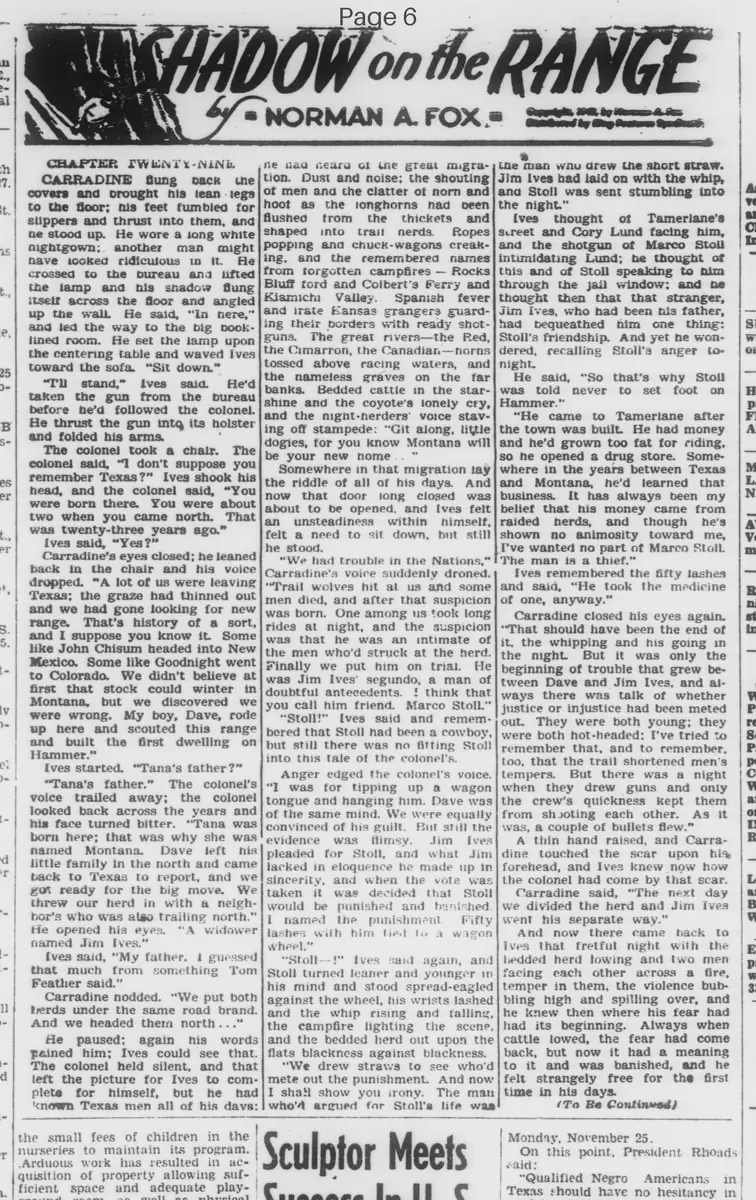
SHADOW on the RANGE
by
NORMAN A. FOX.
Tossed above racing waters, the nameless graves on the far banks. Bedded cattle in the star-shine and the coyote's lonely cry, and the night-herders' voice staving off stampede: "Git along, little dogies, for you know Montana will be your new home"
Somewhere in that migration lay the riddle of all of his days. And now that door long closed was about to be opened, and Ives felt an unsteadiness within himself, felt a need to sit down, but still he stood.
"We had trouble in the Nations."
Carradine's voice suddenly droned. "Trail wolves hit at us and some men died, and after that suspicion was born. One among us took long rides at night, and the suspicion was that he was an intimate of the men who'd struck at the herd.
Finally we put him on trial. He was Jim Ives' segundo, a man of doubtful antecedents, I think that you call him friend. Marco Stoll."
"Stoll!" Ives said and remembered that Stoll had been a cowboy, but still there was no fitting Stoll into this tale of the colonel's.
Anger edged the colonel's voice. "I was for tipping up a wagon tongue and hanging him. Dave was of the same mind. We were equally convinced of his guilt. But still the evidence was flimsy. Jim Ives pleaded for Stoll, and what Jim lacked in eloquence he made up in sincerity, and when the vote was taken it was decided that Stoll would be punished and banished I named the punishment Fifty lashes with him tied to a wagon wheel."
"Stoll-!" Ives said again, and Stoll turned leaner and younger in his mind and stood spread-eagled against the wheel, his wrists lashed and the whip rising and falling, the campfire lighting the scene, and the bedded herd out upon the flats blackness against blackness.
"We drew straws to see who'd mete out the punishment. And now I shall show you irony. The man who'd argued for Stoll's life was the man who drew the short straw.
Jim Ives had laid on with the whip and Stoll was sent stumbling into the night."
Ives thought of Tamerlane's Street and Cory Lund facing him, and the shotgun of Marco Stoll intimidating Lund; he thought of this and of Stoll speaking to him through the jail window; and he thought then that that stranger, Jim Ives, who had been his father, had bequeathed him one thing: Stoll's friendship. And yet he wondered, recalling Stoll's anger to-night.
He said, "So that's why Stoll was told never to set foot on Hammer."
"He came to Tamerlane after the town was built. He had money and he'd grown too fat for riding, so he opened a drug store. Somewhere in the years between Texas and Montana, he'd learned that business. It has always been my belief that his money came from raided herds, and though he's shown no animosity toward me, I've wanted no part of Marco Stoll. The man is a thief."
Ives remembered the fifty lashes and said, "He took the medicine of one, anyway.'"
Carradine closed his eyes again. That should have been the end of it, the whipping and his going in the night. But it was only the beginning of trouble that grew between Dave and Jim Ives, and always there was talk of whether justice or injustice had been meted out. They were both young: they were both hot-headed: I've tried to remember that, and to remember too, that the trail shortened men's tempers. But there was a night when they drew guns and only the crew's quickness kept them from shooting each other. As it was, a couple of bullets flew.
A thin hand raised, and Carradine touched the scar upon his forehead, and Ives knew now how the colonel had come by that scar.
Carradine said, "The next day we divided the herd and Jim Ives went his separate way."
And now there came back to Ives that fretful night with the bedded herd lowing and two men facing each other across a fire, temper in them, the violence bubbling high and spilling over, and he knew then where his fear had had its beginning. Always when cattle lowed, the fear had come back, but now it had a meaning to it and was banished, and he felt strangely free for the first time in his days
(To Be Continued)
CHAPTER TWENTY-NINE
CARRADINE flung back the covers and brought his lean legs to the floor; his feet fumbled for slippers and thrust into them, and he stood up.
He wore a long white nightgown; another man might have looked ridiculous in it. He crossed to the bureau and lifted the lamp and his shadow flung itself across the floor and angled up the wall.
He said, "In here," and led the way to the big book-lined room.
He set the lamp upon the centering table and waved Ives toward the sofa. "Sit down."
"I'll stand."
Ives said. He'd taken the gun from the bureau before he'd followed the colonel.
He thrust the gun into its holster and folded his arms.
The colonel took a chair. The colonel said, "I don't suppose you remember Texas?" Ives shook his head, and the colonel said, "You were born there. You were about two when you came north. That was twenty-three years ago."
Ives said "Yes?"
Carradine's eyes closed: he leaned back in the chair and his voice dropped. "A lot of us were leaving Texas: the graze had thinned out and we had gone looking for new range. That's history of a sort, and I suppose you know it. Some like John Chisum headed into New Mexico. Some like Goodnight went to Colorado, We didn't believe at first that stock could winter in Montana, but we discovered we were wrong. My boy, Dave, rode up here and scouted this range and built the first dwelling on Hammer."
Ives started. "Tana's father?"
"Tana's father." The colonel's voice trailed away: the colonel looked back across the years and his face turned bitter. "Tana was born here; that was why she was named Montana. Dave left his little family In the north and came back to Texas to report, and we got ready for the big move. We threw our herd in with a neighbor's who was also trailing north."
He opened his eyes, "A widower named Jim Ives."
Ives said, "My father. I guessed that much from something Tom Feather said."
Carradine nodded. "We put both herds under the same road brand. And we headed them north..."
He paused: again his words pained him; Ives could see that.
The colonel held silent, and that left the picture for Ives to complete for himself, but he had known Texas men all of his days:
by
NORMAN A. FOX.
Tossed above racing waters, the nameless graves on the far banks. Bedded cattle in the star-shine and the coyote's lonely cry, and the night-herders' voice staving off stampede: "Git along, little dogies, for you know Montana will be your new home"
Somewhere in that migration lay the riddle of all of his days. And now that door long closed was about to be opened, and Ives felt an unsteadiness within himself, felt a need to sit down, but still he stood.
"We had trouble in the Nations."
Carradine's voice suddenly droned. "Trail wolves hit at us and some men died, and after that suspicion was born. One among us took long rides at night, and the suspicion was that he was an intimate of the men who'd struck at the herd.
Finally we put him on trial. He was Jim Ives' segundo, a man of doubtful antecedents, I think that you call him friend. Marco Stoll."
"Stoll!" Ives said and remembered that Stoll had been a cowboy, but still there was no fitting Stoll into this tale of the colonel's.
Anger edged the colonel's voice. "I was for tipping up a wagon tongue and hanging him. Dave was of the same mind. We were equally convinced of his guilt. But still the evidence was flimsy. Jim Ives pleaded for Stoll, and what Jim lacked in eloquence he made up in sincerity, and when the vote was taken it was decided that Stoll would be punished and banished I named the punishment Fifty lashes with him tied to a wagon wheel."
"Stoll-!" Ives said again, and Stoll turned leaner and younger in his mind and stood spread-eagled against the wheel, his wrists lashed and the whip rising and falling, the campfire lighting the scene, and the bedded herd out upon the flats blackness against blackness.
"We drew straws to see who'd mete out the punishment. And now I shall show you irony. The man who'd argued for Stoll's life was the man who drew the short straw.
Jim Ives had laid on with the whip and Stoll was sent stumbling into the night."
Ives thought of Tamerlane's Street and Cory Lund facing him, and the shotgun of Marco Stoll intimidating Lund; he thought of this and of Stoll speaking to him through the jail window; and he thought then that that stranger, Jim Ives, who had been his father, had bequeathed him one thing: Stoll's friendship. And yet he wondered, recalling Stoll's anger to-night.
He said, "So that's why Stoll was told never to set foot on Hammer."
"He came to Tamerlane after the town was built. He had money and he'd grown too fat for riding, so he opened a drug store. Somewhere in the years between Texas and Montana, he'd learned that business. It has always been my belief that his money came from raided herds, and though he's shown no animosity toward me, I've wanted no part of Marco Stoll. The man is a thief."
Ives remembered the fifty lashes and said, "He took the medicine of one, anyway.'"
Carradine closed his eyes again. That should have been the end of it, the whipping and his going in the night. But it was only the beginning of trouble that grew between Dave and Jim Ives, and always there was talk of whether justice or injustice had been meted out. They were both young: they were both hot-headed: I've tried to remember that, and to remember too, that the trail shortened men's tempers. But there was a night when they drew guns and only the crew's quickness kept them from shooting each other. As it was, a couple of bullets flew.
A thin hand raised, and Carradine touched the scar upon his forehead, and Ives knew now how the colonel had come by that scar.
Carradine said, "The next day we divided the herd and Jim Ives went his separate way."
And now there came back to Ives that fretful night with the bedded herd lowing and two men facing each other across a fire, temper in them, the violence bubbling high and spilling over, and he knew then where his fear had had its beginning. Always when cattle lowed, the fear had come back, but now it had a meaning to it and was banished, and he felt strangely free for the first time in his days
(To Be Continued)
CHAPTER TWENTY-NINE
CARRADINE flung back the covers and brought his lean legs to the floor; his feet fumbled for slippers and thrust into them, and he stood up.
He wore a long white nightgown; another man might have looked ridiculous in it. He crossed to the bureau and lifted the lamp and his shadow flung itself across the floor and angled up the wall.
He said, "In here," and led the way to the big book-lined room.
He set the lamp upon the centering table and waved Ives toward the sofa. "Sit down."
"I'll stand."
Ives said. He'd taken the gun from the bureau before he'd followed the colonel.
He thrust the gun into its holster and folded his arms.
The colonel took a chair. The colonel said, "I don't suppose you remember Texas?" Ives shook his head, and the colonel said, "You were born there. You were about two when you came north. That was twenty-three years ago."
Ives said "Yes?"
Carradine's eyes closed: he leaned back in the chair and his voice dropped. "A lot of us were leaving Texas: the graze had thinned out and we had gone looking for new range. That's history of a sort, and I suppose you know it. Some like John Chisum headed into New Mexico. Some like Goodnight went to Colorado, We didn't believe at first that stock could winter in Montana, but we discovered we were wrong. My boy, Dave, rode up here and scouted this range and built the first dwelling on Hammer."
Ives started. "Tana's father?"
"Tana's father." The colonel's voice trailed away: the colonel looked back across the years and his face turned bitter. "Tana was born here; that was why she was named Montana. Dave left his little family In the north and came back to Texas to report, and we got ready for the big move. We threw our herd in with a neighbor's who was also trailing north."
He opened his eyes, "A widower named Jim Ives."
Ives said, "My father. I guessed that much from something Tom Feather said."
Carradine nodded. "We put both herds under the same road brand. And we headed them north..."
He paused: again his words pained him; Ives could see that.
The colonel held silent, and that left the picture for Ives to complete for himself, but he had known Texas men all of his days:
What sub-type of article is it?
Prose Fiction
What themes does it cover?
Moral Virtue
Friendship
Commerce Trade
What keywords are associated?
Cattle Drive
Montana Trail
Trial Punishment
Family Revelation
Western Story
What entities or persons were involved?
By Norman A. Fox.
Literary Details
Title
Shadow On The Range
Author
By Norman A. Fox.
Key Lines
"Git Along, Little Dogies, For You Know Montana Will Be Your New Home"
We Put Him On Trial. He Was Jim Ives' Segundo, A Man Of Doubtful Antecedents, I Think That You Call Him Friend. Marco Stoll.
Jim Ives Had Laid On With The Whip And Stoll Was Sent Stumbling Into The Night.
The Next Day We Divided The Herd And Jim Ives Went His Separate Way.
We Threw Our Herd In With A Neighbor's Who Was Also Trailing North. He Opened His Eyes, "A Widower Named Jim Ives."