Thank you for visiting SNEWPapers!
Sign up free
Editorial
July 5, 1809
The Rhode Island Republican
Newport, Newport County, Rhode Island
What is this article about?
This editorial recounts the 1807 Chesapeake-Leopard affair, British impressment of sailors, and President Jefferson's measured response promoting neutrality and peace over war, despite public outrage. It praises Jefferson's wisdom in handling diplomacy with Britain under Canning.
Clipping
OCR Quality
95%
Excellent
Full Text
Political Miscellany.
For the Republican.
THE RETROSPECT CONTINUED.
"s Give honour unto whom honour is due."
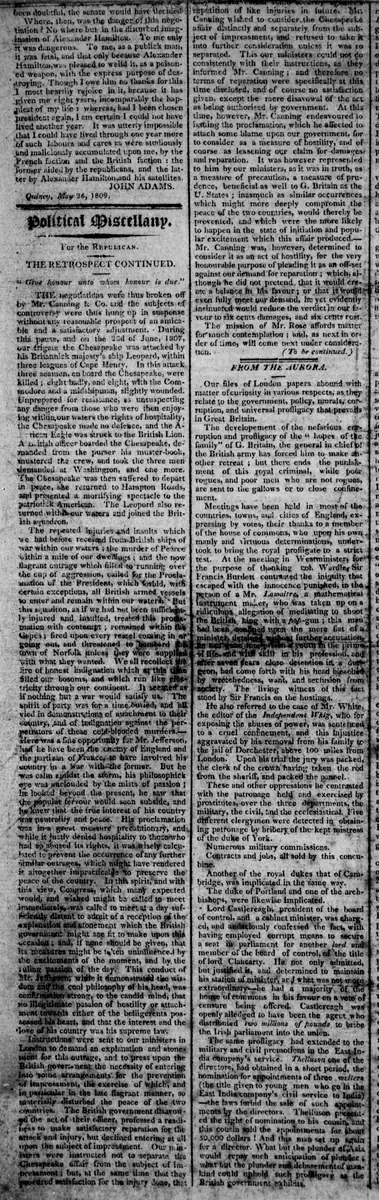
THE negotiations were thus broken off by Mr. Canning & Co. and the subjects of controversy were thus hung up in suspense without any reasonable prospect of an amicable and a satisfactory adjustment. During this pause, and on the 2nd of June, 1807, our frigate the Chesapeake was attacked by his Britannick majesty's ship Leopard, within three leagues of Cape Henry. In this attack three seamen, on board the Chesapeake, were killed ; eight badly, and eight, with the Commodore and a midshipman, slightly wounded. Unprepared for resistance, as unsuspecting any danger from those who were then enjoying within our waters the rights of hospitality, the Chesapeake made no defence, and the American Eagle was struck to the British Lion. A British officer boarded the Chesapeake, demanded from the purser his muster-book, mustered the crew, and took the three men surrendered at Washington, and one more. The Chesapeake was then suffered to depart in peace, she returned to Hampton Roads, and presented a mortifying spectacle to the patriotick American. The Leopard also returned within our waters and joined the British squadron.
The repeated injuries and insults which we had before received from British ships of war within our waters ; the murder of Pearce within a mile of our dwellings ; and the now flagrant outrage which filled to running over the cup of aggression, called for the Proclamation of the President, which forbade, with certain exceptions, all British armed vessels to enter and remain within our waters -But this squadron, as if we had not been sufficiently injured and insulted, treated this proclamation with contempt ; remained within our Capes; fired upon every vessel coming in or going out, and threatened to bombard the town of Norfolk unless they were supplied with what they wanted. We all recollect the fire of honest indignation which at this time filled our bosoms, and which ran like electricity through our continent. It seemed as if nothing but a war would satisfy us. The spirit of party was for a time buried, and all vied in demonstrations of attachment to their country, and of indignation against the perpetrators of these cold-blooded murders.
There was a fine opportunity for Mr. Jefferson, had he have been the enemy of England and the partizan of France, to have involved his country in a War with the former. But he was calm amidst the storm, his philosophick eye was unclouded by the mists of passion ; he looked beyond the present, he saw that the popular fervour would soon subside, and he knew that the true interest of his country was neutrality and peace. His proclamation was in a great measure precautionary, and while it justly denied hospitality to those who had so abused its rights, it was wisely calculated to prevent the occurrence of any further similar outrages, which might have rendered it altogether impracticable to preserve the peace of the country. In this spirit, and with this view, Congress, which many expected would, and wished might be called to meet immediately was called to meet at a day sufficiently distant to admit of a reception of the explanation and atonement which the British government might see fit to make upon this occasion; and, if none should be given, that its measures might be taken uninfluenced by the excitements of the moment, and by the ruling passion of the day. This conduct of Mr. Jefferson while it demonstrated the wisdom and the cool philosophy of his head, was confirmation strong, to the candid mind, that no illegitimate passion of hostility or attachment towards either of the belligerents possessed his heart, and that the interest and the love of his country was his supreme law.
Instructions were sent to our ministers in London to demand an explanation and atonement for this outrage, and to press upon the British government the necessity of entering into some arrangements for the prevention of impressment, the exercise of which, and in particular in the late flagrant manner, so materially disturbed the peace of the two countries. The British government disavowed the act of their officer, professed a readiness to make satisfactory reparation for the attack and injury, but declined entering at all upon the subject of impressment. Our ministers were instructed not to separate the Chesapeake affair from the subject of impressment; but, at the same time that they procured satisfaction for the injury done, that they should insist upon some provisions against the repetition of like injuries in future. Mr. Canning wished to consider the Chesapeake affair distinctly and separately from the subject of impressment, and refused to take it into further consideration unless it was so separated. This our ministers could not do consistently with their instructions, as they informed Mr. Canning ; and therefore no terms of reparation were specifically at this time disclosed, and of course no satisfaction given, except the mere disavowal of the act as being authorised by government. At this time, however, Mr. Canning endeavoured to twist the proclamation, which he affected to attach some blame upon our government, or to consider as a measure of hostility, and of course as lessening our claim for damages and reparation. It was however represented to him by our ministers, as it was in truth, as a measure of precaution, a measure of prudence, beneficial as well to G. Britain as the U. States ; inasmuch as similar occurrences which might more deeply compromit the peace of the two countries, would thereby be prevented, and which were the more likely to happen in the state of irritation and popular excitement which this affair produced.
Mr. Canning was, however, determined to consider it as an act of hostility, or the very honourable purpose of pleading it as an off-set against our demand for reparation; which, although he did not pretend that it would create a balance in his favour; or that it would even fully meet our demand, he yet evidently insinuated would reduce the verdict in our favour to six cents damages, and six cents cost. The mission of Mr. Rose affords matter for much contemplation ; and, as next in order of time, will come next under consideration.
(To be continued.)
For the Republican.
THE RETROSPECT CONTINUED.
"s Give honour unto whom honour is due."
THE negotiations were thus broken off by Mr. Canning & Co. and the subjects of controversy were thus hung up in suspense without any reasonable prospect of an amicable and a satisfactory adjustment. During this pause, and on the 2nd of June, 1807, our frigate the Chesapeake was attacked by his Britannick majesty's ship Leopard, within three leagues of Cape Henry. In this attack three seamen, on board the Chesapeake, were killed ; eight badly, and eight, with the Commodore and a midshipman, slightly wounded. Unprepared for resistance, as unsuspecting any danger from those who were then enjoying within our waters the rights of hospitality, the Chesapeake made no defence, and the American Eagle was struck to the British Lion. A British officer boarded the Chesapeake, demanded from the purser his muster-book, mustered the crew, and took the three men surrendered at Washington, and one more. The Chesapeake was then suffered to depart in peace, she returned to Hampton Roads, and presented a mortifying spectacle to the patriotick American. The Leopard also returned within our waters and joined the British squadron.
The repeated injuries and insults which we had before received from British ships of war within our waters ; the murder of Pearce within a mile of our dwellings ; and the now flagrant outrage which filled to running over the cup of aggression, called for the Proclamation of the President, which forbade, with certain exceptions, all British armed vessels to enter and remain within our waters -But this squadron, as if we had not been sufficiently injured and insulted, treated this proclamation with contempt ; remained within our Capes; fired upon every vessel coming in or going out, and threatened to bombard the town of Norfolk unless they were supplied with what they wanted. We all recollect the fire of honest indignation which at this time filled our bosoms, and which ran like electricity through our continent. It seemed as if nothing but a war would satisfy us. The spirit of party was for a time buried, and all vied in demonstrations of attachment to their country, and of indignation against the perpetrators of these cold-blooded murders.
There was a fine opportunity for Mr. Jefferson, had he have been the enemy of England and the partizan of France, to have involved his country in a War with the former. But he was calm amidst the storm, his philosophick eye was unclouded by the mists of passion ; he looked beyond the present, he saw that the popular fervour would soon subside, and he knew that the true interest of his country was neutrality and peace. His proclamation was in a great measure precautionary, and while it justly denied hospitality to those who had so abused its rights, it was wisely calculated to prevent the occurrence of any further similar outrages, which might have rendered it altogether impracticable to preserve the peace of the country. In this spirit, and with this view, Congress, which many expected would, and wished might be called to meet immediately was called to meet at a day sufficiently distant to admit of a reception of the explanation and atonement which the British government might see fit to make upon this occasion; and, if none should be given, that its measures might be taken uninfluenced by the excitements of the moment, and by the ruling passion of the day. This conduct of Mr. Jefferson while it demonstrated the wisdom and the cool philosophy of his head, was confirmation strong, to the candid mind, that no illegitimate passion of hostility or attachment towards either of the belligerents possessed his heart, and that the interest and the love of his country was his supreme law.
Instructions were sent to our ministers in London to demand an explanation and atonement for this outrage, and to press upon the British government the necessity of entering into some arrangements for the prevention of impressment, the exercise of which, and in particular in the late flagrant manner, so materially disturbed the peace of the two countries. The British government disavowed the act of their officer, professed a readiness to make satisfactory reparation for the attack and injury, but declined entering at all upon the subject of impressment. Our ministers were instructed not to separate the Chesapeake affair from the subject of impressment; but, at the same time that they procured satisfaction for the injury done, that they should insist upon some provisions against the repetition of like injuries in future. Mr. Canning wished to consider the Chesapeake affair distinctly and separately from the subject of impressment, and refused to take it into further consideration unless it was so separated. This our ministers could not do consistently with their instructions, as they informed Mr. Canning ; and therefore no terms of reparation were specifically at this time disclosed, and of course no satisfaction given, except the mere disavowal of the act as being authorised by government. At this time, however, Mr. Canning endeavoured to twist the proclamation, which he affected to attach some blame upon our government, or to consider as a measure of hostility, and of course as lessening our claim for damages and reparation. It was however represented to him by our ministers, as it was in truth, as a measure of precaution, a measure of prudence, beneficial as well to G. Britain as the U. States ; inasmuch as similar occurrences which might more deeply compromit the peace of the two countries, would thereby be prevented, and which were the more likely to happen in the state of irritation and popular excitement which this affair produced.
Mr. Canning was, however, determined to consider it as an act of hostility, or the very honourable purpose of pleading it as an off-set against our demand for reparation; which, although he did not pretend that it would create a balance in his favour; or that it would even fully meet our demand, he yet evidently insinuated would reduce the verdict in our favour to six cents damages, and six cents cost. The mission of Mr. Rose affords matter for much contemplation ; and, as next in order of time, will come next under consideration.
(To be continued.)
What sub-type of article is it?
Foreign Affairs
War Or Peace
What keywords are associated?
Chesapeake Affair
British Impressment
Us Neutrality
Jefferson Policy
British Aggression
What entities or persons were involved?
Mr. Jefferson
Mr. Canning
Chesapeake
Leopard
British Government
Editorial Details
Primary Topic
The Chesapeake Affair And Jefferson's Neutrality Policy
Stance / Tone
Supportive Of Jefferson's Calm And Neutral Response To British Aggression
Key Figures
Mr. Jefferson
Mr. Canning
Chesapeake
Leopard
British Government
Key Arguments
British Ship Leopard Attacked Us Frigate Chesapeake On June 2, 1807, Killing And Wounding Americans And Impressing Sailors
Jefferson Issued A Proclamation Barring British Armed Vessels From Us Waters As A Precautionary Measure
Jefferson Avoided War By Calling Congress Later To Allow For British Explanation
British Government Disavowed The Attack But Refused To Address Impressment
Canning Tried To Use The Proclamation As An Offset Against Us Demands For Reparation