Thank you for visiting SNEWPapers!
Sign up free
Literary
August 3, 1804
Alexandria Daily Advertiser
Alexandria, Virginia
What is this article about?
An essay praising the public sharing of scientific discoveries, contrasting modern liberality with past secrecy. It details James Woodhouse's method for refining camphor, previously monopolized by the Dutch, and celebrates chemistry's wonders and the virtue of disclosing knowledge.
Clipping
OCR Quality
98%
Excellent
Full Text
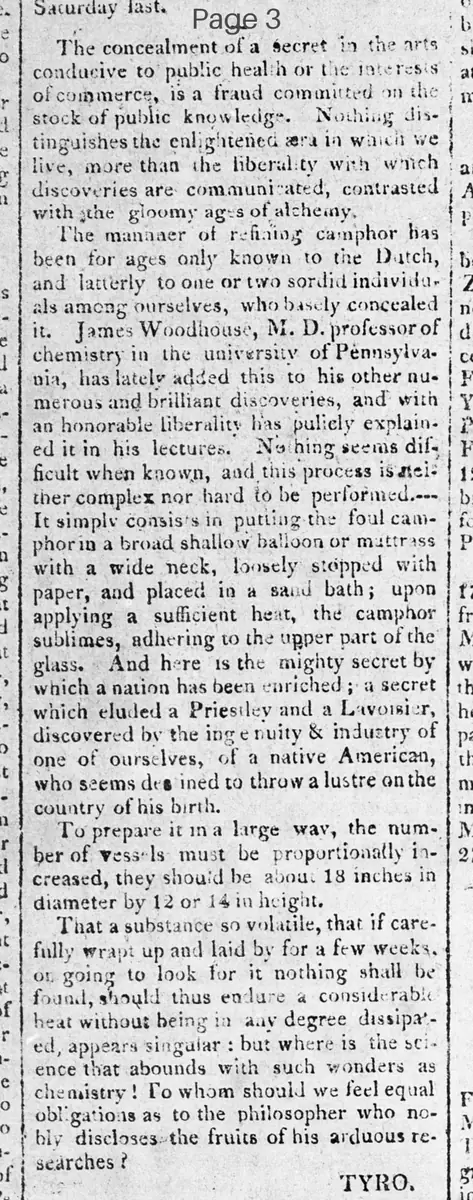
The concealment of a secret in the arts conducive to public health or the interests of commerce, is a fraud committed on the stock of public knowledge. Nothing distinguishes the enlightened era in which we live, more than the liberality with which discoveries are communicated, contrasted with the gloomy ages of alchemy.
The manner of refining camphor has been for ages only known to the Dutch, and latterly to one or two sordid individuals among ourselves, who basely concealed it. James Woodhouse, M. D. professor of chemistry in the university of Pennsylvania, has lately added this to his other numerous and brilliant discoveries, and with an honorable liberality has publicly explained it in his lectures. Nothing seems difficult when known, and this process is neither complex nor hard to be performed.
It simply consists in putting the foul camphor in a broad shallow balloon or matrass with a wide neck, loosely stopped with paper, and placed in a sand bath; upon applying a sufficient heat, the camphor sublimes, adhering to the upper part of the glass. And here is the mighty secret by which a nation has been enriched; a secret which eluded a Priestley and a Lavoisier, discovered by the ingenuity & industry of one of ourselves, of a native American, who seems destined to throw a lustre on the country of his birth.
To prepare it in a large way, the number of vessels must be proportionally increased, they should be about 18 inches in diameter by 12 or 14 in height.
That a substance so volatile, that if carefully wrapt up and laid by for a few weeks, on going to look for it nothing shall be found, should thus endure a considerable heat without being in any degree dissipated, appears singular: but where is the science that abounds with such wonders as chemistry! To whom should we feel equal obligations as to the philosopher who nobly discloses the fruits of his arduous researches?
The manner of refining camphor has been for ages only known to the Dutch, and latterly to one or two sordid individuals among ourselves, who basely concealed it. James Woodhouse, M. D. professor of chemistry in the university of Pennsylvania, has lately added this to his other numerous and brilliant discoveries, and with an honorable liberality has publicly explained it in his lectures. Nothing seems difficult when known, and this process is neither complex nor hard to be performed.
It simply consists in putting the foul camphor in a broad shallow balloon or matrass with a wide neck, loosely stopped with paper, and placed in a sand bath; upon applying a sufficient heat, the camphor sublimes, adhering to the upper part of the glass. And here is the mighty secret by which a nation has been enriched; a secret which eluded a Priestley and a Lavoisier, discovered by the ingenuity & industry of one of ourselves, of a native American, who seems destined to throw a lustre on the country of his birth.
To prepare it in a large way, the number of vessels must be proportionally increased, they should be about 18 inches in diameter by 12 or 14 in height.
That a substance so volatile, that if carefully wrapt up and laid by for a few weeks, on going to look for it nothing shall be found, should thus endure a considerable heat without being in any degree dissipated, appears singular: but where is the science that abounds with such wonders as chemistry! To whom should we feel equal obligations as to the philosopher who nobly discloses the fruits of his arduous researches?
What sub-type of article is it?
Essay
What themes does it cover?
Commerce Trade
Moral Virtue
Liberty Freedom
What keywords are associated?
Camphor Refining
Scientific Discovery
James Woodhouse
Chemistry
Public Knowledge
Dutch Monopoly
American Ingenuity
Literary Details
Subject
On The Refining Of Camphor By James Woodhouse
Key Lines
The Concealment Of A Secret In The Arts Conducive To Public Health Or The Interests Of Commerce, Is A Fraud Committed On The Stock Of Public Knowledge.
Nothing Distinguishes The Enlightened Era In Which We Live, More Than The Liberality With Which Discoveries Are Communicated, Contrasted With The Gloomy Ages Of Alchemy.
And Here Is The Mighty Secret By Which A Nation Has Been Enriched; A Secret Which Eluded A Priestley And A Lavoisier, Discovered By The Ingenuity & Industry Of One Of Ourselves, Of A Native American, Who Seems Destined To Throw A Lustre On The Country Of His Birth.
To Whom Should We Feel Equal Obligations As To The Philosopher Who Nobly Discloses The Fruits Of His Arduous Researches?