Thank you for visiting SNEWPapers!
Sign up free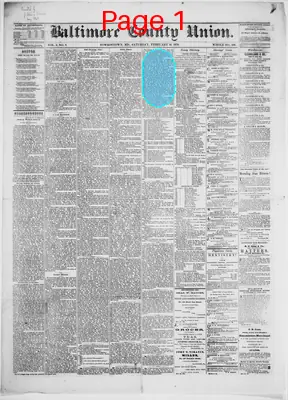
Editorial
February 19, 1870
The Baltimore County Union
Towson, Baltimore County, Maryland
What is this article about?
This editorial argues that true greatness lies in small, everyday acts of kindness and courtesy, such as giving water to the thirsty or offering sympathy, rather than grand ambitions. It critiques prideful pursuits and urges emulating Christ's humble example to beautify life and inspire holiness.
Clipping
OCR Quality
98%
Excellent
Full Text
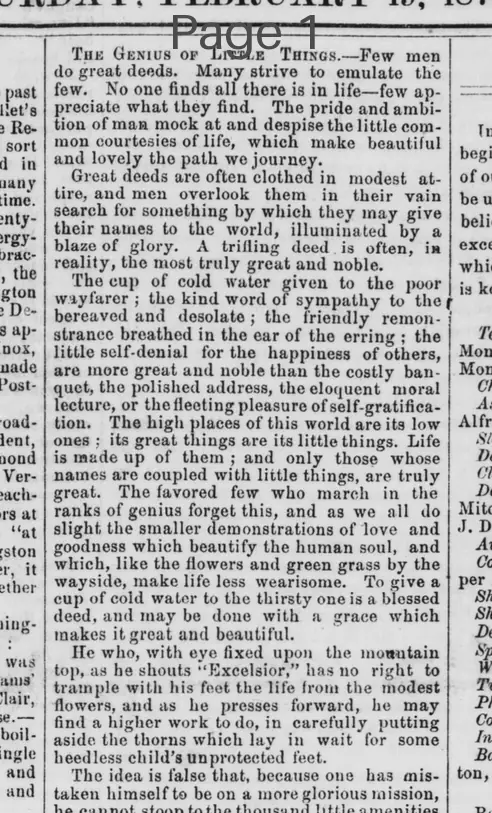
The Genius of Little Things.—Few men do great deeds. Many strive to emulate the few. No one finds all there is in life—few appreciate what they find. The pride and ambition of man mock at and despise the little common courtesies of life, which make beautiful and lovely the path we journey. Great deeds are often clothed in modest attire, and men overlook them in their vain search for something by which they may give their names to the world, illuminated by a blaze of glory. A trifling deed is often, in reality, the most truly great and noble.
The cup of cold water given to the poor wayfarer; the kind word of sympathy to the bereaved and desolate; the friendly remonstrance breathed in the ear of the erring; the little self-denial for the happiness of others, are more great and noble than the costly banquet, the polished address, the eloquent moral lecture, or the fleeting pleasure of self-gratification. The high places of this world are its low ones; its great things are its little things. Life is made up of them; and only those whose names are coupled with little things, are truly great. The favored few who march in the ranks of genius forget this, and as we all do slight the smaller demonstrations of love and goodness which beautify the human soul, and which, like the flowers and green grass by the wayside, make life less wearisome. To give a cup of cold water to the thirsty one is a blessed deed, and may be done with a grace which makes it great and beautiful.
He who, with eye fixed upon the mountain top, as he shouts "Excelsior," has no right to trample with his feet the life from the modest flowers, and as he presses forward, he may find a higher work to do, in carefully putting aside the thorns which lie in wait for some heedless child's unprotected feet.
The idea is false that, because one has mistaken himself to be on a more glorious mission, he cannot stoop to the thousand little amenities of every-day life needed to soften its roughness. Let men try to make life beautiful, homes happy, and to emulate that principle which made Christ God—then the world shall know them great, and be holier from their example.
The cup of cold water given to the poor wayfarer; the kind word of sympathy to the bereaved and desolate; the friendly remonstrance breathed in the ear of the erring; the little self-denial for the happiness of others, are more great and noble than the costly banquet, the polished address, the eloquent moral lecture, or the fleeting pleasure of self-gratification. The high places of this world are its low ones; its great things are its little things. Life is made up of them; and only those whose names are coupled with little things, are truly great. The favored few who march in the ranks of genius forget this, and as we all do slight the smaller demonstrations of love and goodness which beautify the human soul, and which, like the flowers and green grass by the wayside, make life less wearisome. To give a cup of cold water to the thirsty one is a blessed deed, and may be done with a grace which makes it great and beautiful.
He who, with eye fixed upon the mountain top, as he shouts "Excelsior," has no right to trample with his feet the life from the modest flowers, and as he presses forward, he may find a higher work to do, in carefully putting aside the thorns which lie in wait for some heedless child's unprotected feet.
The idea is false that, because one has mistaken himself to be on a more glorious mission, he cannot stoop to the thousand little amenities of every-day life needed to soften its roughness. Let men try to make life beautiful, homes happy, and to emulate that principle which made Christ God—then the world shall know them great, and be holier from their example.
What sub-type of article is it?
Moral Or Religious
Social Reform
What keywords are associated?
Little Things
Great Deeds
Kindness
Moral Excellence
Christian Principle
Self Denial
Courtesies
Human Soul
What entities or persons were involved?
Christ
Editorial Details
Primary Topic
Value Of Small Acts Of Kindness And Courtesy
Stance / Tone
Moral Exhortation Advocating Appreciation Of Little Things
Key Figures
Christ
Key Arguments
Few Perform Great Deeds But Many Overlook The True Greatness In Small Courtesies
Small Acts Like Giving Water To The Thirsty Or Kind Words To The Bereaved Are Nobler Than Grand Gestures
Life Consists Of Little Things Which Make It Beautiful And Less Wearisome
Ambition And Pride Cause People To Despise Everyday Amenities
Emulate Christ's Principle Of Humility And Self Denial To Achieve True Greatness