Thank you for visiting SNEWPapers!
Sign up free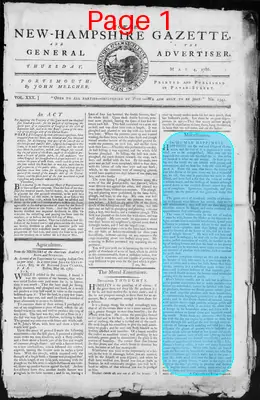
Literary
May 4, 1786
Fowle's New Hampshire Gazette And General Advertiser
Portsmouth, Rockingham County, New Hampshire
What is this article about?
An essay arguing that true human happiness derives from fulfilling duty to God through beneficence and virtue, rather than wealth or ease. It critiques complaints against life's miseries as stemming from ignorance and ingratitude, advocating noble pursuits for eternal felicity.
Clipping
OCR Quality
95%
Excellent
Full Text
Miscellanies:
On HUMAN HAPPINESS.
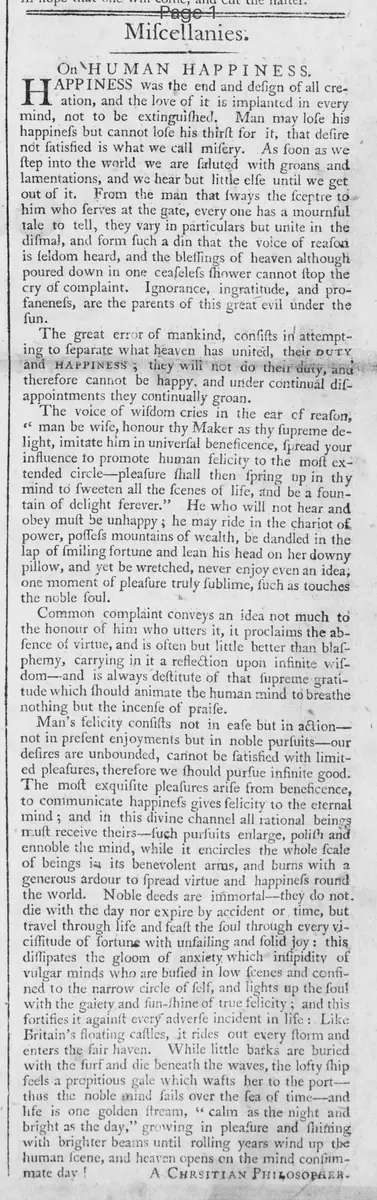
HAPPINESS was the end and design of all creation, and the love of it is implanted in every mind, not to be extinguished. Man may lose his happiness but cannot lose his thirst for it, that desire not satisfied is what we call misery. As soon as we step into the world we are saluted with groans and lamentations, and we hear but little else until we get out of it. From the man that sways the sceptre to him who serves at the gate, every one has a mournful tale to tell, they vary in particulars but unite in the dismal, and form such a din that the voice of reason is seldom heard, and the blessings of heaven although poured down in one ceaseless shower cannot stop the cry of complaint. Ignorance, ingratitude, and profaneness, are the parents of this great evil under the sun.
The great error of mankind, consists in attempting to separate what heaven has united, their duty and HAPPINESS; they will not do their duty, and therefore cannot be happy, and under continual disappointments they continually groan.
The voice of wisdom cries in the ear of reason,
"If man be wise, honour thy Maker as thy supreme delight, imitate him in universal beneficence, spread your influence to promote human felicity to the most extended circle--pleasure shall then spring up in thy mind to sweeten all the scenes of life, and be a fountain of delight forever."
He who will not hear and obey must be unhappy; he may ride in the chariot of power, possess mountains of wealth, be dandled in the lap of smiling fortune and lean his head on her downy pillow, and yet be wretched, never enjoy even an idea; one moment of pleasure truly sublime, such as touches the noble soul.
Common complaint conveys an idea not much to the honour of him who utters it, it proclaims the absence of virtue, and is often but little better than blasphemy, carrying in it a reflection upon infinite wisdom--and is always destitute of that supreme gratitude which should animate the human mind to breathe nothing but the incense of praise.
Man's felicity consists not in ease but in Action--not in present enjoyments but in noble pursuits-our desires are unbounded, cannot be satisfied with limited pleasures, therefore we should pursue infinite good.
The most exquisite pleasures arise from beneficence, to communicate happiness gives felicity to the eternal mind; and in this divine channel all rational beings must receive theirs--such pursuits enlarge, polish and ennoble the mind, while it encircles the whole scale of beings in its benevolent arms, and burns with a generous ardour to spread virtue and happiness round the world. Noble deeds are immortal--they do not die with the day nor expire by accident or time, but travel through life and feast the soul through every vicissitude of fortune with unfailing and solid joy: this dissipates the gloom of anxiety which insipidity of vulgar minds who are busied in low scenes and confined to the narrow circle of self, and lights up the soul with the gaiety and sun-shine of true felicity; and this fortifies it against every adverse incident in life: Like Britain's floating castles, it rides out every storm and enters the fair haven. While little barks are buried with the surf and die beneath the waves, the lofty ship feels a propitious gale which wafts her to the port-- thus the noble mind sails over the sea of time-and life is one golden stream, "calm as the night and bright as the day," growing in pleasure and shining with brighter beams until rolling years wind up the human scene, and heaven opens on the mind consummate day!
A CHRISTIAN PHILOSOPHER.
On HUMAN HAPPINESS.
HAPPINESS was the end and design of all creation, and the love of it is implanted in every mind, not to be extinguished. Man may lose his happiness but cannot lose his thirst for it, that desire not satisfied is what we call misery. As soon as we step into the world we are saluted with groans and lamentations, and we hear but little else until we get out of it. From the man that sways the sceptre to him who serves at the gate, every one has a mournful tale to tell, they vary in particulars but unite in the dismal, and form such a din that the voice of reason is seldom heard, and the blessings of heaven although poured down in one ceaseless shower cannot stop the cry of complaint. Ignorance, ingratitude, and profaneness, are the parents of this great evil under the sun.
The great error of mankind, consists in attempting to separate what heaven has united, their duty and HAPPINESS; they will not do their duty, and therefore cannot be happy, and under continual disappointments they continually groan.
The voice of wisdom cries in the ear of reason,
"If man be wise, honour thy Maker as thy supreme delight, imitate him in universal beneficence, spread your influence to promote human felicity to the most extended circle--pleasure shall then spring up in thy mind to sweeten all the scenes of life, and be a fountain of delight forever."
He who will not hear and obey must be unhappy; he may ride in the chariot of power, possess mountains of wealth, be dandled in the lap of smiling fortune and lean his head on her downy pillow, and yet be wretched, never enjoy even an idea; one moment of pleasure truly sublime, such as touches the noble soul.
Common complaint conveys an idea not much to the honour of him who utters it, it proclaims the absence of virtue, and is often but little better than blasphemy, carrying in it a reflection upon infinite wisdom--and is always destitute of that supreme gratitude which should animate the human mind to breathe nothing but the incense of praise.
Man's felicity consists not in ease but in Action--not in present enjoyments but in noble pursuits-our desires are unbounded, cannot be satisfied with limited pleasures, therefore we should pursue infinite good.
The most exquisite pleasures arise from beneficence, to communicate happiness gives felicity to the eternal mind; and in this divine channel all rational beings must receive theirs--such pursuits enlarge, polish and ennoble the mind, while it encircles the whole scale of beings in its benevolent arms, and burns with a generous ardour to spread virtue and happiness round the world. Noble deeds are immortal--they do not die with the day nor expire by accident or time, but travel through life and feast the soul through every vicissitude of fortune with unfailing and solid joy: this dissipates the gloom of anxiety which insipidity of vulgar minds who are busied in low scenes and confined to the narrow circle of self, and lights up the soul with the gaiety and sun-shine of true felicity; and this fortifies it against every adverse incident in life: Like Britain's floating castles, it rides out every storm and enters the fair haven. While little barks are buried with the surf and die beneath the waves, the lofty ship feels a propitious gale which wafts her to the port-- thus the noble mind sails over the sea of time-and life is one golden stream, "calm as the night and bright as the day," growing in pleasure and shining with brighter beams until rolling years wind up the human scene, and heaven opens on the mind consummate day!
A CHRISTIAN PHILOSOPHER.
What sub-type of article is it?
Essay
What themes does it cover?
Moral Virtue
Religious
What keywords are associated?
Human Happiness
Duty And Virtue
Beneficence
Moral Philosophy
Divine Wisdom
Noble Pursuits
Ingratitude
Eternal Felicity
What entities or persons were involved?
A Christian Philosopher.
Literary Details
Title
On Human Happiness.
Author
A Christian Philosopher.
Key Lines
Happiness Was The End And Design Of All Creation, And The Love Of It Is Implanted In Every Mind, Not To Be Extinguished.
The Great Error Of Mankind, Consists In Attempting To Separate What Heaven Has United, Their Duty And Happiness;
"If Man Be Wise, Honour Thy Maker As Thy Supreme Delight, Imitate Him In Universal Beneficence, Spread Your Influence To Promote Human Felicity To The Most Extended Circle Pleasure Shall Then Spring Up In Thy Mind To Sweeten All The Scenes Of Life, And Be A Fountain Of Delight Forever."
Man's Felicity Consists Not In Ease But In Action Not In Present Enjoyments But In Noble Pursuits Our Desires Are Unbounded, Cannot Be Satisfied With Limited Pleasures, Therefore We Should Pursue Infinite Good.
The Most Exquisite Pleasures Arise From Beneficence, To Communicate Happiness Gives Felicity To The Eternal Mind;