Thank you for visiting SNEWPapers!
Sign up free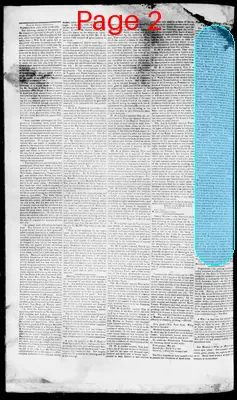
Editorial
February 1, 1839
The Charlotte Journal
Charlotte, Mecklenburg County, North Carolina
What is this article about?
An editorial manifesto critiques resolutions adopted by Van Buren party members in the legislature, defending Whig opposition to the Expunging Resolution as a constitutional stand against record mutilation, not bank revival, and accusing the Van Buren party of hypocrisy in using instructions.
Clipping

OCR Quality
95%
Excellent
Full Text
MANIFESTO
The last "Standard" contains the proceedings of a meeting held by the Van Buren Members of the Legislature, previous to its adjournment, at which a series of resolutions were adopted, which are offered to the world as embodying the principles of the party.
We propose to review each Resolution, separately, and on its own merits; but as the subject of our remarks extends through considerable space we must be indulged with like latitude.
The first of these Resolutions denounces the expression of opinion by our Legislature in opposition to the Expunge, as an attempt to "revive the war in favor of a National Bank," and to "assail, by indirection, the fame and patriotism of Andrew Jackson."
How far the first of these positions is founded in justice, may be inferred from the fact that the Resolutions of Instruction were advocated and voted for by members who publicly avowed that they did not favor such an institution. The party must be wilfully blind, if they can perceive no other reasons which should prompt an opposition to the Expunging Resolution, except a desire to re-establish a National Bank.
Does not the base and unhallowed act of mutilating the records of the highest Legislative body on earth, merit, nay, imperatively demand the reprehension of every American patriot? Is the Constitution of our country so futile and insignificant that a State Legislature cannot raise a voice in its defence, without being accused of sinister design? The party may attempt to escape the odium accompanying their unprincipled and unlawful act of mutilation by coupling it with other questions; but to their sorrow, they will find that hundreds who never were suspected of favoring a National Bank, will cry out with indignation against the "deep damnation of their basest deed of political treachery."
As to the "fame and patriotism of Andrew Jackson," the party should recollect that in striving to screen him from the rebuke due his deeds of misrule, they need not to trample upon the safeguards of the Constitution, and to dishonor and trample the wholesome institutions of our forefathers. A man, whose "fame" is sought to be upheld by violence, by a reckless disregard of law, and by the violation of a solemn Oath to support the Constitution of the country, can never command the affection or esteem of posterity. The acts of his sycophantic followers will "damn him to everlasting fame."
This first Resolution also censures the Whigs for not having, before the election, given notice of their intention to obstruct—
Without stopping to enquire whether the people generally were or were not apprised of the intentions of the Whig members in this respect, before the election, we say—ask how can the Van Buren party of our State muster effrontery and unblushing impudence enough to make such a charge against their instructions to Judge Mangum, they experienced any scruples as to the uses of the people? It is a notorious fact that their principal orators, and the mover of their Resolutions, admitted that they had never broached the matter before their constituents, and that the whole procedure was conducted after their arrival at the Capital. Let them recollect that the system was then novel and unprecedented in this State; and that the Whigs have now only turned the tables by paying them back in their own coin. If the conduct of the Whig members of the late Legislature is to be denounced as a "political imposture." let them remember who began the way, and who first taught and propagated the doctrine of Instruction. The constituent party may find out in the end that in endeavoring to cast odium on their opponents, they have run their own neck into the halter,—and perhaps they may find the people heartily willing to kick the rope.
The remaining portions of the Party Manifesto will be examined hereafter.
The last "Standard" contains the proceedings of a meeting held by the Van Buren Members of the Legislature, previous to its adjournment, at which a series of resolutions were adopted, which are offered to the world as embodying the principles of the party.
We propose to review each Resolution, separately, and on its own merits; but as the subject of our remarks extends through considerable space we must be indulged with like latitude.
The first of these Resolutions denounces the expression of opinion by our Legislature in opposition to the Expunge, as an attempt to "revive the war in favor of a National Bank," and to "assail, by indirection, the fame and patriotism of Andrew Jackson."
How far the first of these positions is founded in justice, may be inferred from the fact that the Resolutions of Instruction were advocated and voted for by members who publicly avowed that they did not favor such an institution. The party must be wilfully blind, if they can perceive no other reasons which should prompt an opposition to the Expunging Resolution, except a desire to re-establish a National Bank.
Does not the base and unhallowed act of mutilating the records of the highest Legislative body on earth, merit, nay, imperatively demand the reprehension of every American patriot? Is the Constitution of our country so futile and insignificant that a State Legislature cannot raise a voice in its defence, without being accused of sinister design? The party may attempt to escape the odium accompanying their unprincipled and unlawful act of mutilation by coupling it with other questions; but to their sorrow, they will find that hundreds who never were suspected of favoring a National Bank, will cry out with indignation against the "deep damnation of their basest deed of political treachery."
As to the "fame and patriotism of Andrew Jackson," the party should recollect that in striving to screen him from the rebuke due his deeds of misrule, they need not to trample upon the safeguards of the Constitution, and to dishonor and trample the wholesome institutions of our forefathers. A man, whose "fame" is sought to be upheld by violence, by a reckless disregard of law, and by the violation of a solemn Oath to support the Constitution of the country, can never command the affection or esteem of posterity. The acts of his sycophantic followers will "damn him to everlasting fame."
This first Resolution also censures the Whigs for not having, before the election, given notice of their intention to obstruct—
Without stopping to enquire whether the people generally were or were not apprised of the intentions of the Whig members in this respect, before the election, we say—ask how can the Van Buren party of our State muster effrontery and unblushing impudence enough to make such a charge against their instructions to Judge Mangum, they experienced any scruples as to the uses of the people? It is a notorious fact that their principal orators, and the mover of their Resolutions, admitted that they had never broached the matter before their constituents, and that the whole procedure was conducted after their arrival at the Capital. Let them recollect that the system was then novel and unprecedented in this State; and that the Whigs have now only turned the tables by paying them back in their own coin. If the conduct of the Whig members of the late Legislature is to be denounced as a "political imposture." let them remember who began the way, and who first taught and propagated the doctrine of Instruction. The constituent party may find out in the end that in endeavoring to cast odium on their opponents, they have run their own neck into the halter,—and perhaps they may find the people heartily willing to kick the rope.
The remaining portions of the Party Manifesto will be examined hereafter.
What sub-type of article is it?
Partisan Politics
Constitutional
What keywords are associated?
Van Buren Party
Expunging Resolution
Andrew Jackson
Whig Opposition
Constitutional Defense
Legislative Instructions
National Bank
Political Treachery
What entities or persons were involved?
Van Buren Party
Andrew Jackson
Whigs
Legislature
Judge Mangum
Editorial Details
Primary Topic
Critique Of Van Buren Resolutions On Expunging Senate Records
Stance / Tone
Strongly Pro Whig And Anti Van Buren, Defending Constitutional Integrity
Key Figures
Van Buren Party
Andrew Jackson
Whigs
Legislature
Judge Mangum
Key Arguments
Opposition To Expunging Resolution Is Not Solely About Reviving National Bank But Defending Constitutional Records
Expunging Mutilates Legislative Records And Demands Patriotic Reprehension
Van Buren Party Hypocritically Accuses Whigs Of Secrecy While Using Instructions Themselves
Jackson's Fame Cannot Be Upheld By Violating The Constitution
Whigs Are Merely Responding In Kind To Van Buren Tactics