Thank you for visiting SNEWPapers!
Sign up free
Montana Oil And Mining Journal
Great Falls, Billings, Cascade County, Yellowstone County, Montana
What is this article about?
Montana farmers intend to reduce wheat acreage by 13% in 1942 while increasing other crops like corn, oats, barley, flax, and sugar beets to meet war goals, per March survey. Labor shortages may impact labor-intensive plantings.
Clipping
OCR Quality
Full Text
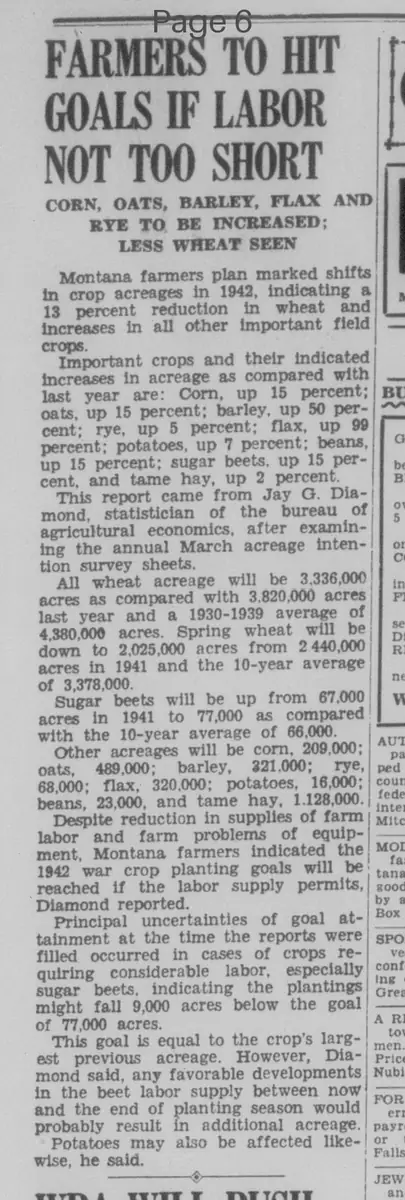
CORN, OATS, BARLEY, FLAX AND RYE TO BE INCREASED; LESS WHEAT SEEN
Montana farmers plan marked shifts in crop acreages in 1942, indicating a 13 percent reduction in wheat and increases in all other important field crops.
Important crops and their indicated increases in acreage as compared with last year are: Corn, up 15 percent; oats, up 15 percent; barley, up 50 percent; rye, up 5 percent; flax, up 99 percent; potatoes, up 7 percent; beans, up 15 percent; sugar beets, up 15 percent, and tame hay, up 2 percent.
This report came from Jay G. Diamond, statistician of the bureau of agricultural economics, after examining the annual March acreage intention survey sheets.
All wheat acreage will be 3,336,000 acres as compared with 3,820,000 acres last year and a 1930-1939 average of 4,380,000 acres. Spring wheat will be down to 2,025,000 acres from 2,440,000 acres in 1941 and the 10-year average of 3,378,000.
Sugar beets will be up from 67,000 acres in 1941 to 77,000 as compared with the 10-year average of 66,000.
Other acreages will be corn, 209,000; oats, 489,000; barley, 321,000; rye, 68,000; flax, 320,000; potatoes, 16,000; beans, 23,000, and tame hay, 1,128,000.
Despite reduction in supplies of farm labor and farm problems of equipment, Montana farmers indicated the 1942 war crop planting goals will be reached if the labor supply permits, Diamond reported.
Principal uncertainties of goal attainment at the time the reports were filled occurred in cases of crops requiring considerable labor, especially sugar beets, indicating the plantings might fall 9,000 acres below the goal of 77,000 acres.
This goal is equal to the crop's largest previous acreage. However, Diamond said, any favorable developments in the beet labor supply between now and the end of planting season would probably result in additional acreage.
Potatoes may also be affected likewise, he said.
What sub-type of article is it?
What keywords are associated?
What entities or persons were involved?
Where did it happen?
Domestic News Details
Primary Location
Montana
Event Date
March 1942
Key Persons
Outcome
wheat acreage reduced to 3,336,000 acres (13% decrease); increases in corn (15%), oats (15%), barley (50%), rye (5%), flax (99%), potatoes (7%), beans (15%), sugar beets (15%), tame hay (2%). goals attainable if labor sufficient, potential shortfall in labor-intensive crops like sugar beets.
Event Details
Montana farmers plan shifts in 1942 crop acreages per war goals, reducing wheat while increasing other field crops, based on March intention survey by Bureau of Agricultural Economics. Uncertainties due to labor and equipment shortages, especially for sugar beets and potatoes.