Thank you for visiting SNEWPapers!
Sign up free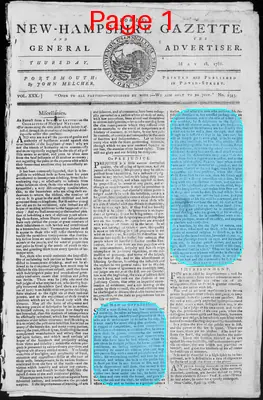
Literary
May 18, 1786
Fowle's New Hampshire Gazette And General Advertiser
Portsmouth, Rockingham County, New Hampshire
What is this article about?
A moral essay denouncing the cunning, oppressive man who amasses wealth through deceit, preying on others without conscience. It contrasts his eventual downfall and divine judgment with the peaceful end of the virtuous, citing Plato and Jeremiah 17:11.
Clipping
OCR Quality
95%
Excellent
Full Text
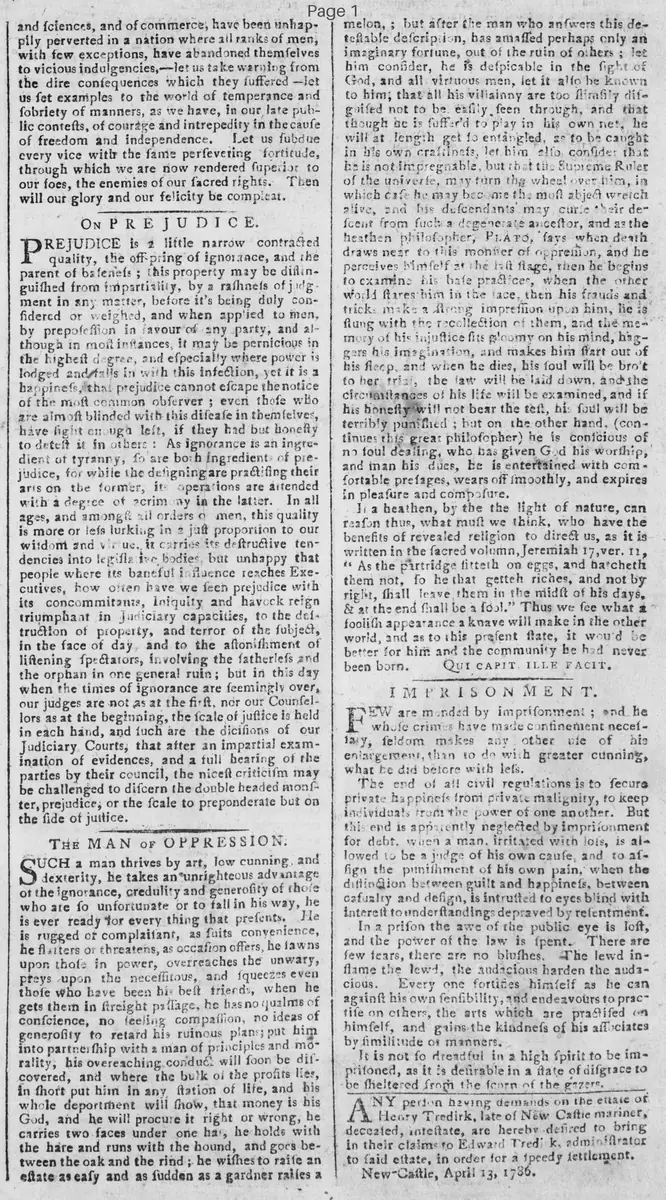
THE MAN OF OPPRESSION.
SUCH a man thrives by art, low cunning, and dexterity, he takes an unrighteous advantage of the ignorance, credulity and generosity of those who are so unfortunate as to fall in his way, he is ever ready for every thing that presents. He is rugged or complaisant, as suits convenience, he flatters or threatens, as occasion offers, he fawns upon those in power, overreaches the unwary, preys upon the necessitous, and squeezes even those who have been his best friends, when he gets them in straight passage, he has no qualms of conscience, no feeling compassion, no ideas of generosity to retard his ruinous plans; put him into partnership with a man of principles and morality, his overreaching conduct will soon be discovered, and where the bulk of the profits lies, in short put him in any station of life, and his whole deportment will show, that money is his God, and he will procure it right or wrong, he carries two faces under one hat, he holds with the hare and runs with the hound, and goes between the oak and the rind: he wishes to raise an estate as easy and as sudden as a gardener raises a melon: but after the man who answers this detestable description, has amassed perhaps only an imaginary fortune, out of the ruin of others; let him consider, he is despicable in the sight of God, and all virtuous men, let it also be known to him that all his villainy are too slimily disguised not to be easily seen through, and that though he is suffered to play in his own net, he will at length get so entangled, as to be caught in his own craftiness, let him also consider, that he is not impregnable, but that the Supreme Ruler of the universe, may turn the wheel over him, in which case he may become the most abject wretch alive, and his descendants may curse their descent from such a degenerate ancestor, and as the heathen philosopher, PLATO, says when death draws near to this monster of oppression, and he perceives himself at the last stage, then he begins to examine his base practices, when the other world stares him in the face, then his frauds and tricks make a strong impression upon him, he is stung with the recollection of them, and the memory of his injustice sits gloomy on his mind, haggles his imagination, and makes him start out of his sleep, and when he dies, his soul will be brought to her trial, the law will be laid down, and the circumstances of his life will be examined, and if his honesty will not bear the test, his soul will be terribly punished: but on the other hand, (continues this great philosopher) he is conscious of no foul dealing, who has given God his worship, and man his dues, he is entertained with comfortable presages, wears off smoothly, and expires in pleasure and composure.
If a heathen, by the light of nature, can reason thus, what must we think, who have the benefits of revealed religion to direct us, as it is written in the sacred volume, Jeremiah 17, ver. 11. "As the partridge sitteth on eggs, and hatcheth them not, so he that getteth riches, and not by right, shall leave them in the midst of his days, & at the end shall be a fool." Thus we see what a foolish appearance a knave will make in the other world, and as to this present state, it would be better for him and the community he had never been born.
SUCH a man thrives by art, low cunning, and dexterity, he takes an unrighteous advantage of the ignorance, credulity and generosity of those who are so unfortunate as to fall in his way, he is ever ready for every thing that presents. He is rugged or complaisant, as suits convenience, he flatters or threatens, as occasion offers, he fawns upon those in power, overreaches the unwary, preys upon the necessitous, and squeezes even those who have been his best friends, when he gets them in straight passage, he has no qualms of conscience, no feeling compassion, no ideas of generosity to retard his ruinous plans; put him into partnership with a man of principles and morality, his overreaching conduct will soon be discovered, and where the bulk of the profits lies, in short put him in any station of life, and his whole deportment will show, that money is his God, and he will procure it right or wrong, he carries two faces under one hat, he holds with the hare and runs with the hound, and goes between the oak and the rind: he wishes to raise an estate as easy and as sudden as a gardener raises a melon: but after the man who answers this detestable description, has amassed perhaps only an imaginary fortune, out of the ruin of others; let him consider, he is despicable in the sight of God, and all virtuous men, let it also be known to him that all his villainy are too slimily disguised not to be easily seen through, and that though he is suffered to play in his own net, he will at length get so entangled, as to be caught in his own craftiness, let him also consider, that he is not impregnable, but that the Supreme Ruler of the universe, may turn the wheel over him, in which case he may become the most abject wretch alive, and his descendants may curse their descent from such a degenerate ancestor, and as the heathen philosopher, PLATO, says when death draws near to this monster of oppression, and he perceives himself at the last stage, then he begins to examine his base practices, when the other world stares him in the face, then his frauds and tricks make a strong impression upon him, he is stung with the recollection of them, and the memory of his injustice sits gloomy on his mind, haggles his imagination, and makes him start out of his sleep, and when he dies, his soul will be brought to her trial, the law will be laid down, and the circumstances of his life will be examined, and if his honesty will not bear the test, his soul will be terribly punished: but on the other hand, (continues this great philosopher) he is conscious of no foul dealing, who has given God his worship, and man his dues, he is entertained with comfortable presages, wears off smoothly, and expires in pleasure and composure.
If a heathen, by the light of nature, can reason thus, what must we think, who have the benefits of revealed religion to direct us, as it is written in the sacred volume, Jeremiah 17, ver. 11. "As the partridge sitteth on eggs, and hatcheth them not, so he that getteth riches, and not by right, shall leave them in the midst of his days, & at the end shall be a fool." Thus we see what a foolish appearance a knave will make in the other world, and as to this present state, it would be better for him and the community he had never been born.
What sub-type of article is it?
Essay
Satire
What themes does it cover?
Moral Virtue
Religious
What keywords are associated?
Oppression
Cunning
Deceit
Morality
Plato
Jeremiah
Riches
Judgment
Virtue
Knavery
Literary Details
Title
The Man Of Oppression.
Key Lines
He Carries Two Faces Under One Hat, He Holds With The Hare And Runs With The Hound, And Goes Between The Oak And The Rind
Money Is His God, And He Will Procure It Right Or Wrong
As The Partridge Sitteth On Eggs, And Hatcheth Them Not, So He That Getteth Riches, And Not By Right, Shall Leave Them In The Midst Of His Days, & At The End Shall Be A Fool.
He Is Despicable In The Sight Of God, And All Virtuous Men
His Soul Will Be Brought To Her Trial, The Law Will Be Laid Down, And The Circumstances Of His Life Will Be Examined