Thank you for visiting SNEWPapers!
Sign up free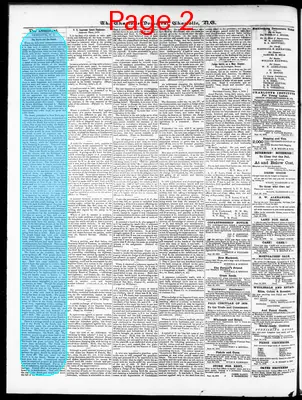
Editorial
October 2, 1876
The Charlotte Democrat
Charlotte, Mecklenburg County, North Carolina
What is this article about?
An editorial from The Democrat in Charlotte, N.C., compares post-Civil War economic conditions, arguing that despite appearances, the South is recovering better than the North, which faces hidden poverty, unemployment, and declining prospects, while the South benefits from self-sufficiency and untapped resources.
Clipping

OCR Quality
98%
Excellent
Full Text
The Democrat.
CHARLOTTE, N. C.
The North and the South.
When we daily hear lamentations around us that the South is impoverished and ruined, it is that sort of comfort which the old adage brings, "that misery loves company," which we experience when we hear that the North, with all her luxury, revelry, deviltry, and other accomplishments, is indeed also troubled with the disease of "hard times."
Our Northern exchanges frequently speak of the poverty and suffering of the operatives of the North; of the mental anxiety and consequent unhappiness of her business men, and of the fears of her capitalists; but the air of thrift and prosperity is everywhere so apparent to the Southerner, traveling North, that he seldom asks himself, how is it behind the curtain?
Doubtless, if clean sheets were shown, there is more happiness and contentment, and less want and misery, throughout the South, than in any country in the world. But we never know when we are well off; if we did, we would "let it alone." Before the war we were restless and unhappy and did not appreciate our condition. Now that things are not as they once were, we can look back and wonder why we were not the happiest people then extant. This is all as nature doubtless intended it. Nations are like individuals; if they become too self-satisfied they soon degenerate into a listlessness that unfits them for great and noble deeds.
The South, published in New York, says: "People have so long been accustomed to regard the South as a poverty-stricken country, while the North was wealthy and prosperous, that to say that to-day the South is really better off than the North, sounds like an absurd statement. Probably, too, the people who would be most incredulous of the truth of such an assertion are the Southerners themselves. True it is, that it would appear to a merely superficial observer that the Northern people were reveling in luxury, while the Southern people were decaying in poverty. Travelers from the South are apt to misjudge the state of affairs from their limited scope of observation. They come North to buy, not to sell. It is the reverse with the Northern commercial travelers going South. Their objective plans require a strict investigation into the present resources and future prospects of the South. The Southern buyer simply selects what he wants, and takes that home. It is of no special consequence to him whether the merchants who have filled his orders, or the manufacturers who have supplied them, are making any money or on the verge of bankruptcy. To know the true condition of the North one must see more than the always bustling throng in the streets of New York. Go to their homes and see the unpaid bills for rent, food and gas that nightly haunts the stylish New York businessman as he enters his brown stone residence on a fashionable street, on which is a heavy mortgage that is tormenting its owner. Go away from New York into New England, the great bee-hive of the world, and see the idle machinery and idle people looking to the future with dark forebodings of distress, suffering and starvation. Go to the West and one finds every one in debt, with nothing to pay with. The farmers are overburdened with provisions that the warehouses want, but have no money to buy, and yet are dreading the sheriff with the foreclosures on their homes, for which they owe some one who must have his money. Such, in brief, is the harrowing picture at the North that is presented on going behind the scenes. The worst feature in that end is yet. From year to year times have been going from bad to worse. Each year have the people hoped that next year would bring better times, but their hopes have been disappointed. More depression of trade, more failures, and more thrown out of employment, have followed. There seems nothing in the immediate future to arrest their progress towards ruin. The succeeding years are likely to see the same scenes re-enacted.
The South, on the contrary, has been growing better off. Few people there cannot but say that they have more of the necessaries of life now than they did six years ago. Their ruin came suddenly. They started from that position to retrieve themselves. They could be no worse; they might become better; they have become better, although the improvement has been so gradual as to be imperceptible to them. They are hardly ready to believe it. So long have they been accustomed to feel themselves a ruined people, that any other condition seems impossible, to the present generation, at least. Though the people at the South do not have the appearance of wealth that one sees at the North, what they do have, is paid for. The cash system, though it came very hard at first at the South, has been of vast benefit. The people can feel that when they do get a little money, it is theirs. Then there is no vast army of idlers at the South, threatening bread riots, organizing strikes, adding to the general fear and lack of confidence in the future. Then, better than all, the Southern people can look forward to a bright future, while at the North the prospect is dark. The poverty of the South is the poverty of the past; that of the North is the present and the terribly dreaded future.
There is a strange sound to an appeal for aid in the North to the South, yet the North really needs the aid of the South. She has no room for her population; the South has. The North can no longer give them maintenance; the South can. The Southern people can give them land to cultivate. They can find many ways of employment for industrious and frugal people. The South has great resources that have never been developed. The North has capital lying idle, which is rapidly melting away on owners' hands in necessary expenses. Which is really the worst off? Or, perhaps the query should be, which will be the worst off? The only relief for the North is in the South. Sooner or later, both must find out. Unemployed capital must be employed as much as undeveloped resources must be developed. Put as to a test of endurance, and the South has the advantage. United effort on the part of both, however, is desideratum. That will hasten the rise of the South and retard and avert the fall of the North."
CHARLOTTE, N. C.
The North and the South.
When we daily hear lamentations around us that the South is impoverished and ruined, it is that sort of comfort which the old adage brings, "that misery loves company," which we experience when we hear that the North, with all her luxury, revelry, deviltry, and other accomplishments, is indeed also troubled with the disease of "hard times."
Our Northern exchanges frequently speak of the poverty and suffering of the operatives of the North; of the mental anxiety and consequent unhappiness of her business men, and of the fears of her capitalists; but the air of thrift and prosperity is everywhere so apparent to the Southerner, traveling North, that he seldom asks himself, how is it behind the curtain?
Doubtless, if clean sheets were shown, there is more happiness and contentment, and less want and misery, throughout the South, than in any country in the world. But we never know when we are well off; if we did, we would "let it alone." Before the war we were restless and unhappy and did not appreciate our condition. Now that things are not as they once were, we can look back and wonder why we were not the happiest people then extant. This is all as nature doubtless intended it. Nations are like individuals; if they become too self-satisfied they soon degenerate into a listlessness that unfits them for great and noble deeds.
The South, published in New York, says: "People have so long been accustomed to regard the South as a poverty-stricken country, while the North was wealthy and prosperous, that to say that to-day the South is really better off than the North, sounds like an absurd statement. Probably, too, the people who would be most incredulous of the truth of such an assertion are the Southerners themselves. True it is, that it would appear to a merely superficial observer that the Northern people were reveling in luxury, while the Southern people were decaying in poverty. Travelers from the South are apt to misjudge the state of affairs from their limited scope of observation. They come North to buy, not to sell. It is the reverse with the Northern commercial travelers going South. Their objective plans require a strict investigation into the present resources and future prospects of the South. The Southern buyer simply selects what he wants, and takes that home. It is of no special consequence to him whether the merchants who have filled his orders, or the manufacturers who have supplied them, are making any money or on the verge of bankruptcy. To know the true condition of the North one must see more than the always bustling throng in the streets of New York. Go to their homes and see the unpaid bills for rent, food and gas that nightly haunts the stylish New York businessman as he enters his brown stone residence on a fashionable street, on which is a heavy mortgage that is tormenting its owner. Go away from New York into New England, the great bee-hive of the world, and see the idle machinery and idle people looking to the future with dark forebodings of distress, suffering and starvation. Go to the West and one finds every one in debt, with nothing to pay with. The farmers are overburdened with provisions that the warehouses want, but have no money to buy, and yet are dreading the sheriff with the foreclosures on their homes, for which they owe some one who must have his money. Such, in brief, is the harrowing picture at the North that is presented on going behind the scenes. The worst feature in that end is yet. From year to year times have been going from bad to worse. Each year have the people hoped that next year would bring better times, but their hopes have been disappointed. More depression of trade, more failures, and more thrown out of employment, have followed. There seems nothing in the immediate future to arrest their progress towards ruin. The succeeding years are likely to see the same scenes re-enacted.
The South, on the contrary, has been growing better off. Few people there cannot but say that they have more of the necessaries of life now than they did six years ago. Their ruin came suddenly. They started from that position to retrieve themselves. They could be no worse; they might become better; they have become better, although the improvement has been so gradual as to be imperceptible to them. They are hardly ready to believe it. So long have they been accustomed to feel themselves a ruined people, that any other condition seems impossible, to the present generation, at least. Though the people at the South do not have the appearance of wealth that one sees at the North, what they do have, is paid for. The cash system, though it came very hard at first at the South, has been of vast benefit. The people can feel that when they do get a little money, it is theirs. Then there is no vast army of idlers at the South, threatening bread riots, organizing strikes, adding to the general fear and lack of confidence in the future. Then, better than all, the Southern people can look forward to a bright future, while at the North the prospect is dark. The poverty of the South is the poverty of the past; that of the North is the present and the terribly dreaded future.
There is a strange sound to an appeal for aid in the North to the South, yet the North really needs the aid of the South. She has no room for her population; the South has. The North can no longer give them maintenance; the South can. The Southern people can give them land to cultivate. They can find many ways of employment for industrious and frugal people. The South has great resources that have never been developed. The North has capital lying idle, which is rapidly melting away on owners' hands in necessary expenses. Which is really the worst off? Or, perhaps the query should be, which will be the worst off? The only relief for the North is in the South. Sooner or later, both must find out. Unemployed capital must be employed as much as undeveloped resources must be developed. Put as to a test of endurance, and the South has the advantage. United effort on the part of both, however, is desideratum. That will hasten the rise of the South and retard and avert the fall of the North."
What sub-type of article is it?
Economic Policy
What keywords are associated?
North South Economy
Hard Times
Post War Recovery
Southern Prosperity
Northern Poverty
Economic Comparison
Cash System
Undeveloped Resources
What entities or persons were involved?
The North
The South
Southerners
Northerners
New York Businessmen
New England
The West
Editorial Details
Primary Topic
Comparison Of Post War Economic Conditions Between North And South
Stance / Tone
Optimistic For Southern Recovery, Critical Of Northern Economic Facade
Key Figures
The North
The South
Southerners
Northerners
New York Businessmen
New England
The West
Key Arguments
Southerners Misjudge Northern Prosperity Due To Superficial Observations
Behind The Scenes, The North Faces Poverty, Unpaid Bills, Idle Machinery, Debt, And Foreclosures
Northern Economy Has Worsened Yearly With No Relief In Sight
The South Has Improved Gradually Since The War, With More Necessaries Of Life And A Cash System
Southern Poverty Is In The Past, While Northern Poverty Is Present And Future
The North Needs Southern Land And Resources For Relief; United Effort Benefits Both