Thank you for visiting SNEWPapers!
Sign up free
The Rhode Island American, And General Advertiser
Providence, Providence County, Rhode Island
What is this article about?
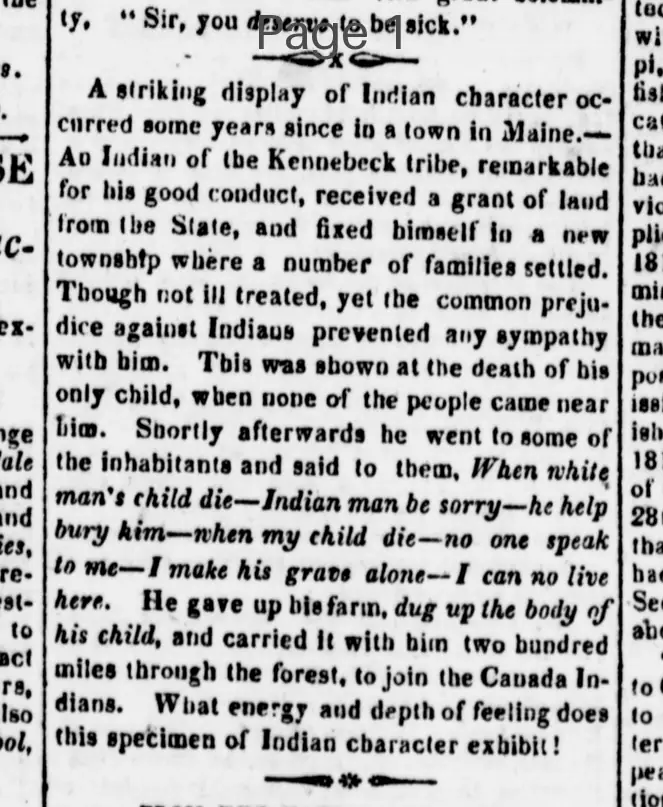
In a Maine town, a Kennebeck Indian faced prejudice after his child's death; no neighbors helped with burial. He abandoned his state-granted farm and carried the body 200 miles through forest to join Canada Indians, showcasing deep feeling.
Clipping
OCR Quality
Full Text
What energy and depth of feeling does this specimen of Indian character exhibit!
What sub-type of article is it?
What keywords are associated?
Where did it happen?
Domestic News Details
Primary Location
A Town In Maine
Event Date
Some Years Since
Outcome
death of his only child; he gave up his farm and carried the body two hundred miles through the forest to join the canada indians
Event Details
An Indian of the Kennebeck tribe, remarkable for his good conduct, received a grant of land from the State and settled in a new township in Maine with other families. Despite not being ill treated, prejudice prevented sympathy; when his only child died, no one came near him or helped. He told inhabitants of the lack of reciprocity, made the grave alone, then left.