Thank you for visiting SNEWPapers!
Sign up free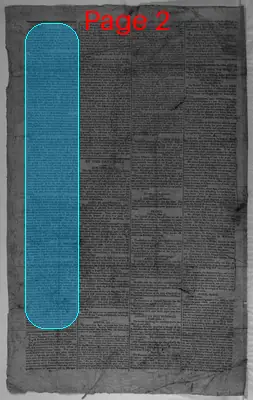
Editorial
July 18, 1796
Gazette Of The United States, & Philadelphia Daily Advertiser
Philadelphia, Philadelphia County, Pennsylvania
What is this article about?
An anonymous editorial defends the US government against critics amid prosperity, advocating neutrality toward England and France, aid via commerce rather than war, and preference for honorable peace over conflict.
Clipping

OCR Quality
98%
Excellent
Full Text
FOR THE GAZETTE OF THE UNITED STATES.
Mr. FENNO,
MANKIND, in the absence of greater evils, have always been accustomed to complain of those which are trivial in their nature, and which would scarcely attract their notice if they were not rendered conspicuous by coming alone. Even where real evils do not exist, the imaginations of some will be busy in forming gloomy prognostications, and their abilities exerted in spreading distrust through society.
To this disposition of human nature to repine at their condition, however enviable, we may justly attribute the murmurs of some of our citizens, at the present time of unexampled prosperity. Here are the United States risen to independence and reputation, and favored with peace, liberty and plenty—and are the eve of pretended patriotism must turn aside from these blessings to analyze the defects of government! America, having resisted the heavy arm of oppression, having baffled the schemes of insurgency, and disarmed by her placid dignity the malice of distant nations, is now doomed to be pestered with the effusions of calumny, and the lamentations of counterfeited sorrow.
To him, however, who considers human frailty, this circumstance will not occasion much surprise; nor, when he examines into its nature and cause, will it rouse his apprehensions. No system of government can be formed so free from error, as not to present some opening to the assaults of discontent; nor, indeed, would perfection itself fare any better with those who are determined on dissatisfaction, and continue their censures, rather to cherish animosity than to effect reformation.
But why should these clamours disturb us? The evil may be truly said to bring its own remedy. By bringing political subjects so frequently into dispute, they incite others to think more deeply upon them, and lead us by frequent alarms to study our security with more circumspection. Let not therefore the friends of good government be disconcerted by the voice of those who delight to vilify & counteract it.
Much has been said about the propriety of our siding with certain foreign nations. For my part, I see no reason to meddle with the concerns either of England or France, further than to demand justice from both. As to the opinion of our partiality for the former power, it is too absurd to deserve refutation, though there are many that profess to hold it. France, it is true, may claim some share of our regard, but cannot we shew it without giving up our Independence to her, as some would have it? I am well aware that we are bound in friendship to the French nation, but these ligaments extend only to the mutual interests of the two nations, and embrace not the internal policy of either. Was it ever intended by the compact between us, that one should make the cause of the other her own, and hold herself obligated to join in her vengeance? If so, the two nations are but one; and let them hereafter be ruled by one head, since they can by this means operate with greater force, and plan their enterprizes with more uniformity.
But taking these people on their own ground, and allowing it is incumbent on us to help France in their present difficulties, by what means are we to do it? Go to war with her enemies? No, surely; if the wisdom of France is equal to her heroism, she will easily see that the aid of America has been more effectually drawn forth by her observance of impartial deportment, than if her government had been inspired with the same spirit of resentment that inflamed themselves. She has furnished them with food, without which the fire of enthusiasm is suffocated, and the force of armies depressed. By this line of conduct substantial succours have been given; and who that wishes well to the cause of France, would be anxious, rather to gratify them with useless anger at their enemies, than to pursue those steps by which alone we are qualified to assist them?
With respect to our treaty with Great-Britain; concerning which the minds of men have not yet become calm, much has been said and written; perhaps more than its opposers are willing or able to examine. I shall therefore forbear to dwell upon it, though it forms the chief subject of complaint amongst us.
It is to be hoped that America will always be so singular in the world, as to prefer peace to war when it can be done with honour, and that from the motive of serving our own interest, as well as doing justice to the rest of mankind. Remonstrances and threats may indeed be made, but have we any way to follow and enforce them? Or if we confine ourselves to inland operations, what advantages of posts captured, or territory subdued, can recompence for the destruction of commerce and the waste of war? I am not one of those who would sacrifice national reputation to frivolous fears, or cautious calculations of interest; but if as much can be obtained by expostulation as by battle, where is the man that would recommend it, or who so weak as to admit his arguments?
From a candid view of the subject it appears obvious, that the uneasiness of our exasperated citizens has been totally without ground; that they only needed some serious calamity, or privation of their present blessings, to bring them to a sense of the superiority of their situation to that of other countries, and that their rancour proceeded by no means from the weight of injury or misfortune, but from the natural inclination of all mortals to raise phantoms of evil where there is none in reality.
AMERICAN
Mr. FENNO,
MANKIND, in the absence of greater evils, have always been accustomed to complain of those which are trivial in their nature, and which would scarcely attract their notice if they were not rendered conspicuous by coming alone. Even where real evils do not exist, the imaginations of some will be busy in forming gloomy prognostications, and their abilities exerted in spreading distrust through society.
To this disposition of human nature to repine at their condition, however enviable, we may justly attribute the murmurs of some of our citizens, at the present time of unexampled prosperity. Here are the United States risen to independence and reputation, and favored with peace, liberty and plenty—and are the eve of pretended patriotism must turn aside from these blessings to analyze the defects of government! America, having resisted the heavy arm of oppression, having baffled the schemes of insurgency, and disarmed by her placid dignity the malice of distant nations, is now doomed to be pestered with the effusions of calumny, and the lamentations of counterfeited sorrow.
To him, however, who considers human frailty, this circumstance will not occasion much surprise; nor, when he examines into its nature and cause, will it rouse his apprehensions. No system of government can be formed so free from error, as not to present some opening to the assaults of discontent; nor, indeed, would perfection itself fare any better with those who are determined on dissatisfaction, and continue their censures, rather to cherish animosity than to effect reformation.
But why should these clamours disturb us? The evil may be truly said to bring its own remedy. By bringing political subjects so frequently into dispute, they incite others to think more deeply upon them, and lead us by frequent alarms to study our security with more circumspection. Let not therefore the friends of good government be disconcerted by the voice of those who delight to vilify & counteract it.
Much has been said about the propriety of our siding with certain foreign nations. For my part, I see no reason to meddle with the concerns either of England or France, further than to demand justice from both. As to the opinion of our partiality for the former power, it is too absurd to deserve refutation, though there are many that profess to hold it. France, it is true, may claim some share of our regard, but cannot we shew it without giving up our Independence to her, as some would have it? I am well aware that we are bound in friendship to the French nation, but these ligaments extend only to the mutual interests of the two nations, and embrace not the internal policy of either. Was it ever intended by the compact between us, that one should make the cause of the other her own, and hold herself obligated to join in her vengeance? If so, the two nations are but one; and let them hereafter be ruled by one head, since they can by this means operate with greater force, and plan their enterprizes with more uniformity.
But taking these people on their own ground, and allowing it is incumbent on us to help France in their present difficulties, by what means are we to do it? Go to war with her enemies? No, surely; if the wisdom of France is equal to her heroism, she will easily see that the aid of America has been more effectually drawn forth by her observance of impartial deportment, than if her government had been inspired with the same spirit of resentment that inflamed themselves. She has furnished them with food, without which the fire of enthusiasm is suffocated, and the force of armies depressed. By this line of conduct substantial succours have been given; and who that wishes well to the cause of France, would be anxious, rather to gratify them with useless anger at their enemies, than to pursue those steps by which alone we are qualified to assist them?
With respect to our treaty with Great-Britain; concerning which the minds of men have not yet become calm, much has been said and written; perhaps more than its opposers are willing or able to examine. I shall therefore forbear to dwell upon it, though it forms the chief subject of complaint amongst us.
It is to be hoped that America will always be so singular in the world, as to prefer peace to war when it can be done with honour, and that from the motive of serving our own interest, as well as doing justice to the rest of mankind. Remonstrances and threats may indeed be made, but have we any way to follow and enforce them? Or if we confine ourselves to inland operations, what advantages of posts captured, or territory subdued, can recompence for the destruction of commerce and the waste of war? I am not one of those who would sacrifice national reputation to frivolous fears, or cautious calculations of interest; but if as much can be obtained by expostulation as by battle, where is the man that would recommend it, or who so weak as to admit his arguments?
From a candid view of the subject it appears obvious, that the uneasiness of our exasperated citizens has been totally without ground; that they only needed some serious calamity, or privation of their present blessings, to bring them to a sense of the superiority of their situation to that of other countries, and that their rancour proceeded by no means from the weight of injury or misfortune, but from the natural inclination of all mortals to raise phantoms of evil where there is none in reality.
AMERICAN
What sub-type of article is it?
Foreign Affairs
War Or Peace
Partisan Politics
What keywords are associated?
Foreign Neutrality
Peace Policy
Government Defense
Anti War Stance
European Affairs
Domestic Discontent
Us Prosperity
Anglo French Relations
What entities or persons were involved?
United States
England
France
American Government
Editorial Details
Primary Topic
Defense Of Us Government And Neutrality In European Affairs
Stance / Tone
Supportive Of Impartial Foreign Policy And Peace, Critical Of Domestic Malcontents
Key Figures
United States
England
France
American Government
Key Arguments
Human Nature Leads To Complaints Despite Prosperity
Critics Of Government Ignore Blessings Of Independence And Peace
No Perfect Government Escapes Discontent
Debates On Foreign Policy Strengthen Security
Us Should Remain Neutral, Demanding Justice From Both England And France Without Entanglement
Aid To France Through Commerce, Not War
Treaty With Britain Should Not Provoke Unnecessary Conflict
Peace Preferable To War When Honorable
Domestic Unease Stems From Imagined Evils, Not Real Ones