Thank you for visiting SNEWPapers!
Sign up free
Literary
March 24, 1878
Daily Globe
Saint Paul, Ramsey County, Minnesota
What is this article about?
Mrs. E. B. Washington provides a detailed physiognomic description of General George Custer, portraying his youthful, blonde, boyish appearance and elaborate uniform, contrasting with his reputation as a fierce Union cavalry leader, evoking admiration and fear from a Southern perspective.
Clipping
OCR Quality
98%
Excellent
Full Text
A Picture of Custer.
[Mrs. E. B. Washington in Philadelphia Times.]
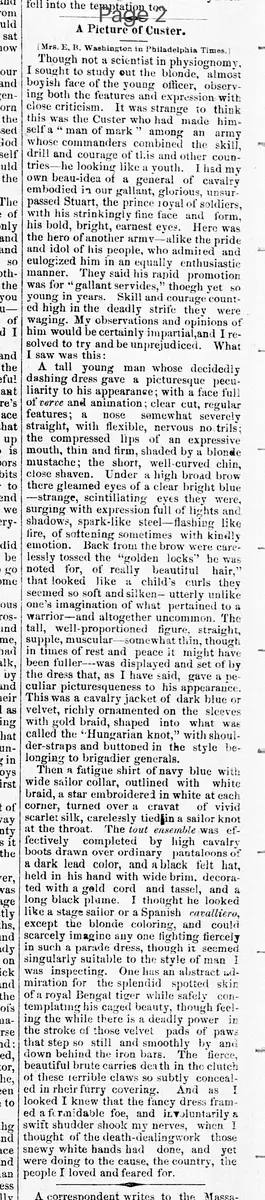
Though not a scientist in physiognomy, I sought to study out the blonde, almost boyish face of the young officer, observing both the features and expression with close criticism. It was strange to think this was the Custer who had made himself a "man of mark" among an army whose commanders combined the skill drill and courage of this and other countries—he looking like a youth. I had my own beau-idea of a general of cavalry embodied in our gallant, glorious, unsurpassed Stuart, the prince loyal of soldiers, with his strikingly fine face and form, his bold, bright, earnest eyes. Here was the hero of another army—alike the pride and idol of his people, who admired and eulogized him in an equally enthusiastic manner. They said his rapid promotion was for "gallant services," though yet so young in years. Skill and courage counted high in the deadly strife they were waging. My observations and opinions of him would be certainly impartial, and I resolved to try and be unprejudiced. What I saw was this:
A tall young man whose decidedly dashing dress gave a picturesque peculiarity to his appearance; with a face full of nerve and animation; clear cut, regular features; a nose somewhat severely straight, with flexible, nervous nostrils; the compressed lips of an expressive mouth, thin and firm, shaded by a blonde mustache; the short, well-curved chin, close shaven. Under a high broad brow there gleamed eyes of a clear bright blue—strange, scintillating eyes they were, surging with expression full of lights and shadows, spark-like steel-flashing like fire, of softening sometimes with kindly emotion. Back from the brow were carelessly tossed the "golden locks" he was noted for, of really beautiful hair, that looked like a child's curls they seemed so soft and silken—utterly unlike one's imagination of what pertained to a warrior—and altogether uncommon. The tall, well-proportioned figure, straight, supple, muscular—somewhat thin, though in times of rest and peace it might have been fuller—was displayed and set off by the dress that, as I have said, gave a peculiar picturesqueness to his appearance.
This was a cavalry jacket of dark blue or velvet, richly ornamented on the sleeves with gold braid, shaped into what was called the "Hungarian knot," with shoulder-straps and buttoned in the style belonging to brigadier generals. Then a fatigue shirt of navy blue with wide sailor collar, outlined with white braid, a star embroidered in white at each corner, turned over a cravat of vivid scarlet silk, carelessly tied in a sailor knot at the throat. The tout ensemble was effectively completed by high cavalry boots drawn over ordinary pantaloons of a dark lead color, and a black felt hat held in his hand with wide brim, decorated with a gold cord and tassel, and a long black plume. I thought he looked like a stage sailor or a Spanish cavalliero, except the blonde coloring, and could scarcely imagine any one fighting fiercely in such a parade dress, though it seemed singularly suitable to the style of man I was inspecting. One has an abstract admiration for the splendid spotted skin of a royal Bengal tiger while safely contemplating his caged beauty, though feeling the while there is a deadly power in the stroke of those velvet pads of paws that step so still and smoothly by and down behind the iron bars. The fierce, beautiful brute carries death in the clutch of these terrible claws so subtly concealed in their furry covering. And as I looked I knew that the fancy dress framed a formidable foe, and involuntarily a swift shudder shook my nerves, when I thought of the death-dealing work those snowy white hands had done, and yet were doing to the cause, the country, the people I loved and feared for.
[Mrs. E. B. Washington in Philadelphia Times.]
Though not a scientist in physiognomy, I sought to study out the blonde, almost boyish face of the young officer, observing both the features and expression with close criticism. It was strange to think this was the Custer who had made himself a "man of mark" among an army whose commanders combined the skill drill and courage of this and other countries—he looking like a youth. I had my own beau-idea of a general of cavalry embodied in our gallant, glorious, unsurpassed Stuart, the prince loyal of soldiers, with his strikingly fine face and form, his bold, bright, earnest eyes. Here was the hero of another army—alike the pride and idol of his people, who admired and eulogized him in an equally enthusiastic manner. They said his rapid promotion was for "gallant services," though yet so young in years. Skill and courage counted high in the deadly strife they were waging. My observations and opinions of him would be certainly impartial, and I resolved to try and be unprejudiced. What I saw was this:
A tall young man whose decidedly dashing dress gave a picturesque peculiarity to his appearance; with a face full of nerve and animation; clear cut, regular features; a nose somewhat severely straight, with flexible, nervous nostrils; the compressed lips of an expressive mouth, thin and firm, shaded by a blonde mustache; the short, well-curved chin, close shaven. Under a high broad brow there gleamed eyes of a clear bright blue—strange, scintillating eyes they were, surging with expression full of lights and shadows, spark-like steel-flashing like fire, of softening sometimes with kindly emotion. Back from the brow were carelessly tossed the "golden locks" he was noted for, of really beautiful hair, that looked like a child's curls they seemed so soft and silken—utterly unlike one's imagination of what pertained to a warrior—and altogether uncommon. The tall, well-proportioned figure, straight, supple, muscular—somewhat thin, though in times of rest and peace it might have been fuller—was displayed and set off by the dress that, as I have said, gave a peculiar picturesqueness to his appearance.
This was a cavalry jacket of dark blue or velvet, richly ornamented on the sleeves with gold braid, shaped into what was called the "Hungarian knot," with shoulder-straps and buttoned in the style belonging to brigadier generals. Then a fatigue shirt of navy blue with wide sailor collar, outlined with white braid, a star embroidered in white at each corner, turned over a cravat of vivid scarlet silk, carelessly tied in a sailor knot at the throat. The tout ensemble was effectively completed by high cavalry boots drawn over ordinary pantaloons of a dark lead color, and a black felt hat held in his hand with wide brim, decorated with a gold cord and tassel, and a long black plume. I thought he looked like a stage sailor or a Spanish cavalliero, except the blonde coloring, and could scarcely imagine any one fighting fiercely in such a parade dress, though it seemed singularly suitable to the style of man I was inspecting. One has an abstract admiration for the splendid spotted skin of a royal Bengal tiger while safely contemplating his caged beauty, though feeling the while there is a deadly power in the stroke of those velvet pads of paws that step so still and smoothly by and down behind the iron bars. The fierce, beautiful brute carries death in the clutch of these terrible claws so subtly concealed in their furry covering. And as I looked I knew that the fancy dress framed a formidable foe, and involuntarily a swift shudder shook my nerves, when I thought of the death-dealing work those snowy white hands had done, and yet were doing to the cause, the country, the people I loved and feared for.
What sub-type of article is it?
Essay
What themes does it cover?
War Peace
Patriotism
What keywords are associated?
George Custer
Civil War
Cavalry General
Physiognomy
Blonde Hair
Military Portrait
Union Officer
What entities or persons were involved?
Mrs. E. B. Washington
Literary Details
Title
A Picture Of Custer.
Author
Mrs. E. B. Washington
Subject
Physiognomic Study Of General Custer
Form / Style
Descriptive Prose Portrait
Key Lines
Though Not A Scientist In Physiognomy, I Sought To Study Out The Blonde, Almost Boyish Face Of The Young Officer, Observing Both The Features And Expression With Close Criticism.
Under A High Broad Brow There Gleamed Eyes Of A Clear Bright Blue—Strange, Scintillating Eyes They Were, Surging With Expression Full Of Lights And Shadows, Spark Like Steel Flashing Like Fire, Of Softening Sometimes With Kindly Emotion.
Back From The Brow Were Carelessly Tossed The "Golden Locks" He Was Noted For, Of Really Beautiful Hair, That Looked Like A Child's Curls They Seemed So Soft And Silken—Utterly Unlike One's Imagination Of What Pertained To A Warrior—And Altogether Uncommon.
The Fierce, Beautiful Brute Carries Death In The Clutch Of These Terrible Claws So Subtly Concealed In Their Furry Covering.
And As I Looked I Knew That The Fancy Dress Framed A Formidable Foe, And Involuntarily A Swift Shudder Shook My Nerves, When I Thought Of The Death Dealing Work Those Snowy White Hands Had Done, And Yet Were Doing To The Cause, The Country, The People I Loved And Feared For.