Thank you for visiting SNEWPapers!
Sign up free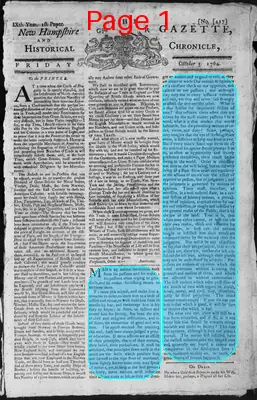
Editorial
October 5, 1764
The New Hampshire Gazette And Historical Chronicle
Portsmouth, Greenland, Rockingham County, New Hampshire
What is this article about?
The editorial argues that education is essential for instilling moral principles and notions in individuals to control passions, promote virtue, and maintain social order, emphasizing early influences as foundational prejudices that shape lifelong behavior.
Clipping
OCR Quality
98%
Excellent
Full Text
MAN is an animal formidable both from his passions and his reason; his passions often urging to great Evils, and his reason furnishing means to atchieve them.
To tame this animal, and make him amenable to order, to inure him to a sense of justice and virtue, to with hold him from ill courses by fear, and encourage him in his duty by hopes: in short, to fashion and model him for society, has been the aim of civil and religious institutions, and in all times the endeavour of good and wise men. The aptest method for attaining this end, hath been always judged a proper education. If mens actions are an effect of their principles, that is of their notions, their belief, their persuaions, it must be admitted, that principles own early in the mind are the seeds which produce fruit and harvest in the ripe state of manhood.
How lightly soever some men may speak of notions, yet, so long as the soul governs the body, mens notions must influence their actions more or less, as they are stronger or weaker, and to good or evil, as they are better or worse. Our notions & opinions are a constant check on our appetites, and balance to our passions; and although they may not in every instance controul and rule, yet they will never fail strongly to affect the one and the other. What is it that bridles the impetuous desires of men? that restrains them when they are driven by the most violent passions? In a word, what is it that renders this world habitable, but the prevailing notions of order, virtue, and duty? Some, perhaps, may imagine that the eye of the Magistrate alone, is sufficient to keep mankind in awe. But if every man's heart was set to do all the mischief his appetite should prompt him to, as often as opportunity and secrecy presented themselves, there could be no living in the world. Order is necessary not only to the well being, but to the very being of a state. Now order and regularity in the actions of men is not the effect of appetite or passion, but of judgment; and the judgment is governed by notions or opinions. There must, therefore, of necessity, in a well ordered state, be a certain system of salutary notions, a prevailing set of opinions, acquired either by reason and reflection, or taught and instilled by the general reason of the Public, that is by the law of the land. True it is, that where men either cannot, or will not use their own reason, think and examine for themselves, in such case, the notions taught or instilled into their minds are embraced rather by the memory than the judgment. Nor will it be any objection to say that these are prejudices, in as much as they are, therefore, neither the less useful nor the less true, although their proofs may not be understood by all men. Prejudices are notions or opinions which the mind entertains without knowing the grounds and reasons of them, and which are assented to without examination: The first notions which takes possession of the minds of men with regard to duties, social, moral, and civil, may, therefore, justly be stiled prejudices. The mind cannot remain empty: If you do not put into it that which is good, it will be sure to receive that which is bad.
Do what you can, there will still be a bias from education, and if so, is it not better this bias should lie towards things laudable and useful to society? This bias still operates, although it may not always prevail. The notions first instilled, have the earliest influence, take the deepest root and generally are found a colour and complexion to the subsequent lives of men, inasmuch as they are, in truth, the great source of human happiness.
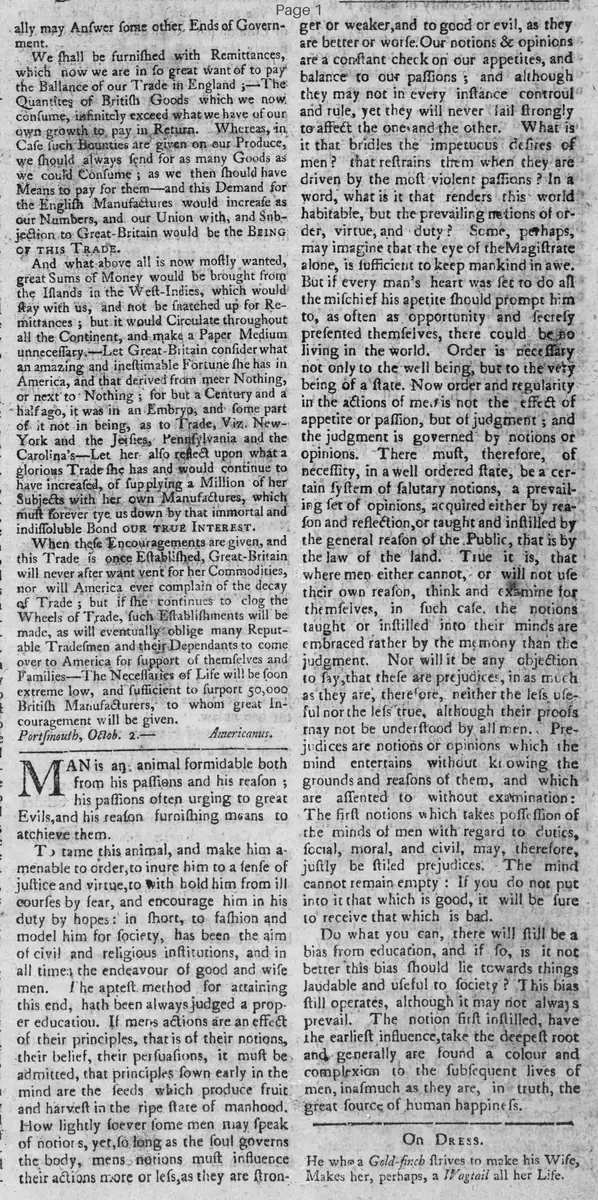
To tame this animal, and make him amenable to order, to inure him to a sense of justice and virtue, to with hold him from ill courses by fear, and encourage him in his duty by hopes: in short, to fashion and model him for society, has been the aim of civil and religious institutions, and in all times the endeavour of good and wise men. The aptest method for attaining this end, hath been always judged a proper education. If mens actions are an effect of their principles, that is of their notions, their belief, their persuaions, it must be admitted, that principles own early in the mind are the seeds which produce fruit and harvest in the ripe state of manhood.
How lightly soever some men may speak of notions, yet, so long as the soul governs the body, mens notions must influence their actions more or less, as they are stronger or weaker, and to good or evil, as they are better or worse. Our notions & opinions are a constant check on our appetites, and balance to our passions; and although they may not in every instance controul and rule, yet they will never fail strongly to affect the one and the other. What is it that bridles the impetuous desires of men? that restrains them when they are driven by the most violent passions? In a word, what is it that renders this world habitable, but the prevailing notions of order, virtue, and duty? Some, perhaps, may imagine that the eye of the Magistrate alone, is sufficient to keep mankind in awe. But if every man's heart was set to do all the mischief his appetite should prompt him to, as often as opportunity and secrecy presented themselves, there could be no living in the world. Order is necessary not only to the well being, but to the very being of a state. Now order and regularity in the actions of men is not the effect of appetite or passion, but of judgment; and the judgment is governed by notions or opinions. There must, therefore, of necessity, in a well ordered state, be a certain system of salutary notions, a prevailing set of opinions, acquired either by reason and reflection, or taught and instilled by the general reason of the Public, that is by the law of the land. True it is, that where men either cannot, or will not use their own reason, think and examine for themselves, in such case, the notions taught or instilled into their minds are embraced rather by the memory than the judgment. Nor will it be any objection to say that these are prejudices, in as much as they are, therefore, neither the less useful nor the less true, although their proofs may not be understood by all men. Prejudices are notions or opinions which the mind entertains without knowing the grounds and reasons of them, and which are assented to without examination: The first notions which takes possession of the minds of men with regard to duties, social, moral, and civil, may, therefore, justly be stiled prejudices. The mind cannot remain empty: If you do not put into it that which is good, it will be sure to receive that which is bad.
Do what you can, there will still be a bias from education, and if so, is it not better this bias should lie towards things laudable and useful to society? This bias still operates, although it may not always prevail. The notions first instilled, have the earliest influence, take the deepest root and generally are found a colour and complexion to the subsequent lives of men, inasmuch as they are, in truth, the great source of human happiness.
What sub-type of article is it?
Education
Moral Or Religious
Social Reform
What keywords are associated?
Education
Moral Principles
Human Passions
Social Order
Virtue
Prejudices
Notions
Duty
What entities or persons were involved?
Good And Wise Men
Magistrate
Editorial Details
Primary Topic
Importance Of Early Education In Instilling Moral Principles
Stance / Tone
Strong Advocacy For Education To Promote Virtue And Social Order
Key Figures
Good And Wise Men
Magistrate
Key Arguments
Human Passions And Reason Can Lead To Evils Without Control
Education Tames Individuals For Society By Instilling Justice And Virtue
Early Principles Shape Actions In Adulthood
Notions And Opinions Check Appetites And Balance Passions
Prevailing Notions Of Order, Virtue, And Duty Make The World Habitable
Order In A State Requires A System Of Salutary Notions Taught By Law Or Reason
Prejudices From Early Education Are Useful And True Even Without Full Understanding
The Mind Will Fill With Bad Notions If Not Provided Good Ones
Bias From Education Towards Laudable Things Benefits Society
First Instilled Notions Deeply Influence And Color Lives