Thank you for visiting SNEWPapers!
Sign up free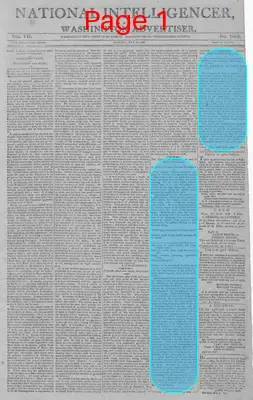
Literary
May 11, 1807
The National Intelligencer And Washington Advertiser
Washington, District Of Columbia
What is this article about?
Essay by Sir Thomas Dermody contrasting Shakespeare's wild, uneven genius—full of virtues and faults like a untamed garden—with Milton's chaste, sublime perfection akin to Eden, analyzing their pathos, terror, and characters like Satan and Macbeth.
Clipping
OCR Quality
95%
Excellent
Full Text
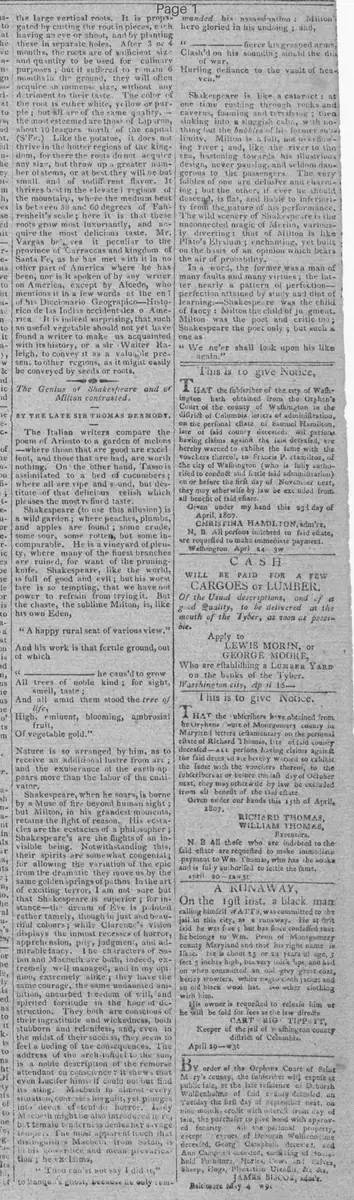
The Genius of Shakespeare and of Milton contrasted.
BY THE LATE SIR THOMAS DERMODY.
The Italian writers compare the poem of Ariosto to a garden of melons--where those that are good are excellent, and those that are bad, are worth nothing. On the other hand, Tasso is assimilated to a bed of cucumbers; where all are ripe and sound, but destitute of that delicious relish which pleases the most refined taste. Shakespeare (to use this allusion) is a wild garden; where peaches, plumbs, and apples are found; some crude, some sour, some rotten, but some incomparable. He is a vineyard of plenty, where many of the finest branches are ruined, for want of the pruning-knife. Shakespeare, like the world, is full of good and evil; but his worst fare is so tempting, that we have not power to refrain from trying it. But the chaste, the sublime Milton, is, like his own Eden,
"A happy rural seat of various view."
And his work is that fertile ground, out of which
--he caus'd to grow
All trees of noble kind; for sight, smell, taste;
And all amid them stood the tree of life,
High, eminent, blooming, ambrosial fruit,
Of vegetable gold."
Nature is so arranged by him, as to receive an additional lustre from art; and the exuberance of the earth appears more than the labor of the cultivator. Shakespeare, when he soars, is borne by a Muse of fire beyond human sight; but Milton, in his grandest moments, retains the light of reason. His ecstasies are the ecstacies of a philosopher; Shakespeare's are the flights of an invisible being. Notwithstanding this, their spirits are somewhat congenial; for allowing the variation of the epic from the dramatic they move us by the same golden springs of pathos. In the art of exciting terror, I am not sure but that Shakespeare is superior; for instance--the dream of Eve is painted rather tamely, though in just and beautiful colours; while Clarence's vision displays the inmost recesses of horror, apprehension, pity, judgment, and admirable fancy. The characters of Satan and Macbeth are both, indeed, extremely well managed, and in my opinion, extremely alike; they have the same courage, the same undaunted ambition, uncurbed freedom of will, and spirited fortitude in the hour of destruction. They both are conscious of their ingratitude and wickedness, both stubborn and relentless, and, even in the midst of their success, they seem to feel a boding of the consequences. The address of the arch-infidel to the sun, is a noble description of the remorse attendant on conscience: it shews that even Lucifer himself could not but find its sting. Macbeth in almost every situation, confesses his guilt, yet plunges into deeds of horrid horror. Lady Macbeth might be also introduced here, but female tenderness denies her savage temper. The most apparent touch that distinguishes Macbeth from Satan, is in his cowardice and mean prevarication; he exclaims,
"Thou can'st not say I did it,"
to Banquo's ghost, because he only commanded his assassination: Milton hero gloried in his undoing; and,
--fierce his grasp'd arms.
Clash'd on his sounding shield the din
of war,
Hurling defiance to the vault of heaven."
Shakespeare is like a cataract: at one time rushing through rocks and caverns, foaming and terrifying; then sinking into a sluggish calm, with nothing but the bubbles of former sublimity. Milton is a full, not overflowing river; and, like the river to the sea, hastening towards his illustrious design, never pausing, and seldom dangerous to the passengers. The very foibles of one are delusive and charming: but the other, if ever he should descend, is flat, and liable to inferiority from the nature of his performance. The wild scenery of Shakespeare is the unconnected magic of Merlin, variously diverting: that of Milton is like Plato's Elysium; enchanting, yet built on the basis of an opinion which bears the air of probability.
In a word, the former was a man of many faults and many virtues; the latter nearly a pattern of perfection--perfection attained by study and dint of learning. Shakespeare was the child of fancy: Milton the child of judgment. Milton was the poet and critic too; Shakespeare the poet only; but such a one as
"We ne'er shall look upon his like again."
BY THE LATE SIR THOMAS DERMODY.
The Italian writers compare the poem of Ariosto to a garden of melons--where those that are good are excellent, and those that are bad, are worth nothing. On the other hand, Tasso is assimilated to a bed of cucumbers; where all are ripe and sound, but destitute of that delicious relish which pleases the most refined taste. Shakespeare (to use this allusion) is a wild garden; where peaches, plumbs, and apples are found; some crude, some sour, some rotten, but some incomparable. He is a vineyard of plenty, where many of the finest branches are ruined, for want of the pruning-knife. Shakespeare, like the world, is full of good and evil; but his worst fare is so tempting, that we have not power to refrain from trying it. But the chaste, the sublime Milton, is, like his own Eden,
"A happy rural seat of various view."
And his work is that fertile ground, out of which
--he caus'd to grow
All trees of noble kind; for sight, smell, taste;
And all amid them stood the tree of life,
High, eminent, blooming, ambrosial fruit,
Of vegetable gold."
Nature is so arranged by him, as to receive an additional lustre from art; and the exuberance of the earth appears more than the labor of the cultivator. Shakespeare, when he soars, is borne by a Muse of fire beyond human sight; but Milton, in his grandest moments, retains the light of reason. His ecstasies are the ecstacies of a philosopher; Shakespeare's are the flights of an invisible being. Notwithstanding this, their spirits are somewhat congenial; for allowing the variation of the epic from the dramatic they move us by the same golden springs of pathos. In the art of exciting terror, I am not sure but that Shakespeare is superior; for instance--the dream of Eve is painted rather tamely, though in just and beautiful colours; while Clarence's vision displays the inmost recesses of horror, apprehension, pity, judgment, and admirable fancy. The characters of Satan and Macbeth are both, indeed, extremely well managed, and in my opinion, extremely alike; they have the same courage, the same undaunted ambition, uncurbed freedom of will, and spirited fortitude in the hour of destruction. They both are conscious of their ingratitude and wickedness, both stubborn and relentless, and, even in the midst of their success, they seem to feel a boding of the consequences. The address of the arch-infidel to the sun, is a noble description of the remorse attendant on conscience: it shews that even Lucifer himself could not but find its sting. Macbeth in almost every situation, confesses his guilt, yet plunges into deeds of horrid horror. Lady Macbeth might be also introduced here, but female tenderness denies her savage temper. The most apparent touch that distinguishes Macbeth from Satan, is in his cowardice and mean prevarication; he exclaims,
"Thou can'st not say I did it,"
to Banquo's ghost, because he only commanded his assassination: Milton hero gloried in his undoing; and,
--fierce his grasp'd arms.
Clash'd on his sounding shield the din
of war,
Hurling defiance to the vault of heaven."
Shakespeare is like a cataract: at one time rushing through rocks and caverns, foaming and terrifying; then sinking into a sluggish calm, with nothing but the bubbles of former sublimity. Milton is a full, not overflowing river; and, like the river to the sea, hastening towards his illustrious design, never pausing, and seldom dangerous to the passengers. The very foibles of one are delusive and charming: but the other, if ever he should descend, is flat, and liable to inferiority from the nature of his performance. The wild scenery of Shakespeare is the unconnected magic of Merlin, variously diverting: that of Milton is like Plato's Elysium; enchanting, yet built on the basis of an opinion which bears the air of probability.
In a word, the former was a man of many faults and many virtues; the latter nearly a pattern of perfection--perfection attained by study and dint of learning. Shakespeare was the child of fancy: Milton the child of judgment. Milton was the poet and critic too; Shakespeare the poet only; but such a one as
"We ne'er shall look upon his like again."
What sub-type of article is it?
Essay
What themes does it cover?
Moral Virtue
What keywords are associated?
Shakespeare Milton
Literary Contrast
Poetic Genius
Satan Macbeth
Moral Faults
Sublime Perfection
What entities or persons were involved?
By The Late Sir Thomas Dermody.
Literary Details
Title
The Genius Of Shakespeare And Of Milton Contrasted.
Author
By The Late Sir Thomas Dermody.
Key Lines
"A Happy Rural Seat Of Various View."
He Caus'd To Grow
All Trees Of Noble Kind; For Sight, Smell, Taste;
And All Amid Them Stood The Tree Of Life,
High, Eminent, Blooming, Ambrosial Fruit,
Of Vegetable Gold."
"Thou Can'st Not Say I Did It,"
Fierce His Grasp'd Arms.
Clash'd On His Sounding Shield The Din
Of War,
Hurling Defiance To The Vault Of Heaven."
"We Ne'er Shall Look Upon His Like Again."