Thank you for visiting SNEWPapers!
Sign up free
Literary
October 6, 1803
Alexandria Daily Advertiser
Alexandria, Virginia
What is this article about?
A prose fragment recounts merchant Henry, condemned for forgery, facing execution in prison with devoted wife Maria and infant son. Amid hopes of pardon, the jailor aids their escape from awakening to his fate, but a divine arrives with actual pardon, restoring Maria's reason. Based on a real acquittal due to indictment variance.
Clipping
OCR Quality
95%
Excellent
Full Text
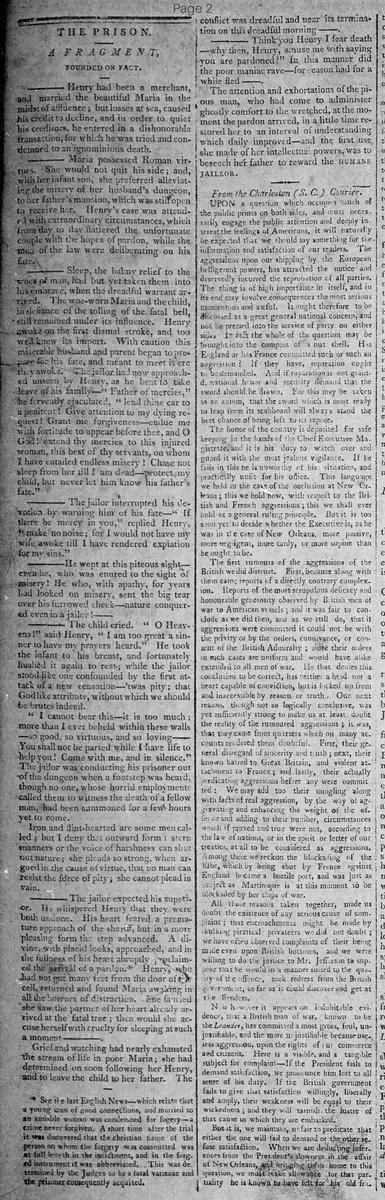
THE PRISON
A FRAGMENT
FOUNDED ON FACT.
Henry had been a merchant, and married the beautiful Maria in the midst of affluence; but losses at sea, caused his credit to decline, and in order to quiet his creditors, he entered in a dishonorable transaction, for which he was tried and condemned to an ignominious death.
Maria possessed Roman virtues. She would not quit his side; and, with her infant son, she preferred alleviating the misery of her husband's dungeon, to her father's mansion, which was still open to receive her. Henry's case was attended with extraordinary circumstances, which from day to day flattered the unfortunate couple with the hopes of pardon, while the men of the law were deliberating on his fate.
Sleep, the balmy relief to the woes of man, had but just taken them into his embrace, when the dreadful warrant arrived. The woe-worn Maria and the child, in defiance of the tolling of the fatal bell, still remained under its influence. Henry awoke on the first dismal stroke, and too well knew its import. With caution this miserable husband and parent began to prepare for his fate, and meant to meet it ere they awoke. The jailor had now approached unseen by Henry, as he bent to take leave of his family—'Father of mercies,' he fervently ejaculated, 'lend thine ear to a penitent! Give attention to my dying request! Grant me forgiveness—endue me with fortitude to appear before thee, and O God! extend thy mercies to this injured woman, this best of thy servants, on whom I have entailed endless misery! Chase not sleep from her till I am dead—protect my child, but never let him know his father's fate.'
The jailor interrupted his devotion by warning him of his fate—'If there be mercy in you,' replied Henry, 'make no noise; for I would not have my wife awoke till I have rendered expiation for my sins.'
He wept at this piteous sight—even he, who was inured to the sight of misery! He, who, with apathy, for years had looked on misery, sent the big tear over his furrowed cheek—nature conquered even in a jailor!
The child cried. 'O Heavens!' said Henry. 'I am too great a sinner to have my prayers heard.' He took the infant to his breast, and fortunately hushed it again to rest; while the jailor stood like one confounded by the first attack of a new sensation—'twas pity; that Godlike attribute, without which we should be brutes indeed.
'I cannot bear this—it is too much; more than I ever beheld within these walls—so good, so virtuous, and so loving—You shall not be parted while I have life to help you! Come with me, and in silence.'
The jailor was conducting his prisoner out of the dungeon when a footstep was heard, though no one, whose horrid employments called them to witness the death of a fellow man, had been summoned for a few hours yet to come.
Iron and flint-hearted are some men called; but I deny that outward form: stern manners or the voice of harshness can shut out nature; she pleads so strong, when argued in the cause of virtue, that no man can resist the force of pity; she cannot plead in vain.
The jailor expected his superior. He whispered Henry that they were both undone. His heart feared a premature approach of the sheriff, but in a more pleasing form the step advanced. A divine, with placid looks, approached, and in the fullness of his heart abruptly proclaimed the arrival of a pardon. Henry, who had not got many feet from the door of the cell, returned and found Maria awakening in all the horrors of distraction. She cried she saw the partner of her heart already arrived at the fatal tree; then would she accuse herself with cruelty for sleeping at such a moment.
Grief and watching had nearly exhausted the stream of life in poor Maria; she had determined on soon following her Henry, and to leave the child to her father. The conflict was dreadful and near its termination on this dreadful morning.
'Think you Henry I fear death—why then, Henry, amuse me with saying you are pardoned?' In this manner did the poor maniac rave—for reason had for a while fled.
The attention and exhortations of the pious man, who had come to administer ghostly comfort to the wretched, at the moment the pardon arrived, in a little time restored her to an interval of understanding which daily improved—and the first use she made of her intellectual powers, was to beseech her father to reward the HUMAN JAILEOR.
*See the last English News—which relate that a young man of good connections, and married to an amiable woman was condemned for forgery—a crime never forgiven. A short time after the trial it was discovered that the christian name of the person on whom the forgery was committed was at full length in the indictment, and in the forged instrument it was abbreviated. This was determined by the Judges to be a fatal variance and the prisoner consequently acquitted.
A FRAGMENT
FOUNDED ON FACT.
Henry had been a merchant, and married the beautiful Maria in the midst of affluence; but losses at sea, caused his credit to decline, and in order to quiet his creditors, he entered in a dishonorable transaction, for which he was tried and condemned to an ignominious death.
Maria possessed Roman virtues. She would not quit his side; and, with her infant son, she preferred alleviating the misery of her husband's dungeon, to her father's mansion, which was still open to receive her. Henry's case was attended with extraordinary circumstances, which from day to day flattered the unfortunate couple with the hopes of pardon, while the men of the law were deliberating on his fate.
Sleep, the balmy relief to the woes of man, had but just taken them into his embrace, when the dreadful warrant arrived. The woe-worn Maria and the child, in defiance of the tolling of the fatal bell, still remained under its influence. Henry awoke on the first dismal stroke, and too well knew its import. With caution this miserable husband and parent began to prepare for his fate, and meant to meet it ere they awoke. The jailor had now approached unseen by Henry, as he bent to take leave of his family—'Father of mercies,' he fervently ejaculated, 'lend thine ear to a penitent! Give attention to my dying request! Grant me forgiveness—endue me with fortitude to appear before thee, and O God! extend thy mercies to this injured woman, this best of thy servants, on whom I have entailed endless misery! Chase not sleep from her till I am dead—protect my child, but never let him know his father's fate.'
The jailor interrupted his devotion by warning him of his fate—'If there be mercy in you,' replied Henry, 'make no noise; for I would not have my wife awoke till I have rendered expiation for my sins.'
He wept at this piteous sight—even he, who was inured to the sight of misery! He, who, with apathy, for years had looked on misery, sent the big tear over his furrowed cheek—nature conquered even in a jailor!
The child cried. 'O Heavens!' said Henry. 'I am too great a sinner to have my prayers heard.' He took the infant to his breast, and fortunately hushed it again to rest; while the jailor stood like one confounded by the first attack of a new sensation—'twas pity; that Godlike attribute, without which we should be brutes indeed.
'I cannot bear this—it is too much; more than I ever beheld within these walls—so good, so virtuous, and so loving—You shall not be parted while I have life to help you! Come with me, and in silence.'
The jailor was conducting his prisoner out of the dungeon when a footstep was heard, though no one, whose horrid employments called them to witness the death of a fellow man, had been summoned for a few hours yet to come.
Iron and flint-hearted are some men called; but I deny that outward form: stern manners or the voice of harshness can shut out nature; she pleads so strong, when argued in the cause of virtue, that no man can resist the force of pity; she cannot plead in vain.
The jailor expected his superior. He whispered Henry that they were both undone. His heart feared a premature approach of the sheriff, but in a more pleasing form the step advanced. A divine, with placid looks, approached, and in the fullness of his heart abruptly proclaimed the arrival of a pardon. Henry, who had not got many feet from the door of the cell, returned and found Maria awakening in all the horrors of distraction. She cried she saw the partner of her heart already arrived at the fatal tree; then would she accuse herself with cruelty for sleeping at such a moment.
Grief and watching had nearly exhausted the stream of life in poor Maria; she had determined on soon following her Henry, and to leave the child to her father. The conflict was dreadful and near its termination on this dreadful morning.
'Think you Henry I fear death—why then, Henry, amuse me with saying you are pardoned?' In this manner did the poor maniac rave—for reason had for a while fled.
The attention and exhortations of the pious man, who had come to administer ghostly comfort to the wretched, at the moment the pardon arrived, in a little time restored her to an interval of understanding which daily improved—and the first use she made of her intellectual powers, was to beseech her father to reward the HUMAN JAILEOR.
*See the last English News—which relate that a young man of good connections, and married to an amiable woman was condemned for forgery—a crime never forgiven. A short time after the trial it was discovered that the christian name of the person on whom the forgery was committed was at full length in the indictment, and in the forged instrument it was abbreviated. This was determined by the Judges to be a fatal variance and the prisoner consequently acquitted.
What sub-type of article is it?
Prose Fiction
What themes does it cover?
Death Mortality
Moral Virtue
Religious
What keywords are associated?
Prison Fragment
Merchant Condemnation
Wife Devotion
Jailor Mercy
Pardon Acquittal
Forgery Trial
Family Suffering
Literary Details
Title
The Prison A Fragment Founded On Fact.
Key Lines
'Father Of Mercies,' He Fervently Ejaculated, 'Lend Thine Ear To A Penitent! Give Attention To My Dying Request! Grant Me Forgiveness—Endue Me With Fortitude To Appear Before Thee, And O God! Extend Thy Mercies To This Injured Woman, This Best Of Thy Servants, On Whom I Have Entailed Endless Misery! Chase Not Sleep From Her Till I Am Dead—Protect My Child, But Never Let Him Know His Father's Fate.'
'I Cannot Bear This—It Is Too Much; More Than I Ever Beheld Within These Walls—So Good, So Virtuous, And So Loving—You Shall Not Be Parted While I Have Life To Help You! Come With Me, And In Silence.'
'Think You Henry I Fear Death—Why Then, Henry, Amuse Me With Saying You Are Pardoned?'
*See The Last English News—Which Relate That A Young Man Of Good Connections, And Married To An Amiable Woman Was Condemned For Forgery—A Crime Never Forgiven. A Short Time After The Trial It Was Discovered That The Christian Name Of The Person On Whom The Forgery Was Committed Was At Full Length In The Indictment, And In The Forged Instrument It Was Abbreviated. This Was Determined By The Judges To Be A Fatal Variance And The Prisoner Consequently Acquitted.