Thank you for visiting SNEWPapers!
Sign up free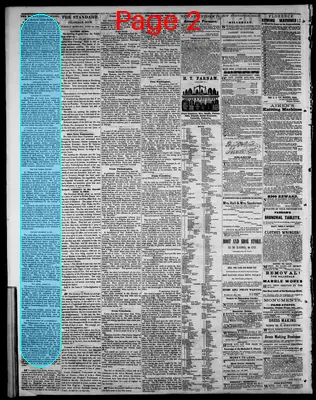
Story
June 23, 1863
The Hillsdale Standard
Hillsdale, Hillsdale County, Michigan
What is this article about?
Reports on the rebel cavalry raid into Pennsylvania led by Gen. Jenkins, entering Chambersburg but retreating without major destruction after failing to capture a Union wagon train. Incidents from Carlisle and Shippensburg highlight local excitement and Union defenses.
Clipping

OCR Quality
95%
Excellent
Full Text
THE RAID IN PENNSYLVANIA.
The Retreat of the Rebels.
The Philadelphia papers of this morning publish columns of reports and incidents concerning the raid of the rebel cavalry, but the fact that the rough-riders of Jenkins have taken themselves out of the State leaves but little news to chronicle. At no time does the force of the rebel cavalry appear to have been more than three thousand men. We sift from the mass of the reports a few interesting incidents of the excitement, which we give below.
Early on the morning of the 10th, no definite information being received of the whereabouts of the rebels in consequence of telegraphic communication stopping beyond Carlisle, (the operator at Chambersburg having been obliged to leave the place by reason of the rebel advance,) some doubt existed as to whether a train would be despatched up the valley. It was determined however to despatch a train to Carlisle, and accordingly at 3 o'clock A. M. an engine, with three cars attached, in which were a limited number of passengers, mostly residents along the line who were anxious to reach their families, started for that destination.
A correspondent of the Philadelphia Inquirer, who left Harrisburg by this train, thus describes the scenes along the route:
ARTILLERY MOVING.
On the road to Mechanicsburg we passed a battery of light artillery, on its way to take up its position on the heights near Bridgeport, to contest the rebel advance along the Cumberland Valley Railroad.
CARLISLE IN A HUBBUB.
At Carlisle we found more excitement probably, than at any other point along the road. The streets were filled with a motley group of men, women and children; trunks, boxes, household furniture, bundles, &c., were piled up in the main street, near the sidewalk for instant removal, in case of necessity. Although no definite information could be obtained of the whereabouts of the enemy, still a scout, who arrived in town shortly after the arrival of the train from Harrisburg, reported as the belief of the Captain of his company, who was in the advance, that the rebel pickets were within ten miles of the town.
A WAGON TRAIN AHEAD OF THE REBELS.
At Carlisle we found between two and three hundred Government wagons filled with valuable commissary stores, and several hundred horses, that had escaped the clutches of the rebels at the fight at Martinsburg, and who pursued them as far as Chambersburg. A guard of seventy cavalry accompanied these wagons, consisting of detachments from the first New York cavalry and a Maryland cavalry regiment, under command of Lieutenant Boyd, who was wounded in the knee while skirmishing with the enemy in the neighborhood of Martinsburg. This guard has continued fighting with the rebels from Martinsburg to Chambersburg, and managed to bring off the wagon train without the loss of a single article. One or two of the men were killed, however, and several wounded.
WHY THE REBELS RETIRED,
At Shippensburg we had the statement confirmed that the rebels had entered Chambersburg at 8 o'clock the previous night, and their force was variously estimated at from one to four thousand cavalry. We learned that beyond the destruction of the bridge at Scotland, no property of any kind had been destroyed, and the citizens of Chambersburg had not been interfered with or molested in any manner. The rebels were encamped at three different points, viz: On the ground of Col. McClure, at Gelsinger's Heights, and New England Hill. Col. McClure had made his exit from Chambersburg, and was thought to be secreted somewhere in the vicinity of the town.
A statement was made by one of the rebel outer pickets to a citizen, that the rebel force would return to Hagerstown the next day, as their object in advancing was for the purpose of capturing the commissary train spoken of as having arrived at Carlisle, and failing in that they would return to Hagerstown. Other information from rebel pickets, however, conveyed the idea that the force at Chambersburg were backed by eighty thousand of Lee's army, who were advancing in the direction of Pennsylvania.
PRIVATE PROPERTY SAVED.
The rebel officer in command at Chambersburg, was about giving orders for the destruction of the warehouse on this side of the creek, but on being informed that it contained no public property, demanded the keys for the purpose of making an examination. These were furnished him, when he remarked, "I'll take your word that there are no public stores in the warehouse," and immediately returned the keys, without making an examination of the warehouse. Two or three cars standing on the track, met his observation, but on being informed they were private property they were spared, the officer remarking: "We rigidly respect all private property."
The officer stated that the force at Chambersburg were all under command of Gen. Jenkins, and comprise the same body that made the raid into Western Virginia some weeks since. While at the bridge, and engaged in its destruction, they exhibited considerable haste and alarm, evidently fearing a Union attack on them.
THE REBEL STRENGTH.
The rebels at the bridge reported their force at Chambersburg to be three thousand strong that they were the advance guard, and that a brigade, under the command of Gen. Rhodes, was hourly expected up to their support. Information was given them during the day that the Union forces were advancing on them from Harrisburg and Baltimore, and the pickets were called in and line of battle formed at Chambersburg three times during the day.
We learn from reliable sources that not more than two hundred horses had been captured during the raid; the enemy were in great want of men to mount them, who were expected to join them.
THE EVACUATION OF CHAMBERSBURG
The Philadelphia Press of this morning says: "The announcement that the rebels have abandoned Chambersburg is the most gratifying intelligence we have this morning. It shows us that with Gen. Hooker in the rear, Lee will not make an invasion of the State. The occupation of Chambersburg was itself a hazardous undertaking, and the fact that no attempt was made to advance upon Carlisle or Shippensburg, shows in the first place, that there were no rebels but an advance division, or, what is most probable, that the movement of Hooker in the neighborhood of Manassas has given Lee cause for alarm, and that in anticipation of a great battle, he has recalled his troops. Whatever the complicated strategy of the past week may mean, it is certain that no definite movement will be made until another battle is fought in Virginia, and in a few days it must take place."
The Retreat of the Rebels.
The Philadelphia papers of this morning publish columns of reports and incidents concerning the raid of the rebel cavalry, but the fact that the rough-riders of Jenkins have taken themselves out of the State leaves but little news to chronicle. At no time does the force of the rebel cavalry appear to have been more than three thousand men. We sift from the mass of the reports a few interesting incidents of the excitement, which we give below.
Early on the morning of the 10th, no definite information being received of the whereabouts of the rebels in consequence of telegraphic communication stopping beyond Carlisle, (the operator at Chambersburg having been obliged to leave the place by reason of the rebel advance,) some doubt existed as to whether a train would be despatched up the valley. It was determined however to despatch a train to Carlisle, and accordingly at 3 o'clock A. M. an engine, with three cars attached, in which were a limited number of passengers, mostly residents along the line who were anxious to reach their families, started for that destination.
A correspondent of the Philadelphia Inquirer, who left Harrisburg by this train, thus describes the scenes along the route:
ARTILLERY MOVING.
On the road to Mechanicsburg we passed a battery of light artillery, on its way to take up its position on the heights near Bridgeport, to contest the rebel advance along the Cumberland Valley Railroad.
CARLISLE IN A HUBBUB.
At Carlisle we found more excitement probably, than at any other point along the road. The streets were filled with a motley group of men, women and children; trunks, boxes, household furniture, bundles, &c., were piled up in the main street, near the sidewalk for instant removal, in case of necessity. Although no definite information could be obtained of the whereabouts of the enemy, still a scout, who arrived in town shortly after the arrival of the train from Harrisburg, reported as the belief of the Captain of his company, who was in the advance, that the rebel pickets were within ten miles of the town.
A WAGON TRAIN AHEAD OF THE REBELS.
At Carlisle we found between two and three hundred Government wagons filled with valuable commissary stores, and several hundred horses, that had escaped the clutches of the rebels at the fight at Martinsburg, and who pursued them as far as Chambersburg. A guard of seventy cavalry accompanied these wagons, consisting of detachments from the first New York cavalry and a Maryland cavalry regiment, under command of Lieutenant Boyd, who was wounded in the knee while skirmishing with the enemy in the neighborhood of Martinsburg. This guard has continued fighting with the rebels from Martinsburg to Chambersburg, and managed to bring off the wagon train without the loss of a single article. One or two of the men were killed, however, and several wounded.
WHY THE REBELS RETIRED,
At Shippensburg we had the statement confirmed that the rebels had entered Chambersburg at 8 o'clock the previous night, and their force was variously estimated at from one to four thousand cavalry. We learned that beyond the destruction of the bridge at Scotland, no property of any kind had been destroyed, and the citizens of Chambersburg had not been interfered with or molested in any manner. The rebels were encamped at three different points, viz: On the ground of Col. McClure, at Gelsinger's Heights, and New England Hill. Col. McClure had made his exit from Chambersburg, and was thought to be secreted somewhere in the vicinity of the town.
A statement was made by one of the rebel outer pickets to a citizen, that the rebel force would return to Hagerstown the next day, as their object in advancing was for the purpose of capturing the commissary train spoken of as having arrived at Carlisle, and failing in that they would return to Hagerstown. Other information from rebel pickets, however, conveyed the idea that the force at Chambersburg were backed by eighty thousand of Lee's army, who were advancing in the direction of Pennsylvania.
PRIVATE PROPERTY SAVED.
The rebel officer in command at Chambersburg, was about giving orders for the destruction of the warehouse on this side of the creek, but on being informed that it contained no public property, demanded the keys for the purpose of making an examination. These were furnished him, when he remarked, "I'll take your word that there are no public stores in the warehouse," and immediately returned the keys, without making an examination of the warehouse. Two or three cars standing on the track, met his observation, but on being informed they were private property they were spared, the officer remarking: "We rigidly respect all private property."
The officer stated that the force at Chambersburg were all under command of Gen. Jenkins, and comprise the same body that made the raid into Western Virginia some weeks since. While at the bridge, and engaged in its destruction, they exhibited considerable haste and alarm, evidently fearing a Union attack on them.
THE REBEL STRENGTH.
The rebels at the bridge reported their force at Chambersburg to be three thousand strong that they were the advance guard, and that a brigade, under the command of Gen. Rhodes, was hourly expected up to their support. Information was given them during the day that the Union forces were advancing on them from Harrisburg and Baltimore, and the pickets were called in and line of battle formed at Chambersburg three times during the day.
We learn from reliable sources that not more than two hundred horses had been captured during the raid; the enemy were in great want of men to mount them, who were expected to join them.
THE EVACUATION OF CHAMBERSBURG
The Philadelphia Press of this morning says: "The announcement that the rebels have abandoned Chambersburg is the most gratifying intelligence we have this morning. It shows us that with Gen. Hooker in the rear, Lee will not make an invasion of the State. The occupation of Chambersburg was itself a hazardous undertaking, and the fact that no attempt was made to advance upon Carlisle or Shippensburg, shows in the first place, that there were no rebels but an advance division, or, what is most probable, that the movement of Hooker in the neighborhood of Manassas has given Lee cause for alarm, and that in anticipation of a great battle, he has recalled his troops. Whatever the complicated strategy of the past week may mean, it is certain that no definite movement will be made until another battle is fought in Virginia, and in a few days it must take place."
What sub-type of article is it?
Historical Event
Military Action
What themes does it cover?
Misfortune
Survival
What keywords are associated?
Rebel Raid
Pennsylvania Invasion
Chambersburg Occupation
Wagon Train Escape
Jenkins Cavalry
Civil War Incident
What entities or persons were involved?
Gen. Jenkins
Col. Mcclure
Lieutenant Boyd
Gen. Hooker
Gen. Lee
Gen. Rhodes
Where did it happen?
Pennsylvania, Chambersburg, Carlisle, Shippensburg
Story Details
Key Persons
Gen. Jenkins
Col. Mcclure
Lieutenant Boyd
Gen. Hooker
Gen. Lee
Gen. Rhodes
Location
Pennsylvania, Chambersburg, Carlisle, Shippensburg
Event Date
The 10th
Story Details
Rebel cavalry under Gen. Jenkins raids into Pennsylvania, enters Chambersburg, destroys a bridge but spares private property, fails to capture Union wagon train, and retreats amid fears of Union advances.